

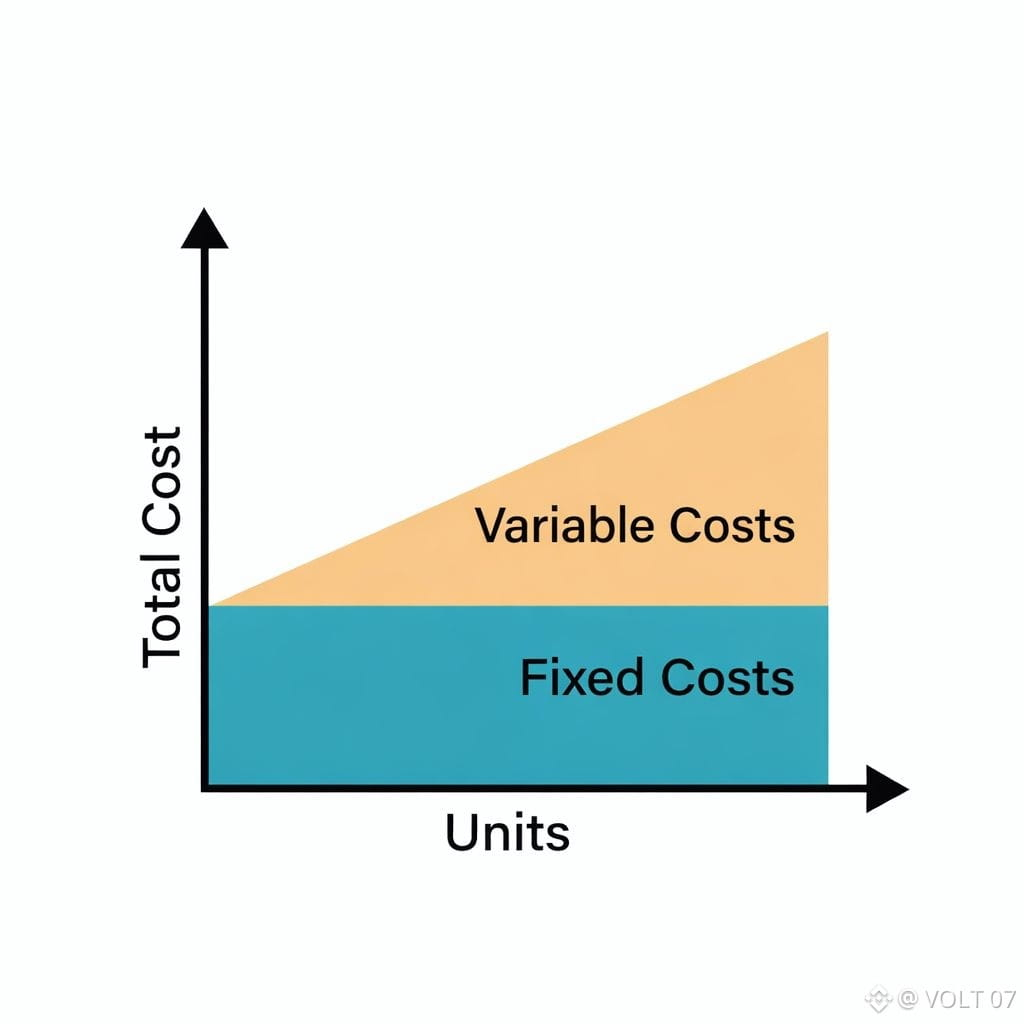
 There’s nothing exciting about predictable costs. No screenshots. No adrenaline. No moment where people rush to post charts or celebrate a sudden spike in activity. And yet, when you look at how real systems actually operate the kind that process payments, manage data, or run applications people rely on every day predictability is the difference between something that can be experimented with and something that can be trusted. That’s where Vanar Chain has done something quietly important.
Most blockchains still behave like weather systems. Fees rise and fall based on activity, sentiment, or sudden congestion. On a calm day, everything works fine. On a busy day, costs explode, transactions stall, and anyone trying to run a real operation has to pause and wait it out. Traders tolerate this. Speculators even enjoy it. But businesses don’t. Developers don’t. And institutions definitely don’t. You can’t build a reliable service on infrastructure that changes its pricing logic every time demand shifts.
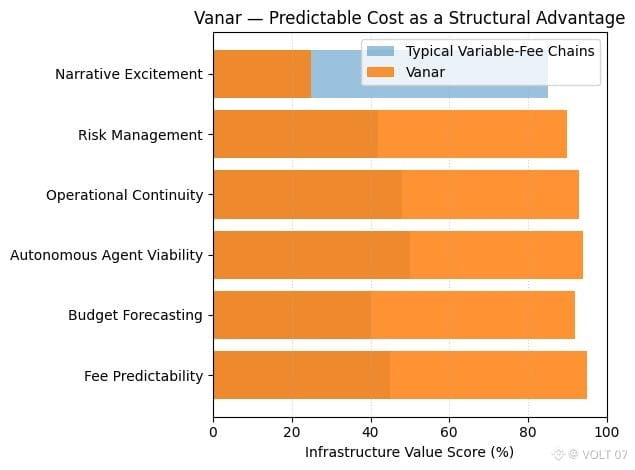
Vanar’s approach strips that uncertainty out of the equation. Transaction costs behave the same way today as they did yesterday. Not because demand is low, but because the system is designed to absorb activity without passing chaos onto users. It’s not flashy. It doesn’t make headlines. But it creates something far more valuable than excitement: confidence. When teams know what an action will cost before they take it, they can design workflows, automate processes, and plan growth without building in buffers for surprise spikes.
This is why predictable cost feels boring to people used to crypto narratives and revolutionary to people who actually deploy software. The moment fees become stable, everything changes quietly in the background. Developers stop optimizing around gas and start optimizing around users. Businesses stop worrying about whether a campaign or launch will accidentally price out their customers. Automation becomes practical instead of fragile.
What makes Vanar’s design meaningful is that it treats cost stability as infrastructure, not a temporary perk. This isn’t a subsidy or an incentive program that fades once activity picks up. It’s a structural choice. The network assumes that demand will grow and prepares for it, instead of reacting after congestion appears. That forward-looking mindset is rare in an industry that often chases short-term attention.

There’s also a psychological shift that comes with predictable pricing. When users aren’t constantly watching fees, they behave more naturally. They interact more often. They experiment without fear. Over time, that creates healthier ecosystems not because people are forced to stay, but because nothing pushes them away. Growth happens quietly, driven by comfort rather than urgency.
In the long run, this kind of “boring” reliability is what separates infrastructure from experiments. Roads aren’t exciting because they exist; they’re important because they’re always there and they cost what you expect them to cost. Payment rails don’t win attention by being volatile; they win it by disappearing into the background. Vanar is aiming for that same role not as a spectacle, but as a foundation.
So while predictable cost may never trend on social feeds or fuel speculative excitement, it solves a problem most blockchains still avoid confronting. It makes the system usable by people who don’t want to think about the chain at all. And if real-world adoption is the goal, that kind of invisibility isn’t a weakness.
It’s the point.
