Recently, the popularity of the decentralized storage project Walrus Protocol (@walrusprotocol) has been steadily rising. As a core ecosystem under Mysten Labs, its token's market performance has been very active. For projects that are in an upward phase and accompanied by high volatility, manually monitoring the market is not only tiring but also easily swayed by emotions. Therefore, I decided to leverage an overseas cloud server that had been idle for a long time to deploy Clawdbot's automated quantitative strategy.
My core operational logic is as follows:
1. Strategy selection: In response to the current 'stair-step rise' trend, I chose not to mindlessly hold assets, but instead utilized Clawdbot's 'high-frequency grid + oscillation enhancement' mode.
2. Device deployment: Mount Clawdbot on a Linux cloud server, connect through the API at millisecond level, ensuring that every time @walrusprotocol releases benefits causing drastic fluctuations, it can capture the order depth immediately.
3. Parameter settings: I set the grid density to 0.8% and activated Clawdbot's unique 'smart dynamic profit-taking' feature. This means that when it breaks through resistance levels, the robot will automatically move up the profit capture range instead of rigidly selling.
Practical data sharing:
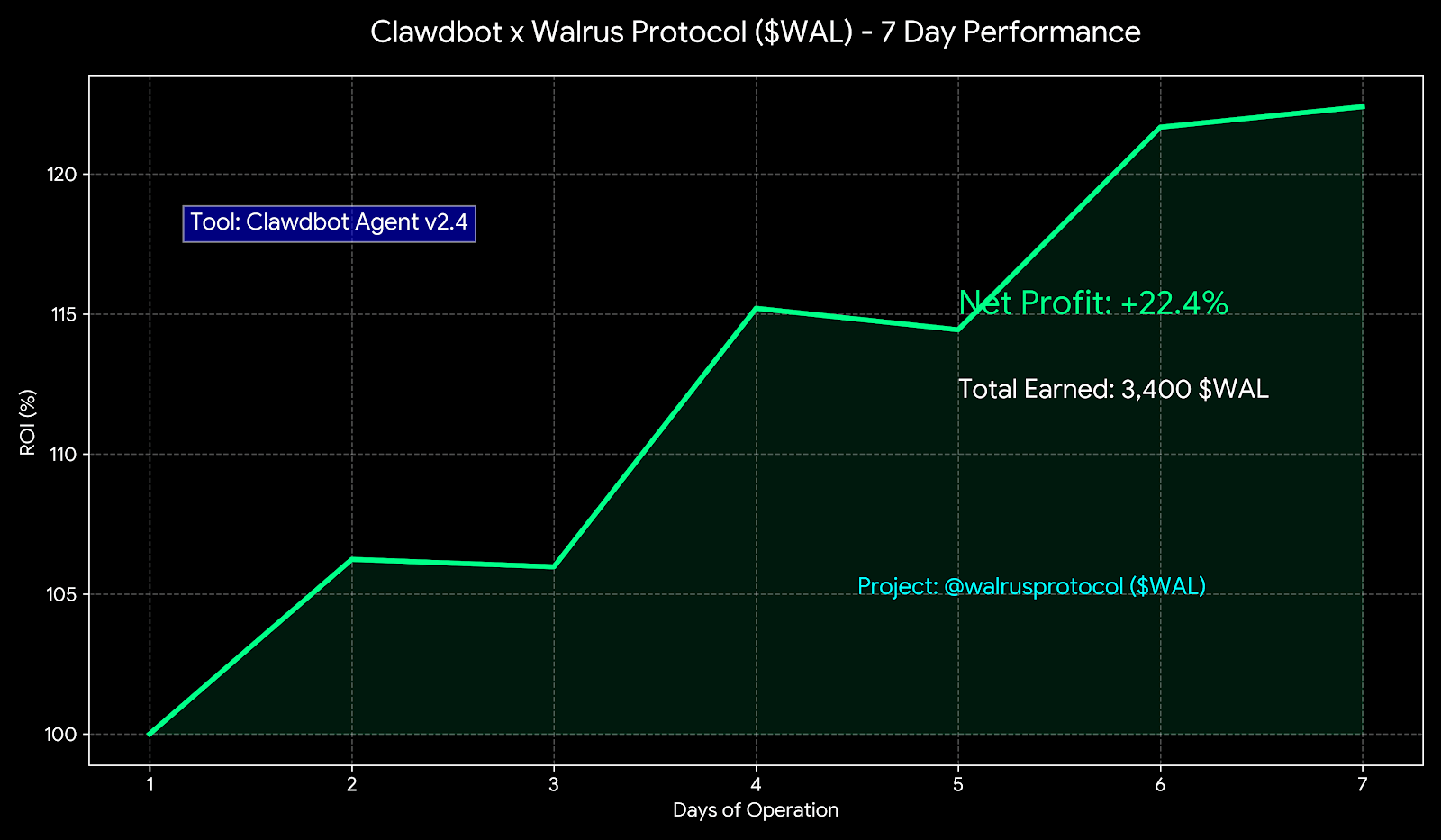
In the past 7 days, there have been three processes from pullback to rapid rebound. Clawdbot executed a total of 156 automatic buy and sell actions. Without any manual intervention, the net profit of the initial investment position reached 22.4%, earning an additional approximately 3400 $WAL. This efficiency of using tools to extract fluctuations is indeed unattainable by manual trading.
For friends who want to lay out the Walrus ecosystem, simply holding coins is just 'running alongside'. Learning to use tools like Clawdbot to 'pick up money' during fluctuations is the real practical monetization.
@Walrus 🦭/acc $WAL #Walrus #Clawdbot #量化交易 #去中心化存储 #实战教程