
A while back, I was moving a small position across borders. Nothing exotic. Just shifting tokenized assets between accounts, with reporting in mind. I’d done this plenty of times before, but this time the friction was impossible to ignore. Everything was visible by default, which meant extra checks just to stay compliant. Adding privacy felt like duct-taping something on top of a system that wasn’t built for it. Fees weren’t outrageous, but they crept up anyway because every workaround added another step. What bothered me wasn’t speed or cost. It was never knowing if the setup would actually hold up once real-world rules were applied without leaking more than it should.
That experience sums up a bigger problem across blockchains. Privacy is usually handled poorly, especially once finance enters the picture. Public ledgers are fine when you’re swapping tokens for fun, but they fall apart when real assets or institutions get involved. You’re either fully exposed, showing trade sizes and counterparties to anyone watching, or you’re so opaque that compliance becomes a red flag. Developers feel this too. Bolt-on privacy slows things down and gets expensive. Native privacy can break tooling or integrations. Operationally, it’s messy. Proofs take time. Audits require custom logic. Every serious app ends up reinventing the same wheels. That friction is why so much real financial activity still avoids public chains entirely.
Traditional finance figured this out decades ago. Bank accounts don’t broadcast balances to the world, but regulators can still access what they need. Clients get discretion. Oversight still works. When that balance disappears, systems grind to a halt. Blockchains that default to total transparency run into the same wall once stakes are real.
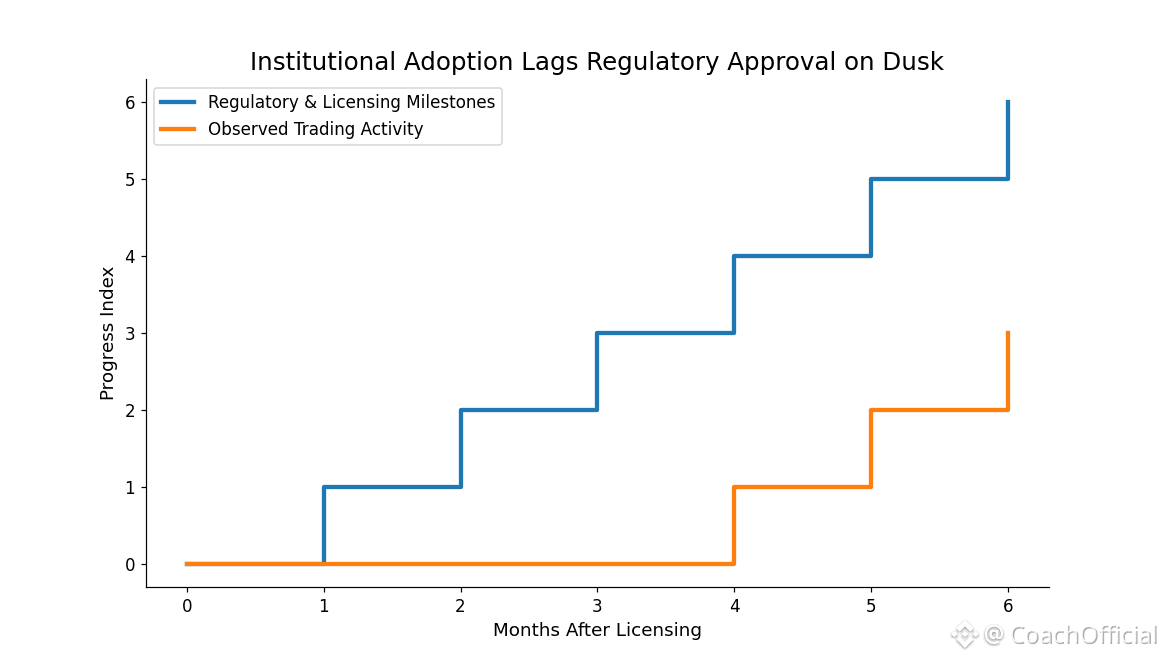
#Dusk takes a different path. It’s built around the idea that privacy should be normal for financial activity, not something layered on later. Transactions are inherently private, yet the system allows for selective disclosure when needed. This design choice is significant. It sidesteps the pitfalls of total anonymity while safeguarding critical details such as the size of a position or the intricacies of a settlement process. For developers, this translates to a reduced risk of hacks and fewer trade-offs when creating applications like tokenized securities or regulated payment systems.
Since mainnet went live in early January 2026, blocks have been confirming quickly and predictably. Activity is still early, but behavior matches the intent.
Under the surface, the design choices reflect those priorities. Consensus relies on small, rotating committees rather than broadcasting everything to everyone. That keeps latency down, but it also means trusting the committee selection process to stay robust under pressure. The network has also been split into layers, separating settlement, execution, and privacy logic. That helps isolate heavy cryptographic work, though it introduces coordination overhead. Tooling has improved steadily. Recent updates have made contract development feel less like wrestling infrastructure and more like building actual applications.
$DUSK itself stays fairly disciplined. It’s used for fees, part of which are burned as activity increases. Early burns are small, but the mechanism is live. Validators stake it to secure the network, and misbehavior is penalized directly. The same stake gives voting power over upgrades and integrations. There’s no extra utility layered on for the sake of marketing. Emissions release the remaining supply gradually toward the one-billion cap, rather than flooding the market upfront.
From a market perspective, about half the supply is already circulating. Valuation sits in that awkward middle zone where interest exists but hype hasn’t taken over. It’s enough liquidity to matter, without the chaos that usually comes from overheated launches.
Short-term price action has mostly followed narratives. Privacy themes, real-world asset talk, product announcements. Those moves can be sharp, but they fade just as quickly when attention shifts. That kind of volatility makes sense for traders, but it doesn’t say much about whether the system is actually being used. The real test is quieter. It’s whether platforms issuing regulated assets stick around. Whether developers keep building once incentives cool. Whether validators stay engaged as emissions taper.
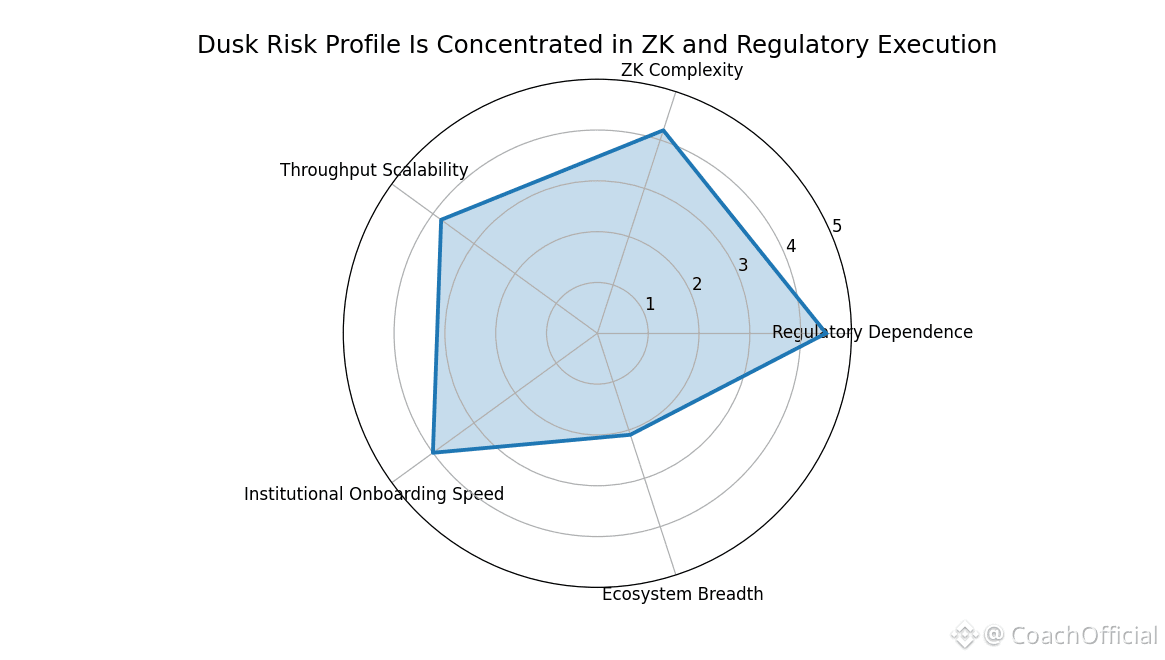
The risks aren’t abstract. Competition is intense. Ethereum’s ZK ecosystem keeps improving, and other privacy-focused chains already have loyal communities. Regulation could cut either way. Selective disclosure might become a requirement, or it might be constrained by stricter rules that force redesigns. One scenario that genuinely worries me is a committee failure during a high-value settlement. Even a short halt, if it hits at the wrong time, could shake confidence in the settlement layer when real assets are involved.
In the end, capped supply and burn mechanics don’t create value by themselves. They only amplify behavior that already exists. If developers keep shipping, validators keep participating, and users come back because the privacy rails quietly do what they’re supposed to do, the model works. If not, it becomes another well-designed system waiting for traction. That answer won’t come from charts or announcements. It shows up slowly, in whether people trust the network enough to use it again.
@Dusk #Dusk $DUSK
