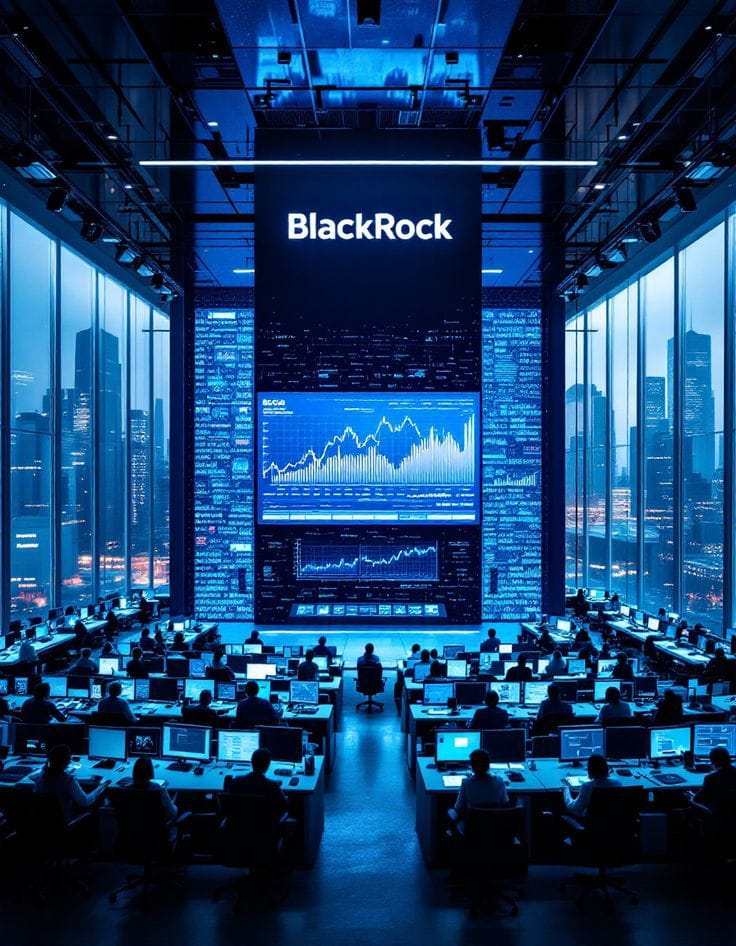
BlackRock — the largest investment company and asset manager in the world, playing a key role in the modern global financial system. As of the early 2020s, BlackRock manages trillions of dollars, distributed among stocks, bonds, ETFs, alternative investments, and technological solutions for financial markets.
Foundation and early years (1988–1994)
BlackRock was founded in 1988 by a group of financiers led by Larry Fink, a former employee of First Boston. Initially, the company was created as a risk and asset management division within Blackstone Group. The key idea was to implement strict risk management and analytics in investment management — an approach that sharply distinguished BlackRock from many competitors of that time.
In 1994, BlackRock separated from Blackstone and became an independent company. This was a strategic step that allowed it to focus exclusively on asset management and the development of its own technologies.
Growth and entry into the global market (1995–2007)
In the second half of the 1990s and the early 2000s, BlackRock was actively expanding:
attracted institutional clients — pension funds, insurance companies, sovereign funds;
entered international markets;
developed its own risk analysis technology platform.
In 1999, the company conducted an IPO on the New York Stock Exchange, which accelerated its growth and increased business transparency.
The 2008 crisis and strategic turning point
The global financial crisis of 2008 was a key moment in BlackRock's history. Due to its expertise in risk management, the company was engaged by the U.S. government and the Federal Reserve to analyze the troubled assets of banks and insurance companies.
In 2009, BlackRock acquired Barclays Global Investors along with the iShares brand — the largest provider of ETFs. This deal turned BlackRock into the absolute leader in the exchange-traded fund market and significantly increased assets under management.
Technology and the Aladdin platform
One of BlackRock's main competitive advantages has been the technological platform Aladdin (Asset, Liability, Debt and Derivatives Investment Network).
Aladdin is used not only within the company but also by thousands of external clients worldwide for:
assessing investment and credit risks;
scenario modeling of crises;
real-time portfolio management.
In fact, BlackRock has transformed not only into an investment giant but also into one of the largest fintech providers on a global scale.
ESG, sustainable development, and market influence (2015–present)
Since the mid-2010s, BlackRock has been actively promoting ESG principles (environment, social responsibility, corporate governance). Larry Fink's letters to CEOs of major corporations have become important benchmarks for global business, emphasizing:
long-term sustainability instead of short-term profit;
climate risks as financial risks;
the need for transparent corporate governance.
This position has made BlackRock one of the most influential participants in the dialogue between business, governments, and investors.
Role in the modern global economy
Today, BlackRock:
holds significant stakes in the world's largest public companies;
influences stock markets through ETFs and index products;
collaborates with central banks and governmental institutions;
shapes standards for capital and risk management.
The company is simultaneously viewed as a symbol of the efficiency of global capitalism and as a subject of criticism due to its massive concentration of influence.
Conclusion
The history of BlackRock is a journey from a small team of financiers to a key institution in the global financial system. The combination of technology, risk management, and extensive institutional trust has allowed the company not only to survive the largest crises but also to emerge from them stronger. In the 21st century, BlackRock remains one of the main architects of the global investment landscape.