

As I gaze at the screen filled with news and white papers on 'AI + Web3' funding at this moment, the persistent thought in my mind grows louder: are we fooling ourselves? Everyone is shouting the slogan of decentralized artificial intelligence, but if you peel away those flashy UIs and marketing terms, the underlying architecture is still a shaky pillar of Web2. The vast majority of so-called 'AI chains' are actually just running a Python script off-chain and then sending the hash of the results back on-chain. This is not true on-chain intelligence; it's merely notarizing for centralized servers. I can't help but reflect, in this market filled with narratives for the sake of narratives, is there still anyone doing real work at the 'infrastructure' level? It wasn't until my gaze landed on the technical documentation of Vanar Chain that this anxiety eased slightly. This is not some branded 'AI concept coin'; what I see is an ambition to reconstruct blockchain logic from the ground up—they call it a 'thinking chain.'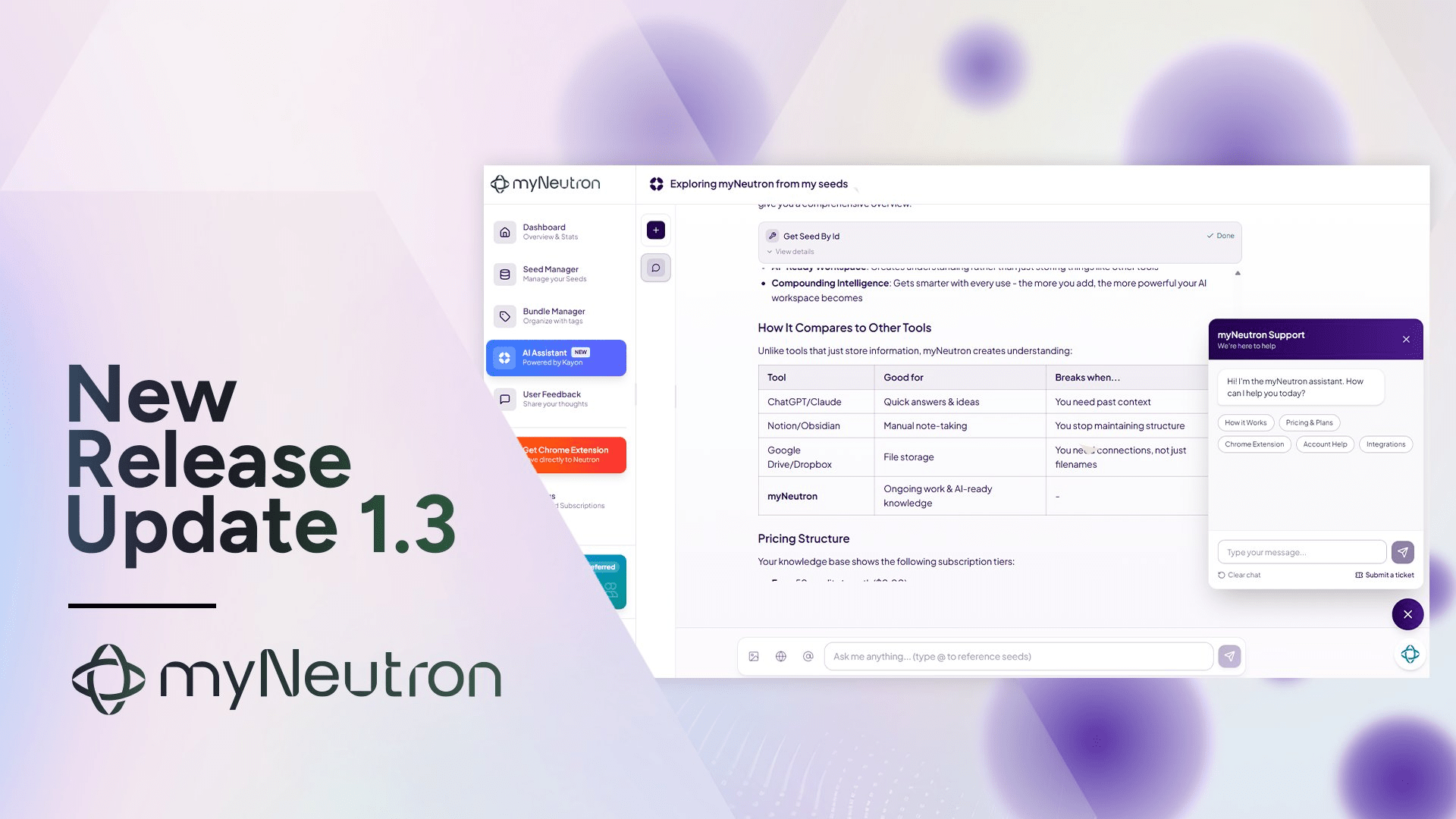
I have to admit, at first I was...@Vanarchain This project was initially biased. After all, in this cycle, any project with "AI" in its name seems suspicious. But as I delved deeper into their five-layer architecture, I realized I might have underestimated Vanar's vision. It's not just an L1 layer; it's actually addressing a massive gray rhino problem selectively ignored by the entire industry: the state and memory of AI. Most current AI agents are stateless; they're like disposable tools, used and forgotten, lacking coherent memory and unable to truly accumulate experience. Vanar Chain's solution, especially the Neutron semantic memory layer, showed me a completely new possibility. It's like we've finally moved from the era of "read-only CDs" to the era of read-write, evolveable hard drives, but this time on the blockchain.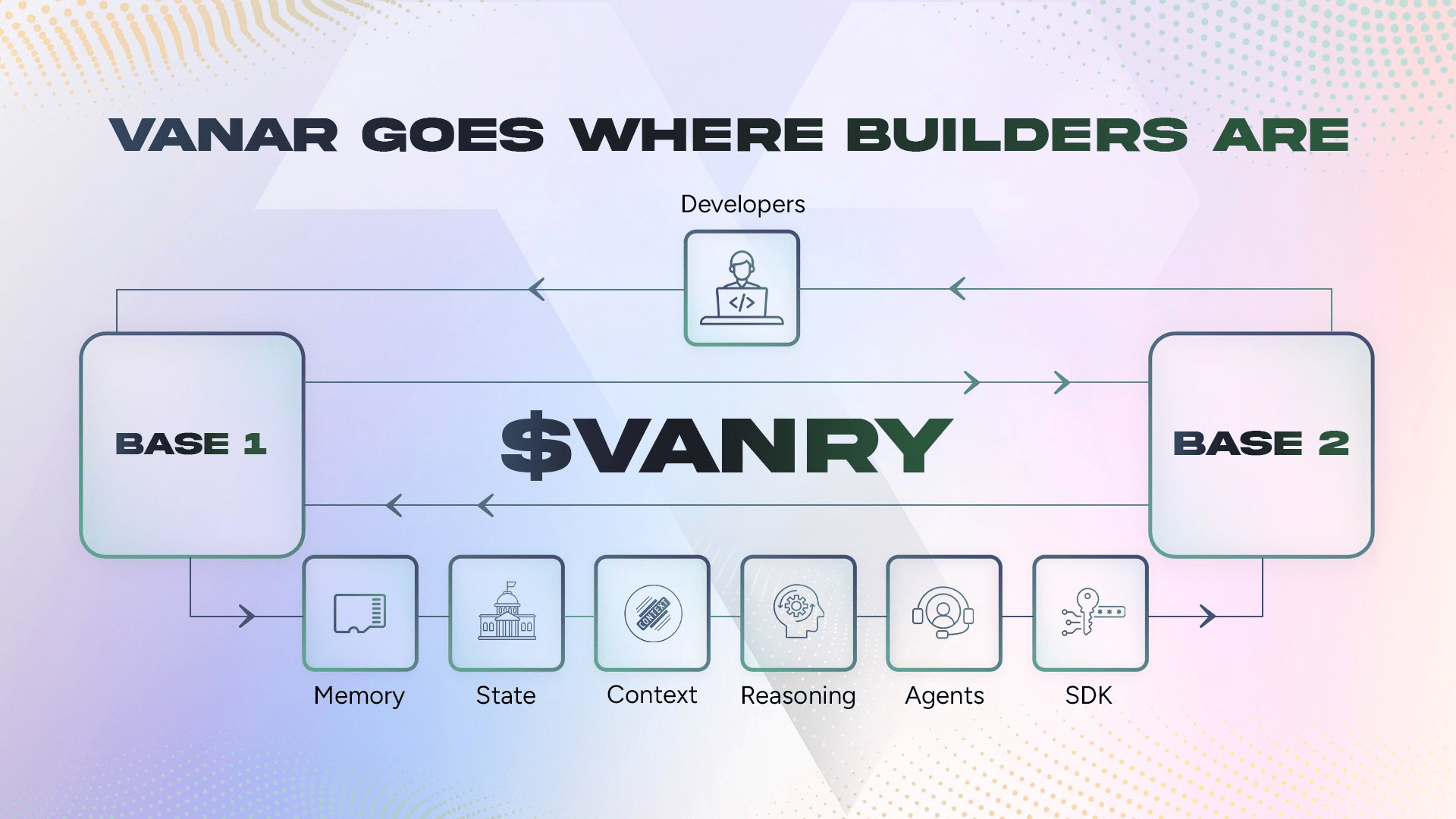
Let me take a moment to clarify the logic behind Neutron, because it's truly fascinating. Our current NFTs or on-chain data are essentially an "ownership illusion." You think you own that JPEG, or that on-chain contract, but in reality, the chain only stores a hash pointing to AWS or IPFS. If Amazon's servers go down (which has happened before), or IPFS nodes stop hosting, all you have is a string of gibberish pointing to nothing. Vanar does it completely differently. They don't store hashes; they store "seeds." These are data entities compressed through neural network structuring and semantic embedding. Imagine a 25MB video file, compressed into a seed of a few dozen bytes using some incredibly sophisticated algorithm, and this seed can live directly on the blockchain. This isn't a reference; it's the ontology. This means that even if the entire Web2 internet collapses, as long as Vanar's nodes are still running, this data can be restored without loss. This technological elegance gives me a long-lost excitement—this is what blockchain should be like: independent, trustless, and completely autonomous.
This leads me to a deeper question: if data can be stored this way, then smart contracts are no longer just "dumb code" that can only perform addition, subtraction, multiplication, and division. Current smart contracts are static; they can only execute according to pre-defined If-This-Then-That logic. But in Vanar's architecture, I see Kayon—that on-chain inference engine. This could be the true "singularity" of Web3. What would happen if contracts could "understand" the data they process? Imagine a DeFi protocol that no longer mechanically liquidates your positions based on oracle price feeds, but is able to understand market sentiment, analyze macro news (through semantic analysis), and even make fuzzy judgments like a human trader. This is what Kayon aims to do: evolve blockchain from "programmable" to "intelligent." This evolution isn't icing on the cake, but a lifeline. Because as on-chain interactions become increasingly complex, what we need are systems capable of handling complexity and reasoning, not just faster throughput. Everyone is chasing TPS (transactions per second), but Vanar seems to be chasing "IPS" (intelligence per second).
This shift in technical architecture will inevitably lead to a dramatic change in business models. I took a look at the token model $VANRY , and it's quite interesting. It's not just Gas; it's the fuel for the entire AI ecosystem. In traditional L1, you pay Gas to buy block space; in Vanar, you pay $VANRY to buy "computing power" and "memory." When developers use myNeutron to store data or call Kayon for inference, they are consuming tokens. This creates a very direct value capture mechanism: the smarter the network, the scarcer the tokens. This is much more robust than models that rely solely on governance rights or elusive staking rewards to support the token price. It's like paying for every neuronal synapse firing in the brain—not only reasonable, but necessary. This also explains why they emphasize their partnerships with NVIDIA and Google Cloud so much; it's not just a simple endorsement, but an interoperability of computing infrastructure. If Vanar can truly route the computing power of high-performance GPUs onto the blockchain in a decentralized manner, then it will not just be a public blockchain, but a decentralized AI cloud.
But this isn't just a technical issue; it's a philosophical one. I've been wondering, why do we so desperately need an "AI-native" blockchain? Current AI giants—OpenAI, Google, Anthropic—are forming new data monopolies. If you feed your data to GPT, you lose control over it. Vanar's "data as an asset" concept might be a silent rebellion against these Silicon Valley giants. Through Neutron, your data is compressed, encrypted, and stored on-chain; only you possess the private key for decompression and authorization. When AI needs to use your data for training or inference, it must obtain your authorization and may even have to pay for it. This is the future Web3 promises us: individual sovereignty. In this system, AI is no longer a reaper to harvest us, but a tool to serve us. Vanar Chain plays the role of a fair and immutable intermediary layer, ensuring that the contract between humans and AI is transparent and enforceable.
Thinking deeper, what does this architecture mean for the "metaverse" and games? I remember Vanar's predecessor had a strong background in the gaming industry. What would happen if we applied Neutron and Kayon to NPCs (non-player characters)? Currently, game NPCs are just puppets looping a few lines of dialogue. But in Vanar, each NPC has its own on-chain memory (Neutron) and its own reasoning ability (Kayon), making them true "digital lives." If you save an NPC in a game today, a month later it might remember you and make a decision to repay your kindness or seek revenge based on your actions. Moreover, this memory is permanently stored on the blockchain, not disappearing when the game server shuts down. This isn't just a revolution in the gaming experience; it's a revolution in digital ontology. We are creating a kind of digital intelligence that can exist across platforms and across time, and Vanar is the habitat of this intelligence.
Of course, all of this sounds wonderful, but my instincts as an investor and observer keep me on my guard. Implementing technology is always much harder than writing a white paper. I need to see Axon (intelligent automation) and Flows (industry applications) truly operational. What we're seeing now is the infrastructure being built, the skeleton, but the flesh and blood haven't fully grown in yet. However, I'm reassured that Vanar hasn't fallen into the trap of "reinventing the wheel." They are EVM compatible, meaning existing Ethereum developers can migrate seamlessly. This is an extremely clever strategy—don't try to teach developers a new language, but give them new capabilities. You still write Solidity, but your Solidity can now call AI models, store compressed videos, and perform semantic searches. This kind of "dimensionality reduction" experience upgrade is often the most effective driver of technological transformation.
This leads to another topic: the vitality of#Vanaras an ecosystem. What I value is not just its technology stack, but also its presence in the Real-World Assets (RWA) and Payments in Finance (PayFi) sectors. Why does AI need PayFi? Because the main actors in future economic activities may no longer be humans, but AI agents. Your personal AI assistant might automatically book tickets, invest, and even pay taxes for you. These high-frequency, micro-amount, automated transactions cannot be handled by traditional banking systems, nor by the expensive Ethereum mainnet. Vanar's low cost ($0.0005/transaction) and high confirmation speed are precisely designed for this machine-to-machine (M2M) economic model. When hundreds of millions of AI agents begin interacting on-chain, they need a ledger capable of handling this massive concurrency and possessing native intelligence. Vanar seems to be preparing for this, and this forward-thinking approach impresses me.
Sometimes I ask myself, at the end of this cycle, what kind of projects will remain? Will it be those worthless cryptocurrencies with only meme-like attributes, or those projects that truly build the foundation for a new world? If AI is the future of human productivity, then the blockchain that supports AI is the future of production relations. What impresses me most about Vanar Chain is that it doesn't try to cater to every current trend, but instead steadfastly follows a "difficult but correct" path. Building a completely new semantic storage layer is difficult, building an on-chain inference engine is even more difficult, but it is precisely these difficulties that constitute its moat. In the crypto world, copying a codebase takes only five minutes, but copying a complete, self-consistent, and proven AI infrastructure ecosystem may take five years.
I feel like I'm standing in front of Ethereum in 2016. While there's still a lot of uncertainty and the ecosystem is still somewhat immature, I can vaguely hear the sound of gears meshing. It's a beautiful noise born from a logical closed loop. Vanar isn't doing "addition" (Blockchain + AI), it's doing "multiplication." It imbues AI with trust through the immutability of blockchain, and gives blockchain intelligence through the generalization capabilities of AI. This fusion creates a new species that may completely exceed the boundaries of our current imagination. Perhaps in the near future, when we talk about "smart contracts," we won't be referring to that cold, hard code, but to a digital entity that truly possesses judgment, memory, and execution capabilities.
I've been testing their myNeutron product these past few days, and the experience of turning documents into "seeds" and storing them on the blockchain is truly amazing. It shattered my preconceived notions about the act of "uploading." I'm no longer handing files over to Baidu Cloud or Google Drive; I'm inscribing knowledge on an eternal ledger. This subtle shift in experience often foreshadows a paradigm shift. Moreover, it solves a compliance issue that has troubled me for a long time. In the financial and legal fields, data traceability and privacy are paramount. Vanar's architecture allows encrypted compliance documents to be stored on-chain, while AI can verify them through zero-knowledge proofs or specific access controls. This is a killer feature for enterprise applications. Enterprises don't need to expose sensitive data to public AI models; instead, they can train private agents using private data within Vanar's secure environment, while enjoying the transparency and interoperability offered by a public blockchain.
Finally, I want to talk about faith. Spending too much time in this industry can easily make one cynical. We've seen too many collapses, scams, and lies. But every now and then, there are always one or two projects that rekindle your awe of technology. Vanar Chain is such a project for me. It doesn't have crazy airdrop marketing, nor any fancy "ecosystem incentive" Ponzi schemes; it simply quietly updates its codebase and releases new technical modules. From Neutron to Kayon, and the upcoming Axon, every step has been steady and reliable. This kind of engineering culture seems out of place in the fickle world of crypto, but that's precisely why it's so precious. Investing is essentially investing in people, in the team's values. If a team, in an era where everyone is busy issuing MEME tokens, is still working tirelessly on underlying storage compression algorithms and researching how to enable on-chain VMs to support neural network inference, then that team is worth my investment.
As I closed my laptop, the city lights outside the window shone brightly. I imagined Vanar's nodes quietly operating within the network of fiber optic cables and servers. They processed more than just transaction records; they processed human knowledge, logic, and memory. It was a grand vision, so grand it was almost arrogant. But haven't every technological leap by humankind begun with some kind of audacious vision? From Satoshi Nakamoto's desire to create a non-national currency, to Vitalik Buterin's ambition to create a world computer, and now Vanar's desire to create a thinking blockchain—it's a consistent spirit of exploration. I'm not sure if they can ultimately realize that grand blueprint, but at this moment, I'm willing to believe in this story. Because in this world filled with copy-paste, original thinking is so sexy. And Vanar, as its name suggests, might truly become the ark carrying the next generation of internet civilization. This isn't just about the rise and fall of cryptocurrency prices; it's about how we define our future digital way of life. I, as an observer, a participant, and even a believer, am filled with anticipation.
