

In the past 72 hours, the only key word in global markets has been: uncertainty. This time, it does not stem from economic data or corporate earnings reports, but from the escalating political game in the Middle East, which could reverse at any moment. The U.S. military movements and financial pressure around Iran are occurring simultaneously, directly reinserting 'risk premiums' back into asset pricing models.
The first reaction came from crude oil. WTI and Brent quickly surged in a short time, with intraday gains once exceeding 3%, not only erasing previous declines but also continuing an upward trend that has lasted nearly a month. This is not a sudden reversal in supply and demand, but rather the market is taking out insurance against the 'worst-case scenario' in advance. Iran, as a key oil-producing country and at an important shipping node, could see energy prices' elasticity amplified indefinitely if the situation spirals out of control.
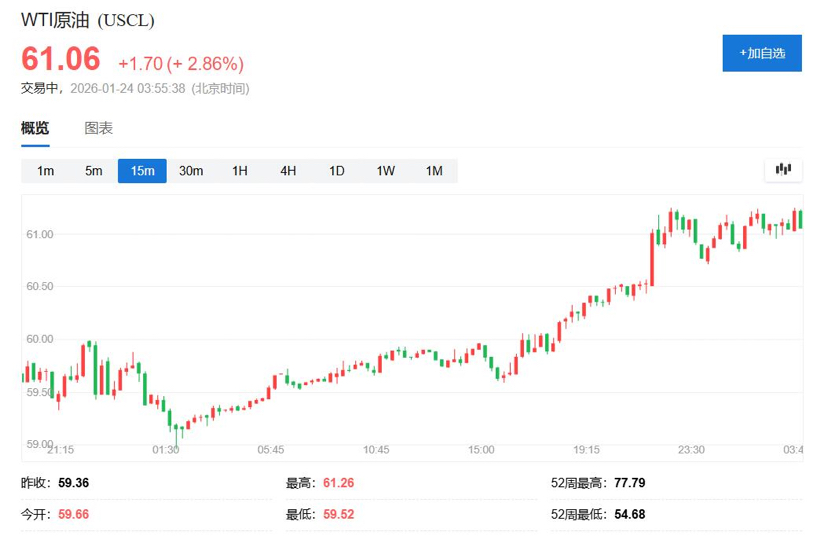
But more important than oil prices is the 'method' of this round of actions by the United States. This is not merely military deterrence but a combination of military + financial tactics: aircraft carrier strike groups moving forward while using 'restricting oil dollar settlements' as leverage to pressure Iraq. This signal is very clear— the dollar system itself is being used as a tool once again. As long as the market realizes this, risk appetite will automatically contract.
This change has already begun to transmit to the cryptocurrency market. BTC and ETH have not experienced a panic sell-off in the past 72 hours, but the trend has clearly entered a 'suppressed oscillation range.' From the derivatives data, the funding rate continues to decline, and leverage is actively cooling down; from the options side, the demand for short-term protective puts is rising, and implied volatility is on the rise. Funds have not withdrawn but are lowering aggression, waiting for direction confirmation.
This is precisely the typical state of the cryptocurrency market under geopolitical shock. It is neither passively eating risk premiums like gold nor directly reacting emotionally to policy statements like the U.S. stock market. Instead, it acts as a highly elastic pool of liquidity, first compressing leverage and then waiting for variables to land. In summary: the current BTC and ETH are not weak but are holding back.
It is worth noting that the 'contrast' between gold and cryptocurrency is becoming increasingly interesting. Gold prices are continuously reaching new highs amidst uncertainty, while BTC's 'digital gold' narrative is temporarily suppressed in oscillation. This is not a failure of logic but rather a difference in funding levels. Central banks and sovereign capital are using gold to hedge systemic risks, while cryptocurrency is still more of a battleground for market-oriented funds. As long as macro variables fluctuate, BTC and ETH are more likely to be used as rebalancing tools rather than the ultimate safe haven.
So you will see a very realistic picture: gold is reaching new highs, and cryptocurrency is washing out chips; precious metals are eating up certainty premiums, while BTC and ETH are preparing for a repricing in the next phase.
That said, the conclusion is quite straightforward— as long as the president is still Trump, the market cannot be quiet.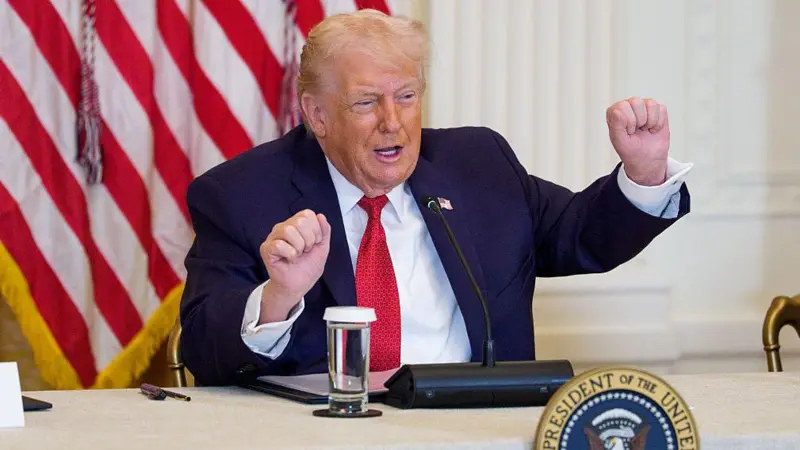
His statements can be extreme in the morning and retracted in the afternoon; policies can threaten or be paused. In this environment, the most comfortable position is never full leverage but rather a configuration that allows you to sleep well.
So this recent saying has become increasingly reasonable:
👉 If you have spare cash, buy precious metals 😏
👉 Witnessing new highs 📈
👉 Question: When is the gold price cheap?
👉 Answer: Yesterday 😁
And BTC and ETH?
They are not out of the game; it's just not their turn to exert strength yet. The real opportunity often appears at the moment when everyone thinks 'they can't do it for now.' #美国伊朗如何影响市场 $BTC

