After being in the Web3 circle for a long time, you gradually become aware of a somewhat harsh reality:
The stories are getting grander, but the actual income that can be secured is getting less and less.
AI, the metaverse, on-chain identity, decentralized social... there are almost new projects discussing these narratives every day. They all sound very advanced, but if you continue to ask one more question—where does the money come from, most projects will quickly revert to that old path: issuing tokens, creating hype, courting liquidity, and leaving the rest to market luck.
It is precisely because of this that more and more people are starting to become impatient.
Whether investors or ordinary users, they are actually asking a very simple question:
Can this project continue to make money?
KGeN's answer is not complicated, nor is it sexy, but it is direct enough:
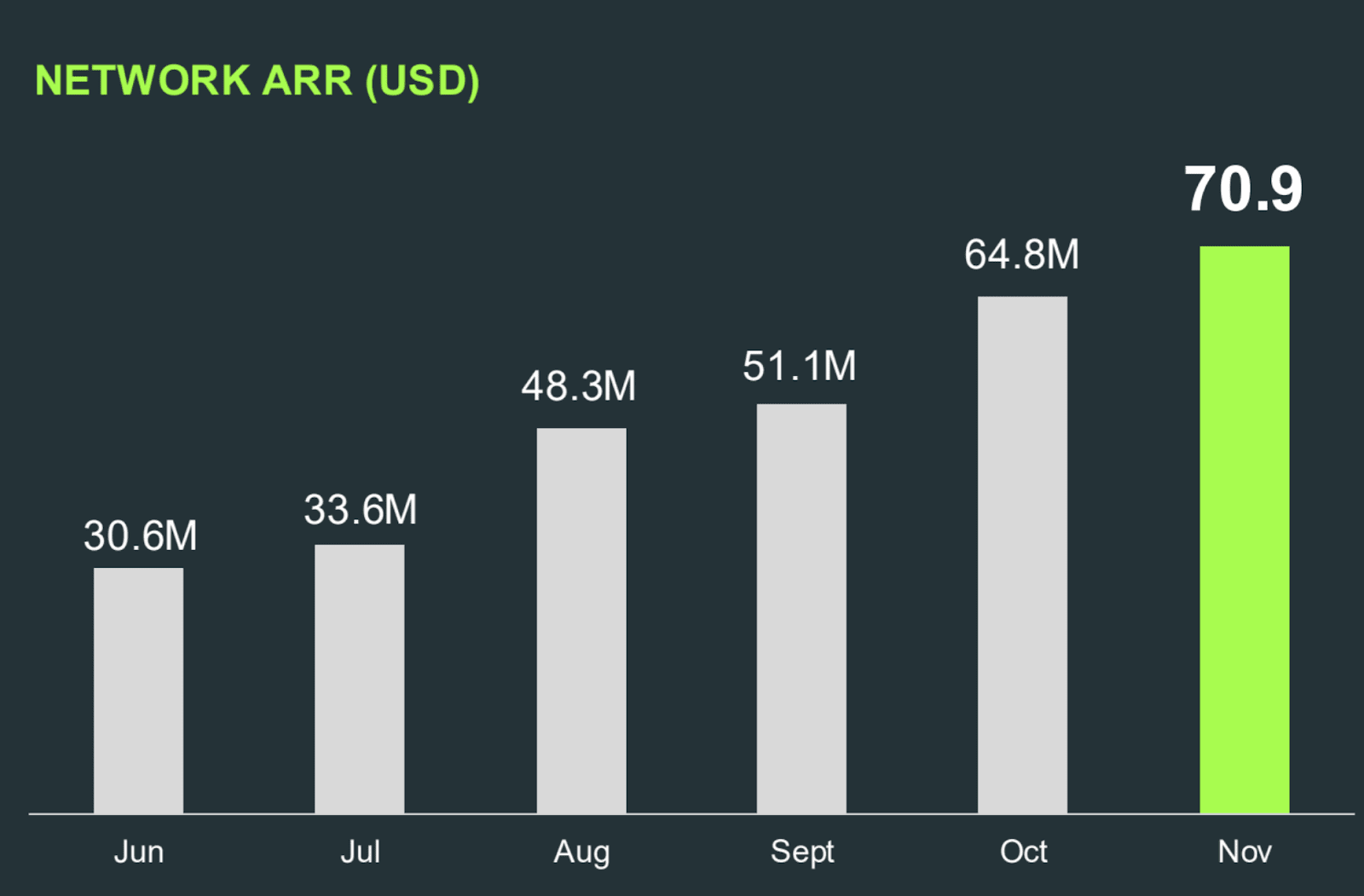
Annual Recurring Revenue (ARR) has exceeded $80 million.
This is not a prediction in the white paper, nor a promise in the roadmap, but a reality of cash flow that has already occurred.
Real users are the most scarce production resources.
If you had to choose one fatal issue for Web3 projects, it is definitely not technology or funding, but:
You have no idea if your users are real people.
Bot traffic, witch attacks, and fake interactions have long become the 'rules of the game' in the industry. Project parties spend money to buy users, but what they end up buying is worthless data bubbles; growth looks great, but conversion is a mess.
KGeN's entry point is surprisingly 'down-to-earth' and very effective:
First, solve the question of 'Are you a real person?'.
Through the VeriFi verification protocol and the POGE (Proof of Genuine Engagement) system, KGeN verifies not just 'you are human', but whether your actions, skills, and participation are genuine and trustworthy. So far, the platform has accumulated 48,900,000 genuinely verified users, not cold, lifeless wallet addresses, but real individuals who will participate, take action, and generate commercial value.
Once this premise is established, the subsequent business logic will naturally follow.

On one end is game user acquisition, and on the other end is AI data.
KGeN's revenue structure is not complicated, with the core coming from two directions.
Firstly, it is the genuine user acquisition (UA) for game manufacturers.
More than 200 game companies find users through KGeN, avoiding repeated payments for bot traffic. As long as users complete registration, retention, and payment, manufacturers are willing to continue paying—this is a very standard and very realistic business practice.
The second direction is key to truly 'breaking the circle' for KGeN: AI data services.
Currently, almost all AI companies face the same bottleneck:
Models require a large amount of high-quality, real, and verifiable human feedback data.
And KGeN happens to hold this type of resource.
The platform already has 1,000,000 verified expert users, distributed across more than 60 countries and covering over 20 languages, spanning multiple professional fields such as programming, healthcare, law, and design. These individuals are not makeshift labor, but real individuals with on-chain credibility and verifiable abilities.
They participate in RLHF, TTS, multimodal labeling, model evaluation, and other tasks; AI companies pay for the results, and KGeN provides infrastructure and distribution capabilities. This type of B2B business has a high unit price and stable repurchase, which is the core reason for the continuous rise of ARR.
Tokens are not narratives, but entry points for revenue.
Many problems of Web3 projects actually lie not in the business but in token design:
The money made by the business has nothing to do with the token.
KGeN is relatively restrained in this regard and leans more towards the logic of the real world.
$KGEN is the receiving end of protocol revenue—whether it’s game acquisition costs or AI data service income, it will ultimately translate into demand for tokens. Users earn profits through staking, and these profits are not generated by inflation, but are supported by real cash flow.
You may not agree with this model, but at least it is a closed loop.
Why take off from the Global South?
KGeN also has a common choice that is often overlooked: the market focus is not in North America or Europe, but in India, Southeast Asia, Latin America, and Africa.
The reason is actually very simple.
Users in these regions are young, numerous, and the gaming market is active; they are also more willing to participate in the 'do tasks - get rewards - exchange for real value' model. Through the KStore digital mall, users can exchange their earnings on the platform for gift cards or tangible goods, and this kind of incentive has a very real appeal in emerging markets.
A Web3 sample that is not sexy but is clear-headed.
KGeN is not the kind of project that gets people excited after hearing about it.
It does not rely on slogans, nor does it depend on emotions to drive up prices.
What it does is very simple:
Verify real people, distribute tasks, sell data, and charge service fees.
But it is precisely this lack of sexiness that makes it appear exceptionally clear-headed in the current Web3 environment.
Can Web3 make money?
KGeN's answer is: yes, but the premise is that you first solve real-world problems.
This may not be a revolution, but today, it has become a rare return to common sense.