1. The core differences between ASTER and BNB (why it can't become the next BNB)
1. Ecological positioning is vastly different: BNB is the core ecological infrastructure of Binance + BNB Chain, covering transaction gas, fee deductions, quarterly repurchases and burns, Launchpad new projects, staking wealth management, etc., permeating all aspects of the crypto ecosystem, making it a 'must-hold' hard currency. ASTER is currently only a Perp DEX token; although it mentions Aster Chain, it clearly will not develop its ecosystem in the short term, and the token lacks strong demand scenarios, heavily relying on CZ's traffic endorsement.
2. Value support is completely different: BNB relies on Binance's compliance licenses, stable cash flow, and a large staking ecosystem to withstand cycles, with a continuous deflationary destruction mechanism, ensuring long-term value stability. ASTER has no unique technological barriers; competitors like 'privacy trading' and 'high leverage' Hyperliquid have already implemented similar features; the so-called 'airdrop points' have no actual value support and are more like castles in the air.
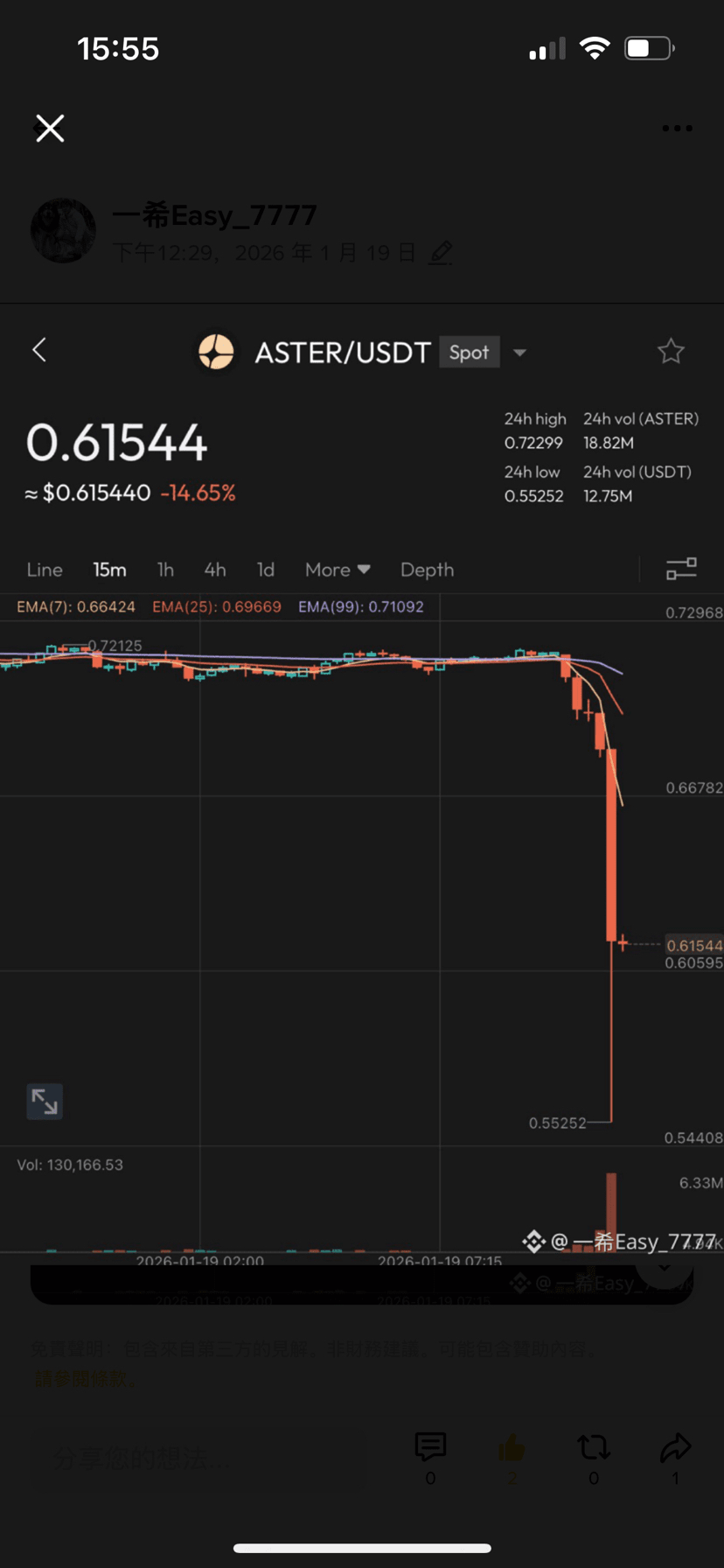
3. Token economy and market confidence: BNB circulation matches market value, buyback and destruction are transparent, and market consensus is strong. ASTER has a low circulation rate, early chips are concentrated, unlocking pressure is significant, whales liquidating exacerbate panic, CZ's holdings are down 37%, confidence collapses.
2. Is ASTER a wrongful killing or a return to value?
• Conclusion: Value returns, it's definitely not a wrongful killing. Its decline is an inevitable result of insufficient fundamentals: no unique application scenarios, relying on big players' traffic rather than ecological self-sufficiency; competing products are closely watching with no barriers, public chains do not empower in the short term; the token economy is weak, selling pressure is concentrated, and after speculation, it naturally returns to real value. Whales suffering huge losses and fleeing, CZ being trapped, are all market votes against 'speculation without fundamentals.'
• Although there are buybacks and destruction, and expectations for Aster Chain's launch, it is difficult to change the issue of hollowed-out value in the short term. The so-called 'wrongful killing' is merely self-comforting narrative of speculation.
3. Should we follow CZ's lead?
• It is not recommended for ordinary investors to buy the dip. Reasons are as follows:
1. Value fundamentals are unstable: there is no BNB-style ecological necessity, rebounds lack sustained momentum, and are likely to become 'rebound traps.'
2. Selling pressure risk remains: early unlocks, whales escaping, retail panic, prices are likely to drop further.
3. Big players' holdings ≠ safety net: CZ's holding cost is about $0.913, current price is $0.629, down 37%, even big players find it hard to go against the trend, their holdings only provide a starting point, not the confidence to weather the cycle.
• Those with extremely high risk appetite who want to gamble need to have strict risk control: small positions (no more than 5% of total funds), set a stop loss at $0.4, exit immediately if it breaks; pay attention to the progress of Aster Chain's ecology and token application landing, and stop loss in a timely manner if there are no substantial breakthroughs.
Important reminder: A whale has lost over 4 million dollars and left the market.
Is now the time to buy the dip? Or is it time to cut losses? Let's discuss!