Preface
If only using 300U, under strict risk control, disciplined execution, and a solid research foundation, how far can a trading system really go? This question stems from witnessing Zijun sharing his experience of growing from 200U to 16,000U while preparing a course. At that moment, I realized that rather than impressive results, what truly matters is verifying whether the method is replicable and whether the risks are genuinely manageable.
So, I decided to fully execute a position rollover plan with real capital of 300U as a practical test of my trading system—not to prove how skilled I am, but to see how far I could go under strict risk control, disciplined execution, and solid research logic.
At the beginning of December, while following other instructors' live broadcasts for learning, I was simultaneously sharing my trading records in the community. Coincidentally, we were also preparing to hold the yearly sharing activity, encouraging everyone to record and review their trading history. I took this margin trading plan as a more rigorous and public practical exercise.
Starting point of 300 U: an experiment in discipline and mindset.
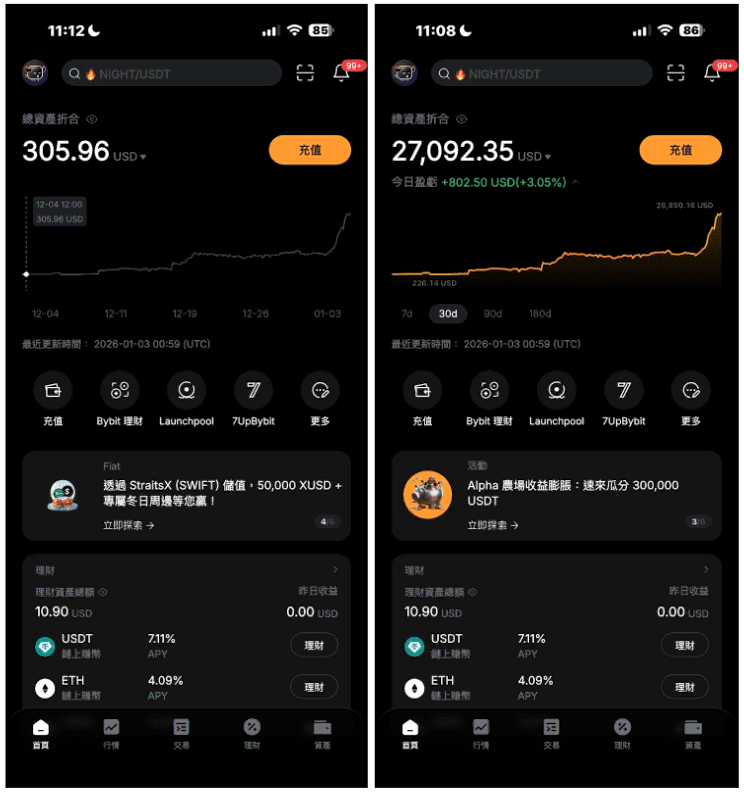
On 12/2, I deposited 300 USDT into Bybit, officially starting the initial capital for this margin trading plan.
This journey of turning 300 U into a margin trading process was not smooth sailing all the way. In the early stages, I spent a lot of time testing different price behaviors and strategy combinations, deliberately keeping the position within a very small range, with only one purpose—to confirm whether the market rhythm was consistent with my judgment, rather than rushing to increase profits. For me, controlling risk is always more important than pursuing performance before the direction has been validated.
Entering the mid-term, the strategy gradually stabilized, and I instead imposed stricter discipline requirements on myself to ensure that each trade is based on manageable risk, rather than relaxing risk control due to account growth.
Only by the last trade did I choose to increase my position. At that time, I combined news and on-chain data for judgment, observing that there were obvious signs of concentration in the chips, while the funding rate maintained positive values within the fluctuation range, indicating that the market's bullish structure still had continuity, which is when I entered to complete the last segment of the margin trading plan.
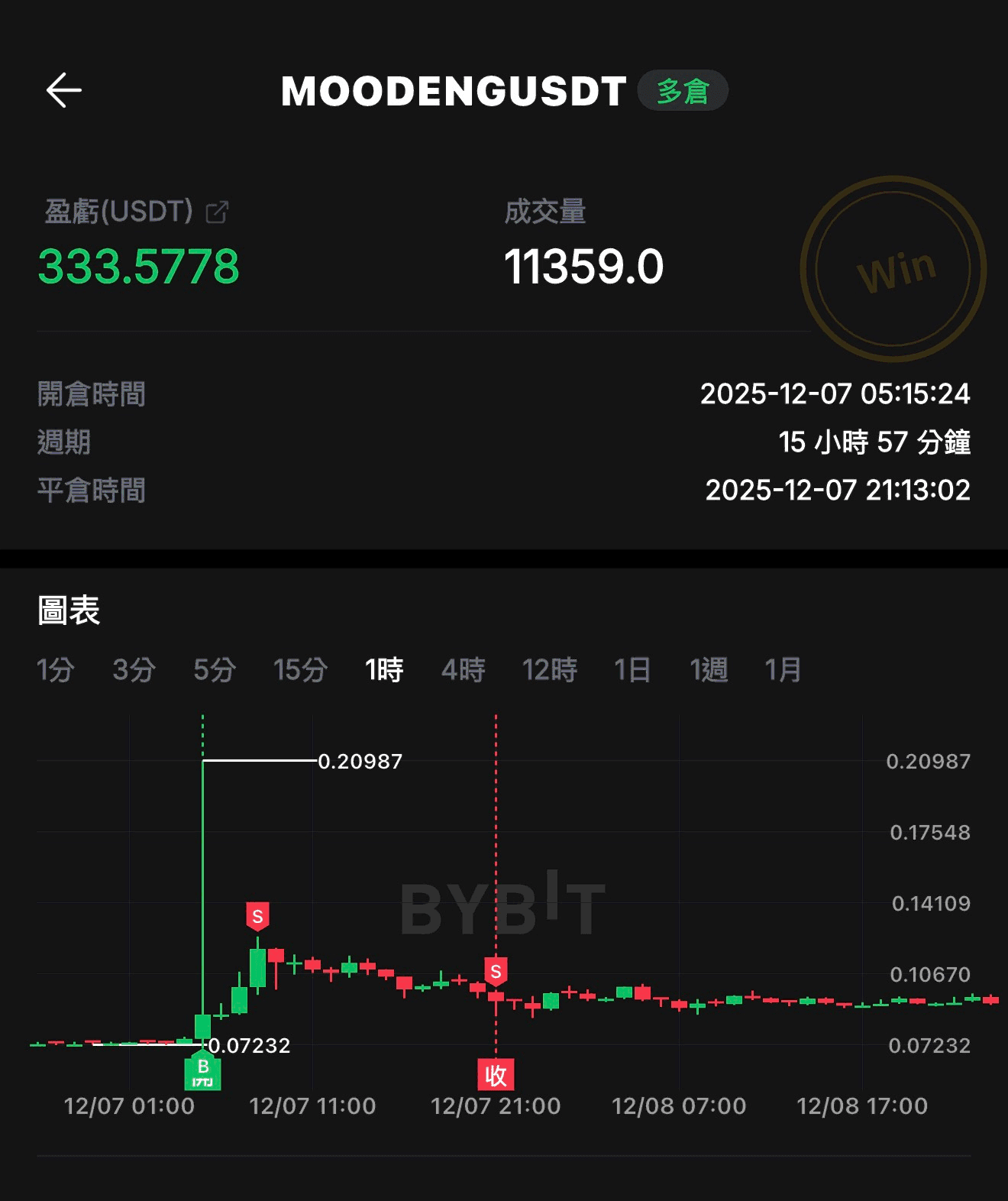
Throughout the process, I specifically selected three trades as examples: one was MOODENG, which brought about +1578.2% return; the second was BROCCOLI; and the last one was the final PEPE, which had a single profit of over ten thousand dollars.
MOODENG Review: How to achieve 15 times the returns?
Taking the MOODENG trade as an example, at that time I observed that the funding rate quickly turned to a significantly negative value, but open contracts (OI) continued to rise, indicating that the number of short positions entering the market was increasing, while the price did not weaken synchronously. This type of structure is a signal worth being cautious about for me as it indicates that once the price moves in the opposite direction, it could trigger a short squeeze.
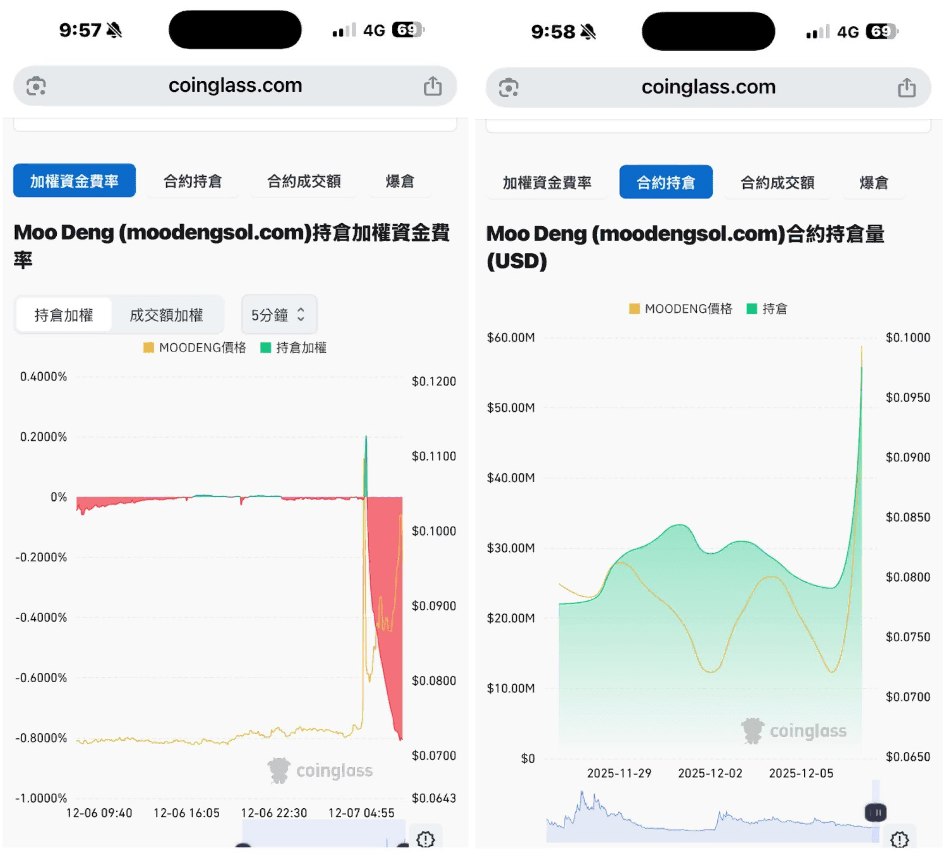
After confirming the risk control conditions, I chose to enter long based on this logic and was fortunate enough to hit that segment of the market. This type of trading does not just look at a single indicator, but rather draws my attention when there is 'discrepancy' among the data.
Related concepts can refer to this article: What are funding rates and open interest? A complete analysis of the four quadrants of cryptocurrency perpetual contract leverage structure.
BROCCOLI Review: How to seize the thousand U arbitrage opportunity?
Next, I want to share about BROCCOLI, this trade was only opened with 2x leverage, and it was not completed on Bybit; it can also be said to be a small episode in the later stage of this challenge, but I particularly want to highlight that I used it to profit from the funding cost price difference!
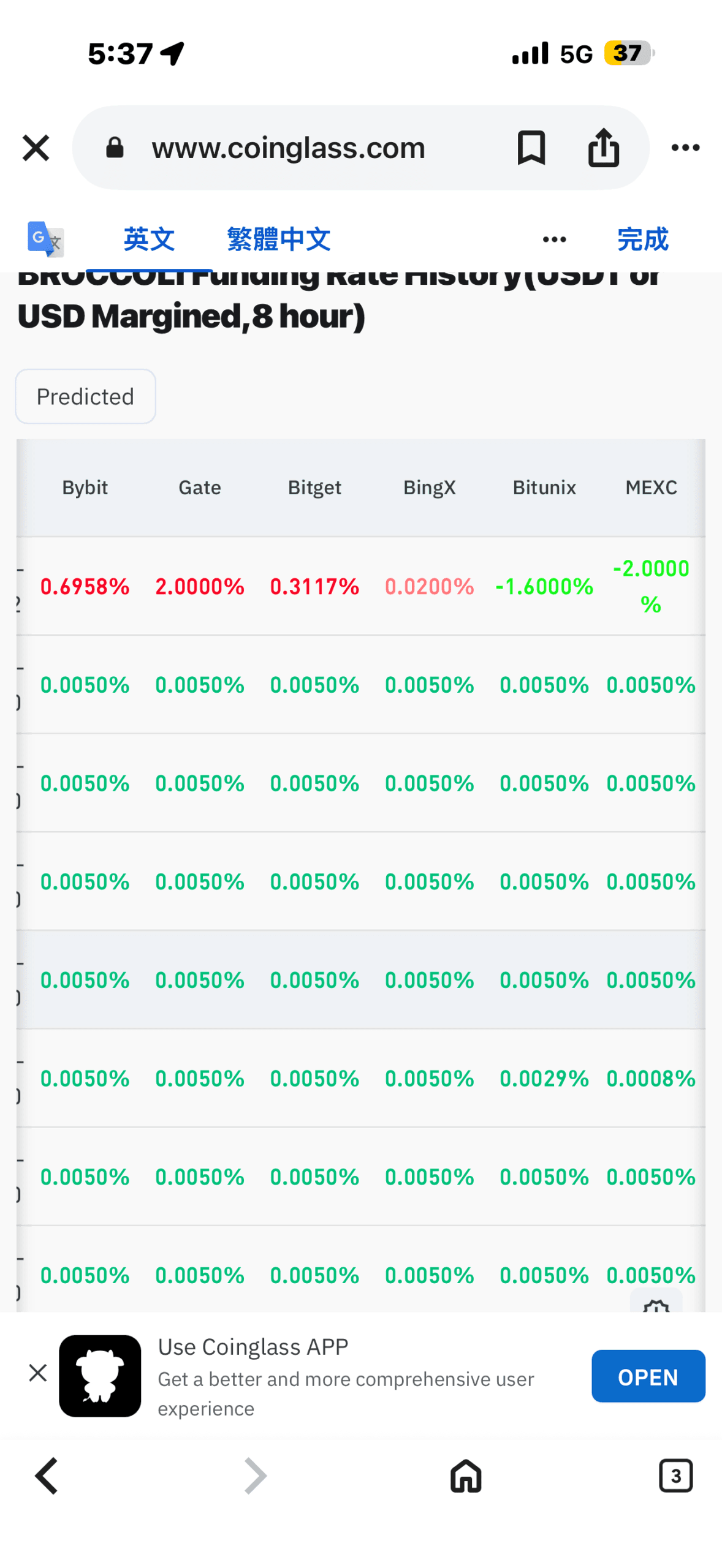
At this moment, I found a great opportunity for funding arbitrage, and because the funding settlement takes place once every hour, it means I have a chance to make a profit.
So, after confirming that there were no major issues comparing the candlestick charts, I immediately chose to short on the Gate exchange and long on MEXC, and fortunately, I made a profit of about a thousand U after deducting the opening fees from the price difference over a few hours.
PEPE Final Battle Review: How to seize the doubling opportunity.
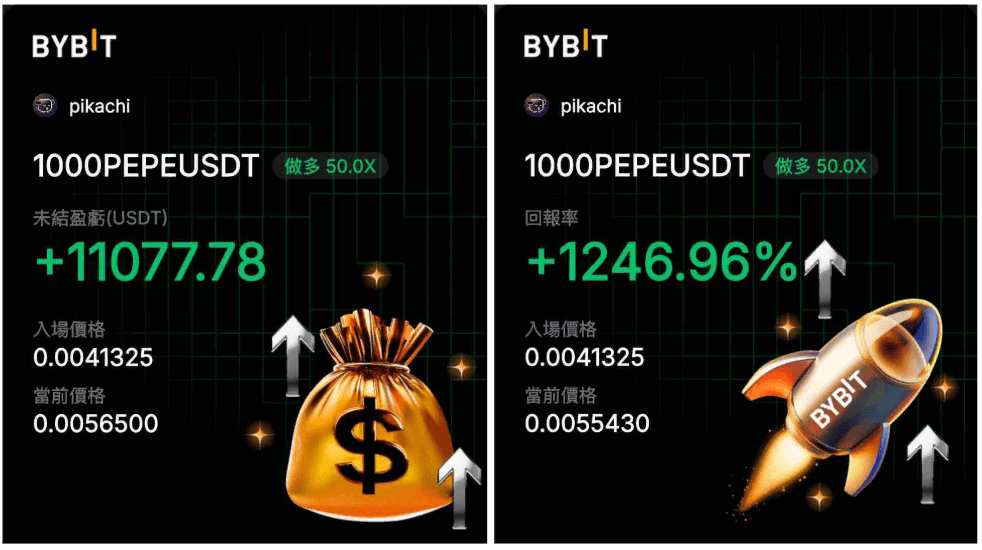
The last trade was PEPE, a long position of about 9M, with 50x leverage. At that time, I noticed that people on X started discussing PEPE, including a blogger who had been continuously monitoring and sharing before it was listed on exchanges. Their past observations often accompanied subsequent price fermentation, which made me start to study this target more carefully.
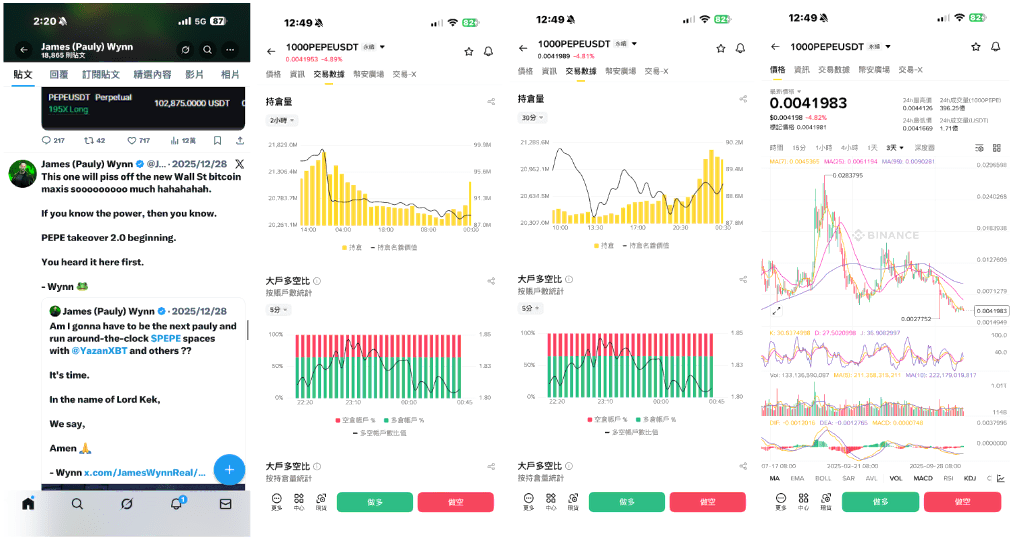
Upon further observation, I found that the concentration of market chips gradually increased, funding rates maintained positive values for several consecutive days, and open contracts also steadily rose. Coupled with the relatively low sentiment of other cryptocurrencies and the overall market at that time, this made the trade appear more attractive in terms of risk-reward ratio. Thus, I chose to build a position and exited according to the originally set profit-taking strategy, making a profit of over 10,000 U, ultimately reaching about 27,000 U on paper.
Such operational rhythm does not suit everyone, nor does it mean that it can be replicated every time. But for me, at least, it ensures that I amplify my judgment while being in a state of manageable risk. Performance cannot be replicated, but the underlying thinking methods and decision-making logic are what I hope to be understood and learned.
Below are records at the start of the challenge and at the end of the challenge.
In addition to contract trading, I also earned over 10,000 U on-chain!
John Smith is the first colleague I truly connected with in DA, who later also became a friend.
Once, Smith shared the River project in the community.
Based on my usual attention to his articles and research outputs on X, I already had a certain level of trust in the project he shared. But even so, I still confirmed some questions privately with him, and also conducted my basic due diligence. (If you want to discuss, you can directly @ the instructor in the community.)
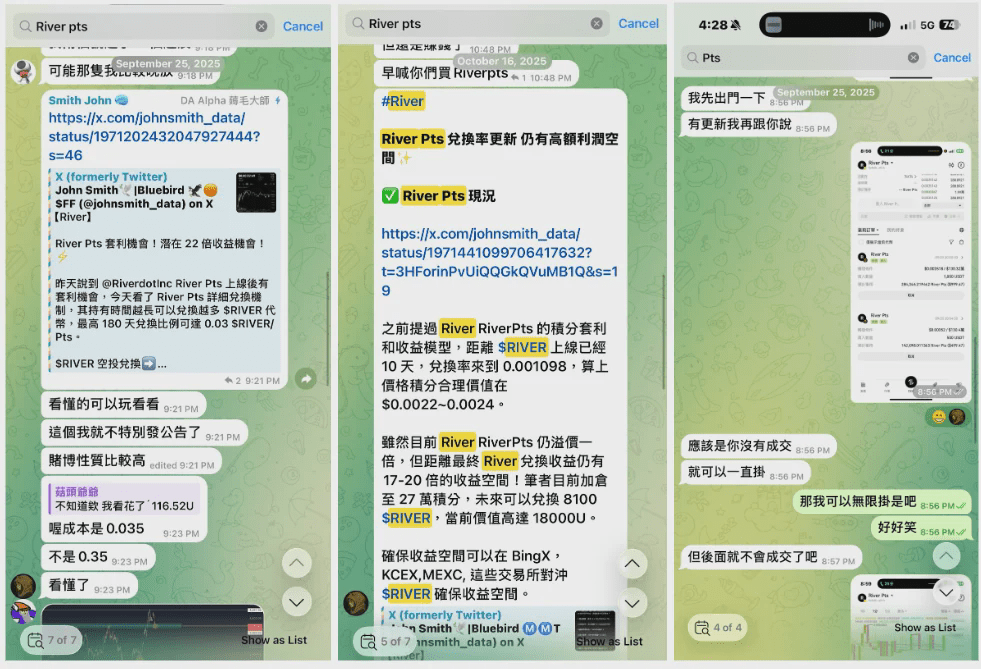
The first two screenshots above are from John Smith sharing in the group, and the last screenshot is from a private message discussion.
At that time, River was still in a relatively early stage. Looking back now, it can be considered very cheap, but at that time, it actually felt like a 'premium' price when I bought River pts.
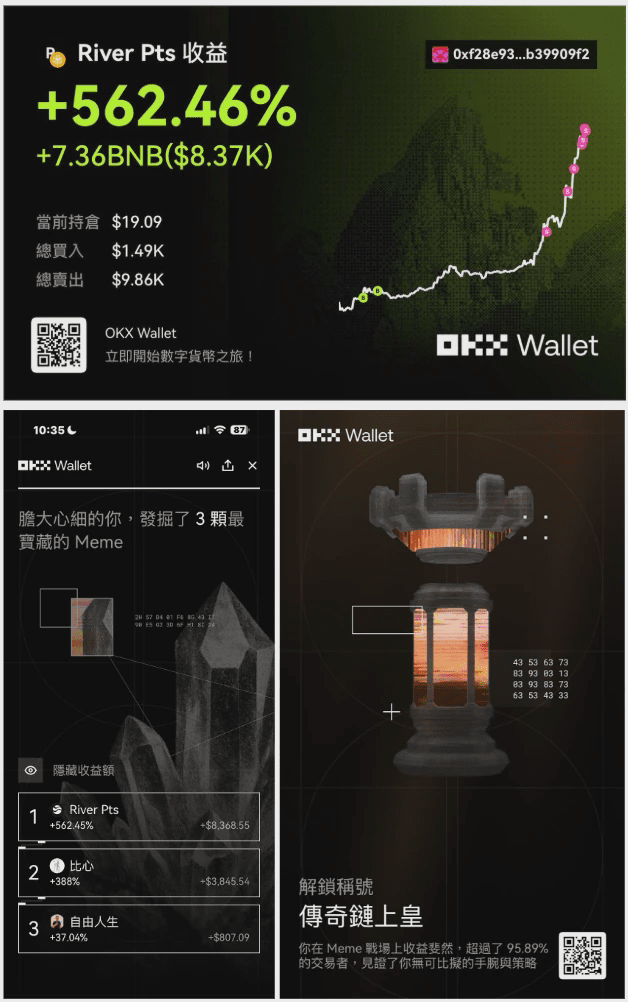
Subsequently, as the project progressed and the narrative spread, market sentiment was ignited, and the price quickly surged. I also cleared my position in batches within what I considered a reasonable range, which brought about close to 9,000 U in profits.
In fact, given the market atmosphere at that time, I could have chosen to hold my position and let the profits expand further. But I have never been accustomed to chasing so-called 'whales'. Before entering, I had already set an expected profit range of about 5-10 times.
When the price started to rise rapidly and community sentiment clearly shifted to FOMO, I chose to exit in batches according to the original plan instead. Looking back now, this decision turned out to be very fortunate, but for me, what is more important is that during the process, I simply executed the pre-established trading hypothesis rather than being led by market emotions on a whim.
Later, the 1-2 projects that I followed up on also had good results.
These profits have actually helped me a lot in my subsequent position opening and trading mindset—
Because trading with profits is the state with the least psychological pressure.
This time the result was correct, but if the narrative did not spread as expected, I was also ready to bear the consequences of incorrect judgment. I also remind everyone again: when investing and trading, please be sure to use spare money.
In addition to one's own perspective in contract trading, one can also refer to the opinions of those around them.
DA has live broadcasts almost every weekday at 8 PM.
At the beginning, I was actually participating in a 'job-like manner'—waiting for the live broadcast to end to draw prizes, noting down the winning list and colors before clocking out. Honestly, at first, I just hoped to finish quickly. 🤣
As a result, after listening a couple of times, I actually started to complete things ahead of time, wanting to listen to the live broadcast in full. The reason is simple: the content is truly valuable, and it is not the kind of live broadcast that only reports points; the instructor also clarifies 'why it is viewed this way and where the risks lie'.
What's even better is the strong interactivity; you throw in the cryptocurrency or market questions you are watching, and the instructor will directly explain using the current market structure, including how they evaluate, what situations will enter, what situations will be prioritized, etc. They won't just throw out a conclusion and tell you to follow it.
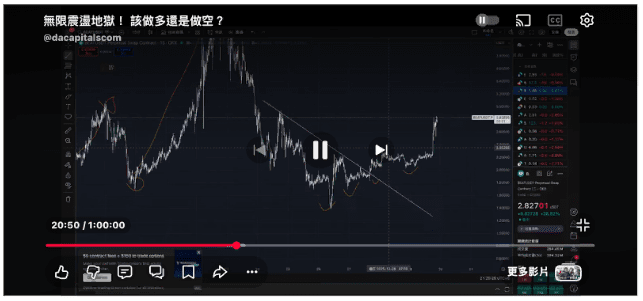
Sometimes the instructor's views differ from mine, which yields even more gains because I am forced to check back: Did I assume wrong? Or did I overlook the risks? This habit of 'validating once more before placing an order' has also successfully helped me gain several new perspectives during the process of opening orders in the challenge.
https://www.youtube.com/@dacapitalscom
From the live content, I developed my own research system.
In several live broadcasts, I heard instructors ADAM and NICK mention several indicators I was already paying attention to, including funding rates, open contracts (OI), and long-short ratios.
Since this is data I usually pay attention to, I spent more time studying the relationships between them, including liquidation maps, long and short chip distribution, etc. Later, I even organized and wrote an article about the interaction between funding rates and open contracts.
Sharing the mindset of contract trading.
Currently, my own trading process mainly revolves around four core aspects:
Whether the information source is reliable.
Changes in capital flow and data structure, such as funding rates and open contracts (OI).
Immediate price reaction to news.
Then it is the execution power of risk control and decision-making.
In actual trading, whether the news is true or false is often not the most critical factor. What truly affects price trends is how the market 'reacts' and 'the speed of the reaction'. So-called news trading is essentially about capturing the market's expectation gap and information mismatch. Rather than spending time debating the authenticity of the news, it is more efficient to directly observe whether funds and prices are synchronized and act according to the market's already given reactions.
And before all judgments, risk control must proceed first. In contract trading, taking profit is as important as stopping loss. Stop loss can be dynamically adjusted according to market conditions, but the premise is that the risk must be defined in advance, rather than constantly expanding the stop loss out of unwillingness or holding on. Before each order, one should think clearly about the best scenario and the worst scenario: is the potential reward of this order worth the risk? If the worst-case scenario really occurs, can I accept it in terms of capital and psychology?
Furthermore, when mistakes happen not just in a single trade but consecutively, it is even more important not to rush to recover losses. At this point, stopping to review the market environment, trading strategy, and execution discipline is crucial; if necessary, reduce the position or even pause trading. Whether one can make these adjustments before emotions intervene is often the key to staying in the market long-term and can also prevent falling into the trap of 'winning 99 times at 1 dollar, but losing 100 dollars in the last time'—thinking through the risks before entering is always more important than the entry itself.
Law of attraction? It’s actually the law of focus.
This may sound a bit mysterious, but I have deep insights from my experiences in the cryptocurrency circle and other jobs. During these weeks of the margin trading plan, I have been thinking repeatedly every day: how to turn 300 U into 30,000, or even 50,000 U.
When you focus on a clear goal for a long time, your brain unconsciously starts to operate, thinking about which links can still be optimized, which behaviors are actually redundant, and what risks are not worth taking. The so-called 'law of attraction' is more like the natural result of accumulated focus and action. This state applies not only to trading but also to any goals in life and work.
Summary.
In the DA community, in addition to discussing market trends and on-chain opportunities with everyone, you can also participate in various community activities and live broadcasts on weekday evenings. By accumulating rewards through drawing prizes, you can even exchange for round-trip tickets to Japan for two or a PS5, as well as tangible rewards like USDT.
But for me, what truly brings growth is not just participation itself, but rather integrating the perspectives shared by instructors, the ideas discussed in the community, with my own research and practical experience, forming a trading logic that belongs to myself and executing it long-term. This is like how I often go to Eslite to read books; the learning itself is the most long-term and stable investment.
Since November last year, I have continued to record what I see and learn on X. If you are interested, feel free to follow and communicate; if you also want to join the DA public discussion group to discuss market trends and ideas, I and other instructors will be waiting for you in the community.
I do not encourage anyone to replicate performance, but I highly encourage you to establish a trading logic that can help you survive in the long term.