
Most people think innovation in crypto arrives with noise. Big announcements, fast charts, louder promises. But the changes that matter most usually arrive quietly, almost awkwardly, before anyone knows how to talk about them properly. Plasma’s beta debut belongs to that category. Not because it launched a token or attracted headlines, but because it touched something far more fundamental: how money actually moves on-chain when speculation is removed from the equation.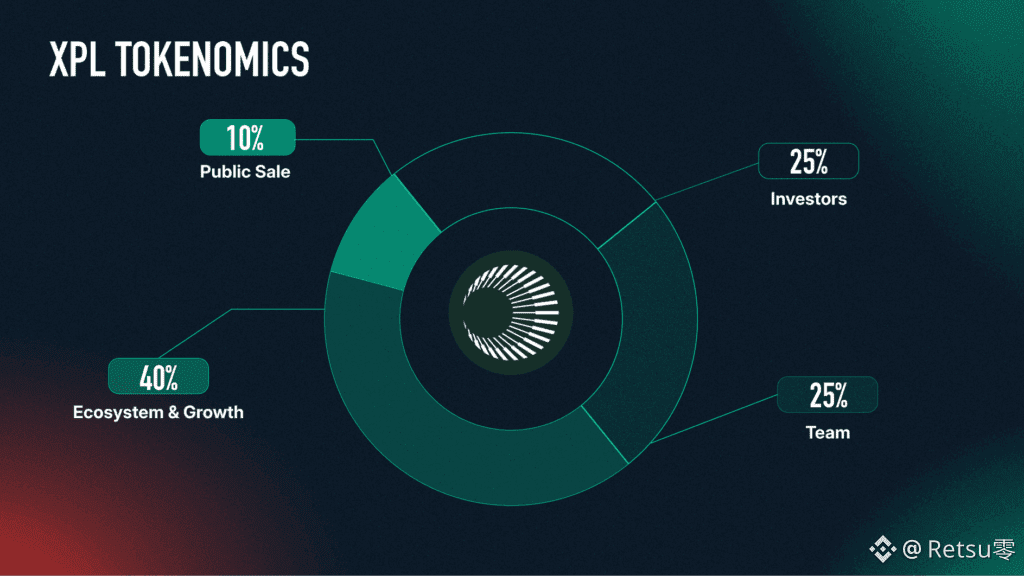
The moment Plasma went live with more than $2 billion in stablecoin liquidity, the signal was clear. This was not a testnet experiment or a concept demo. This was a working financial rail, designed around a single idea most blockchains avoid addressing directly: stablecoins are already money, and money should move without friction.
To understand why this matters, it helps to step back from crypto narratives and think like a user. Not a trader, not a yield farmer, but someone who just wants to move value. On most blockchains today, payments are an afterthought. You pay gas in a volatile asset, you worry about congestion, and you accept that fees fluctuate based on forces unrelated to your transaction. That model works for speculation. It breaks down completely for payments.
Plasma flips this logic. Stablecoins are not guests on the network, they are the network’s reason for existing. Zero-fee transfers are not a marketing feature, they are the foundation. When you send USDT on Plasma, you are not exposed to hidden costs, token juggling, or timing risk. The experience feels closer to moving data than moving capital, and that distinction matters more than most people realize.
The $2 billion liquidity figure is important, but not because it looks impressive on a dashboard. Liquidity at this scale changes behavior. It tells developers they can build without worrying about shallow markets. It tells payment platforms they can process volume without slippage. And it tells institutions that this is infrastructure, not a sandbox. Liquidity is trust, expressed in capital rather than words.
What makes Plasma’s beta especially interesting is how little it tries to impress. There is no attempt to reinvent smart contracts or chase every possible narrative. EVM compatibility exists for practicality, not ideology. Sub-second finality exists because payments do not tolerate delay. Even the native token, $XPL, feels positioned less as a speculative object and more as a coordination tool for the network’s long-term operation.
This restraint is rare in crypto, and it shows maturity. Plasma is not asking users to believe in a distant future. It is asking them to use something that already works.
From a market perspective, the timing is not accidental. Stablecoins are no longer a niche instrument. They are the backbone of on-chain liquidity, cross-border settlements, and emerging market payments. Yet the infrastructure supporting them remains fragmented and inefficient. Most stablecoin volume still moves on chains that were never designed for high-frequency, low-cost monetary flow. Plasma’s arrival highlights how outdated that assumption has become.
The early transaction data reinforces this point. Millions of transactions processed shortly after launch are not a sign of hype, they are a sign of fit. People use systems that remove friction. They abandon systems that add it. Payments are unforgiving in this regard.
For the Binance Square audience, the deeper question is not whether Plasma will succeed as a project, but whether its design philosophy will force others to adapt. Once users experience zero-fee stablecoin transfers at scale, it becomes difficult to justify anything else. Fee abstraction, gas sponsorship, and UX patchwork start to feel like temporary fixes rather than real solutions.
There are, of course, open questions. Beta phases exist for a reason. Governance, decentralization, and long-term validator incentives still need to prove themselves under stress. No serious system avoids acknowledging its unfinished edges. But Plasma’s strength lies in what it has chosen to solve first. It did not chase complexity. It solved movement.
What we are witnessing is not just the debut of a blockchain, but the emergence of a different mental model for on-chain money. One where stablecoins are treated as infrastructure, not products. One where payments are designed for normal people, not power users. And one where liquidity serves usage, not the other way around.
In hindsight, this moment may not be remembered for price action or launch day excitement. It may be remembered as the point where on-chain payments stopped trying to look like finance experiments and started behaving like utilities.
That shift is quiet. It is easy to miss. But it is exactly how real adoption begins.

