

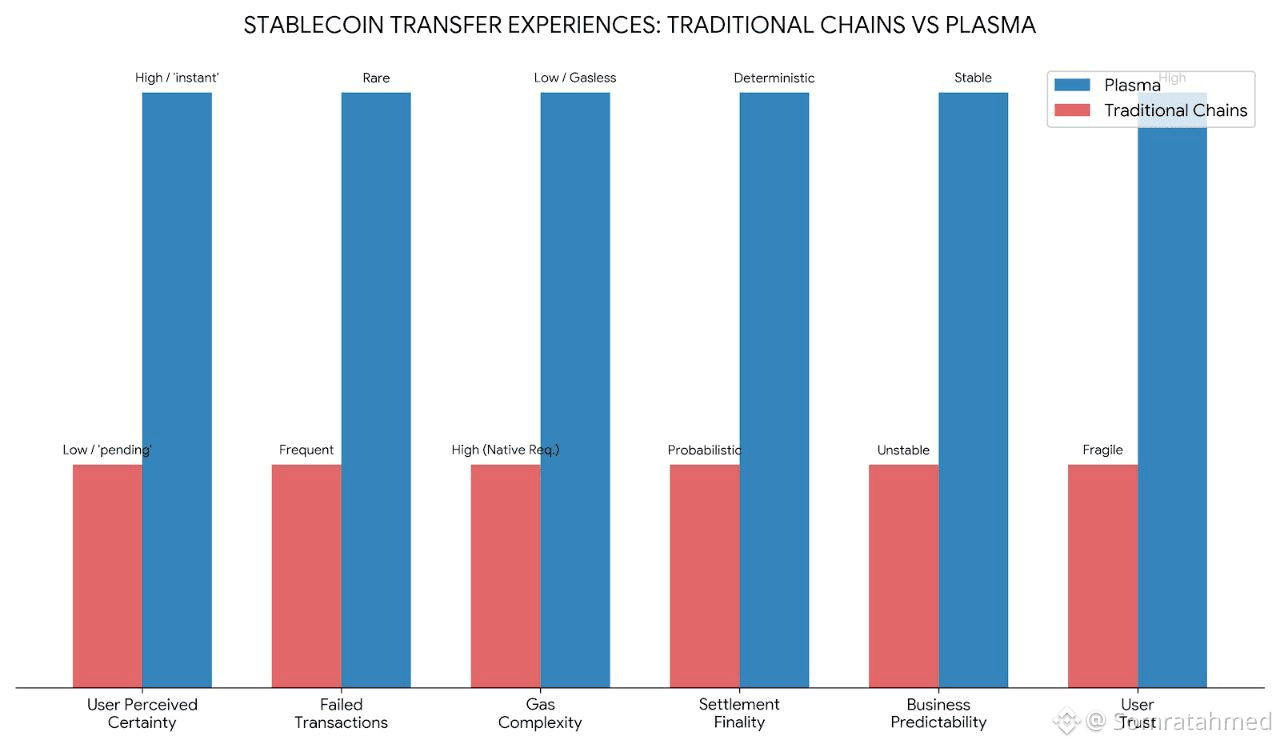


Stablecoins are supposed to be simple. You send money, it arrives, and both sides move on. But on most blockchains, stablecoin transfers are full of uncertainty. Transactions sit in mempools, fees change mid-flight, confirmations take time, and users refresh wallets hoping nothing breaks. The money is sent, but it’s not done. That gap between sending and certainty is where trust erodes.
Plasma is designed around closing that gap.
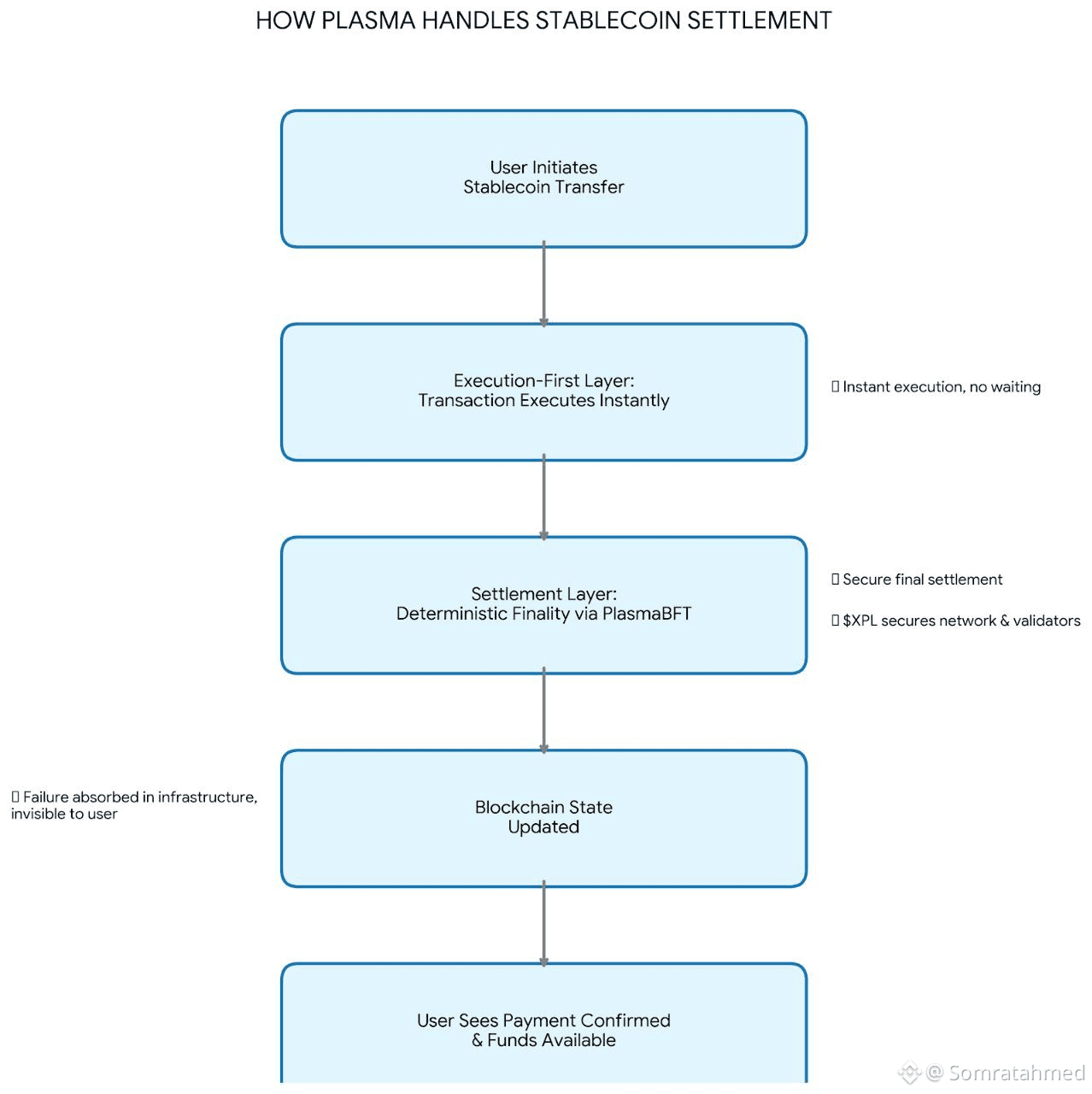
Instead of treating stablecoin transfers like generic transactions, Plasma treats them as settlement events that must feel final immediately. Its execution-first architecture allows USDT and other stablecoins to execute instantly, while settlement security happens in the background. The user experiences completion, not waiting. This sounds subtle, but for payments, it changes everything.
Why “Fast” Is Not the Same as “Certain”
Many chains advertise speed, but speed does not equal confidence. A payment that is fast but reversible, reorderable, or fee-sensitive still feels risky. Businesses care less about milliseconds and more about knowing that money is actually there.
Plasma’s architecture prioritizes certainty over raw throughput. Execution happens instantly, and finality is handled deterministically through PlasmaBFT and anchored security. The system is designed so that once a stablecoin transfer appears complete, it stays complete.
Stablecoin-First Design Changes Who Can Use Crypto
Most blockchains quietly assume users will hold a volatile gas token. Plasma rejects that assumption. With gasless transfers and stablecoin-paid fees, Plasma removes the psychological barrier that stops real users from sending money on-chain. People don’t want to manage assets just to move assets.
This design is not cosmetic. It’s a recognition that stablecoins are infrastructure, not products. Plasma is building around how money is actually used, not how crypto culture prefers it to be used.
Why This Matters Under Load
When networks are busy, stablecoin transfers are the first thing to break. Fees spike, confirmations slow, and users lose confidence. Plasma’s separation of execution and settlement means congestion does not break the user experience. Payments remain responsive, and the system absorbs stress instead of pushing it outward.
That is the difference between a payment network and a blockchain that happens to support payments.
The Quiet Role of XPL
XPL exists to make this reliability possible. It secures validators, funds execution infrastructure, and supports the hidden work that makes stablecoin transfers feel boring and predictable. Most users will never notice it, and that is the point. When money works, nobody asks how.
Why Plasma Feels Different
Plasma doesn’t market stablecoins as a feature. It treats them as a responsibility. That mindset is rare in crypto, and it shows in the architecture. The chain is optimized for the most common, most human action: sending money without drama.
If Plasma succeeds, users won’t say it’s fast. They’ll say it’s reliable. And in payments, that’s the only metric that matters.