
When Price Drops Fast, Psychology Matters More Than Charts
Sharp market drops grab attention immediately. Whether it’s Bitcoin pulling back toward key levels or broader market weakness, the first reaction is often emotional rather than analytical. Fear, urgency, and the need to “do something” take over quickly.
The reality is that most damage during crashes comes from reactions, not the drop itself.
Understanding the Nature of Market Crashes
Not every sharp move is the same. Some drops are driven by liquidation cascades, others by macro news, sentiment shifts, or simple overextension. What matters early is not predicting the bottom, but identifying whether the move is:
1. A short-term flush
2. A broader trend shift
3. Or a transition into consolidation
Treating every drop as the same leads to poor decisions.
The Most Common Mistake After a Crash
New and even experienced traders often rush into one of two extremes:
1. Panic selling into weakness
2. Aggressively buying without confirmation
Both come from the same place — discomfort with uncertainty.
Markets rarely reward urgency immediately after a crash.
What the Recovery Phase Usually Looks Like
Recovery is rarely instant. More often, markets move through stages:
high volatility and wide ranges
reduced momentum and choppy price action
1. Gradual stabilization
2. Renewed direction
Trying to trade aggressively during the early recovery phase often means trading noise instead of structure.
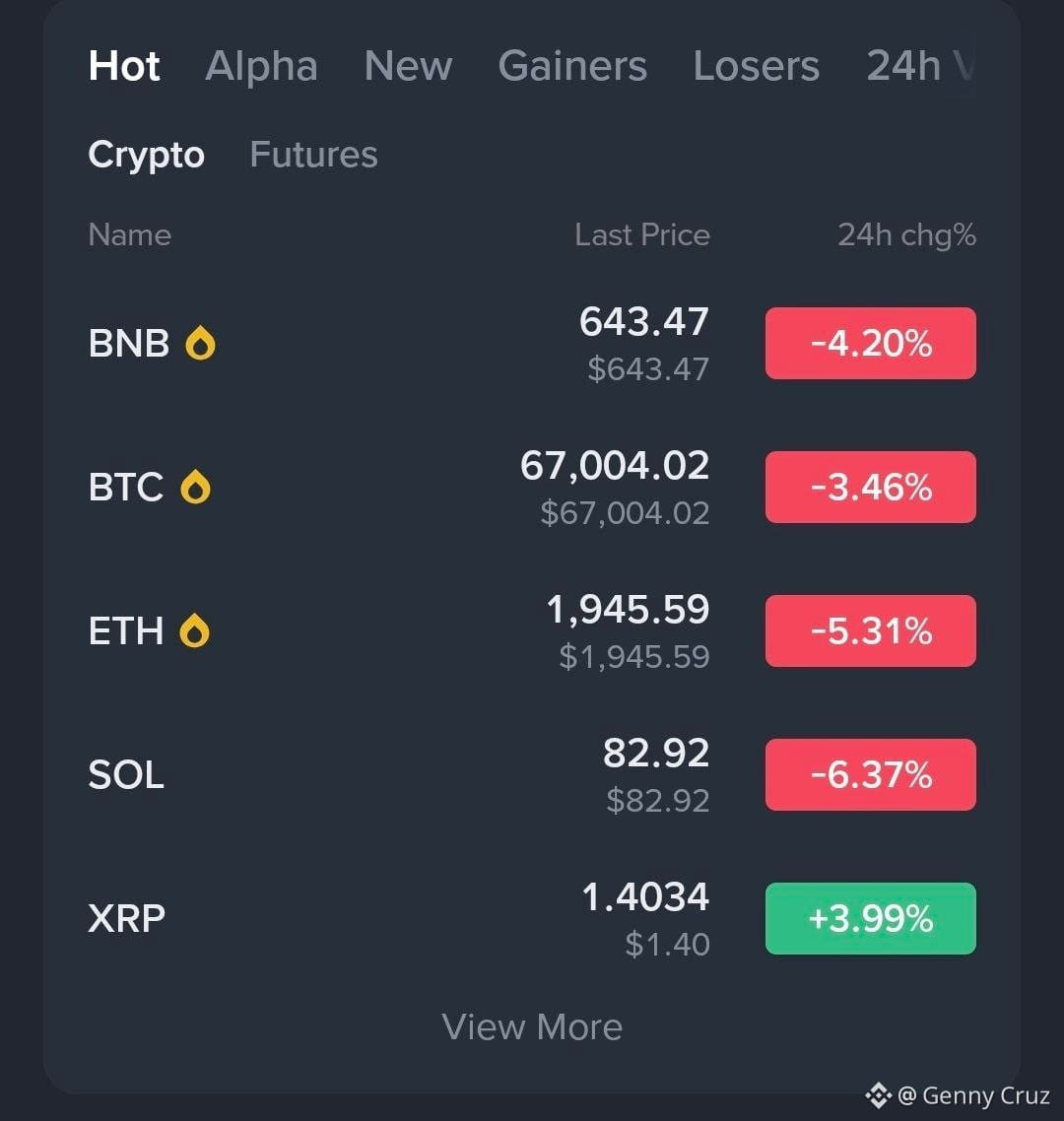
What Traders Can Focus On Instead
After a sharp drop, the priority should shift from profit to positioning.
Useful focus areas include:
1. Reducing position size
2. Reassessing risk exposure
3. Identifying key levels rather than chasing moves
4. Observing volume and market response, not predictions
Preserving capital during uncertainty is a form of progress.
Why Patience Becomes an Edge
Crashes compress time and emotions. Everyone sees the same candles, but not everyone responds the same way. Traders who slow down gain information others miss.
Waiting for confirmation is not weakness — it’s discipline.
The Role of Bitcoin in Market Recovery
Bitcoin often acts as the market’s reference point. How it behaves after a sharp drop — whether it stabilizes, reclaims levels, or continues to range — often sets the tone for broader sentiment.
Recovery is less about catching the lowest price and more about recognizing when selling pressure weakens.
Long-Term Perspective Still Matters
Sharp drops don’t erase long-term structure instantly. Markets move in cycles, and volatility is part of that process. Traders who survive multiple cycles learn that the goal is not to win every move, but to stay positioned for the ones that matter.
Final Thought
Crashes test discipline. Recovery rewards patience.
In moments like these, the best decision is often not the fastest one, but the most deliberate.
@Daniel Zou (DZ) 🔶 @CZ @Yi He @Richard Teng