
Most “decentralized storage” projects are basically glorified file cabinets on the blockchain. Upload your JPEG, PDF, video, whatever—IPFS-style, nodes copy it around, hope someone keeps it alive. It works okay for static stuff, but it’s dumb storage. No ownership logic, no automation, no smart contracts touching it meaningfully, no way to make the data *work* for apps or AI without a ton of extra glue code. It sits there. That’s it.
**Walrus** (@Walrus) is flipping the script hard. It’s not trying to be Filecoin 2.0 or Arweave with better marketing. It’s building a full programmable data layer on top of Sui as the control plane, where data becomes real on-chain objects you can own, trade, gate, automate, and interact with via smart contracts. The actual blobs live off-chain on nodes (erasure-coded with their Red Stuff tech), but every piece has an on-chain identity, metadata, economic rules, and proofs tied to it. That means developers can treat data like a first-class citizen in dApps, not some external bucket you pray doesn’t disappear.
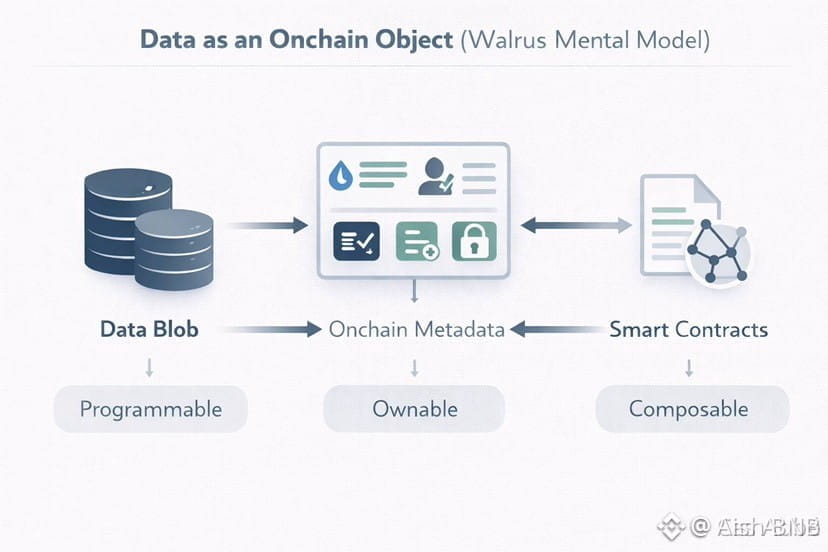
The tech under the hood is legitimately clever. Red Stuff uses fancy erasure coding to split files into slivers with smart redundancy—not full replication (which is insanely expensive and wasteful), but enough that the network can lose a bunch of nodes and still recover perfectly. And the killer part: self-healing only needs bandwidth for the lost chunks, not re-uploading the whole damn file. That’s a huge efficiency win in high-churn decentralized networks where nodes come and go constantly. No more “oh great, half the network left, now we’re rebuilding everything from scratch.”
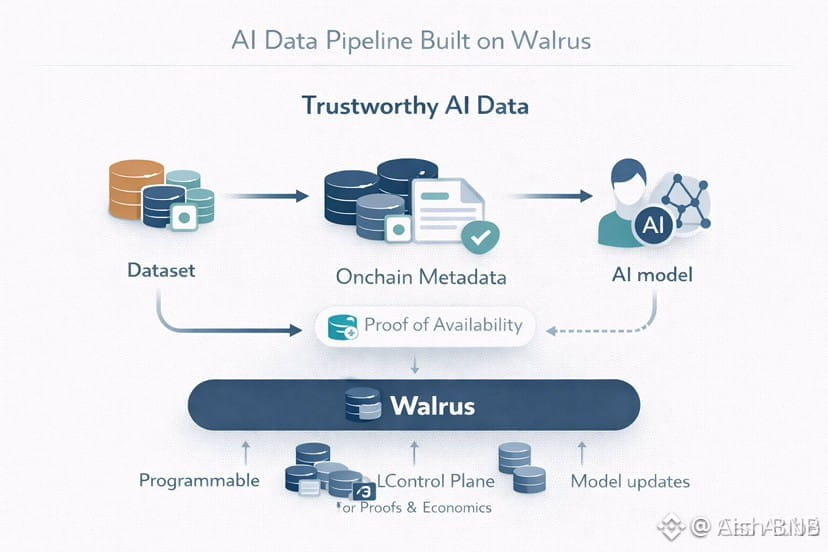
Then there’s the Incentivized Proofs of Availability (PoA). Nodes don’t just say “yep, I have it.” They have to periodically prove it on-chain with verifiable evidence, and the system rewards them (or slashes if they lie). It creates a public, auditable trail that any app or AI agent can check: “Is this dataset still here? Yes, certified.” That’s massive for trust—especially when data is being bought, sold, rented, or fed into models. No more “trust me bro” availability.
It’s chain-agnostic too. Sure, Sui handles the metadata, payments, and proofs, but devs on Ethereum, Solana, whatever can plug in via SDKs. One universal data layer across silos—share the same storage primitives without everyone rebuilding their own blob system. That’s how you get real interoperability, not just “bridge and pray.”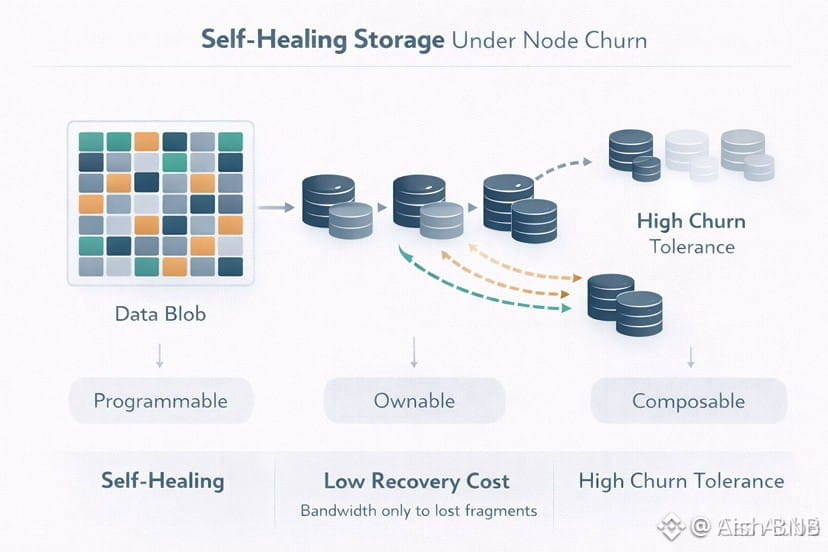
$WAL is the economic glue:
- Pay upfront in WAL for fixed-period storage → funds get streamed to nodes/stakers over time (no lump-sum rug risk).
- Stake WAL to secure the network and earn from storage fees.
- Some burn mechanics to create deflationary pressure as real usage grows.
- Community stuff like soulbound NFT airdrops, grants, incentives that reward builders and long-term holders, not just flippers.
Real use cases are starting to look way more interesting than “store my cat pics forever”:
- AI pipelines: Store datasets/models with provable availability → agents can trust the data for training/inference without wondering if it vanished.
- Decentralized media/NFT platforms: Metadata + content verifiable, censorship-resistant, programmable access (paywalls, tiers, rentals via contracts).
- Data markets: Fractional ownership, rental markets, access gates enforced on-chain.
- Multi-chain tools: Any chain can lean on Walrus for heavy blobs instead of rolling their own expensive storage.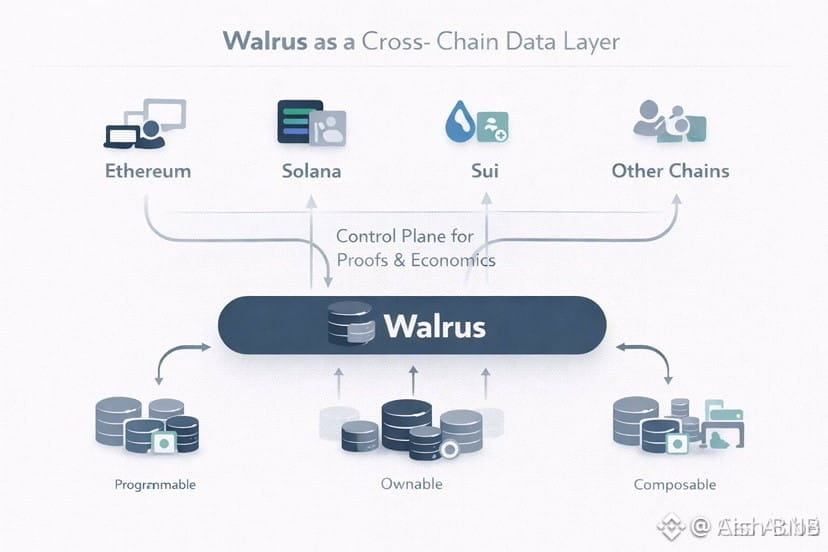
The big shift in thinking: storage stops being a boring back-end service and becomes programmable, ownable, economically active data. That unlocks whole new app categories—AI agents proving their training sources, fractional data ownership, unified cross-chain data markets, automated renewals/access rules.
They’ve got real momentum: $140M+ from top crypto VCs, actual dev interest (especially AI/media folks), integrations tackling latency/retrieval speed. Market’s tired of pure hype; utility that quietly works is winning.
Walrus isn’t another file host. It’s positioning to be the programmable data primitive Web3 and AI need—verifiable, interoperable, economically sound. If it executes, this could be one of those infra layers people look back on in 5 years and go “yeah, that was the one that made data actually useful on-chain.”
Pretty damn exciting if you’re into the boring-but-revolutionary stuff.
#Walrus @Walrus 🦭 $WAL


