
The world of crypto keeps changing and new projects come along all the time. Plasma is one of those projects that caught my attention because it tries to solve real problems that many blockchains still face. Its goal is to make money transfers faster cheaper and easier while allowing data to move across blockchains without issues. In this article I want to explain what Plasma is how it works and what its token XPL does in the simplest way I can
What Plasma Is
At first I thought Plasma was related to the old Ethereum Plasma scaling concept but it is something completely different. Plasma is an independent layer one blockchain designed to store data and move value across chains safely. It is built to handle stablecoins like USDT and other whitelisted assets such as BTC and focus on payments at scale
Plasma uses a proof of stake system to keep data safe and reward validators who run nodes. The network allows developers to store files that can be accessed across different chains. This means apps can save information on Plasma and retrieve it later from another blockchain without duplication or siloed storage
How Plasma Works
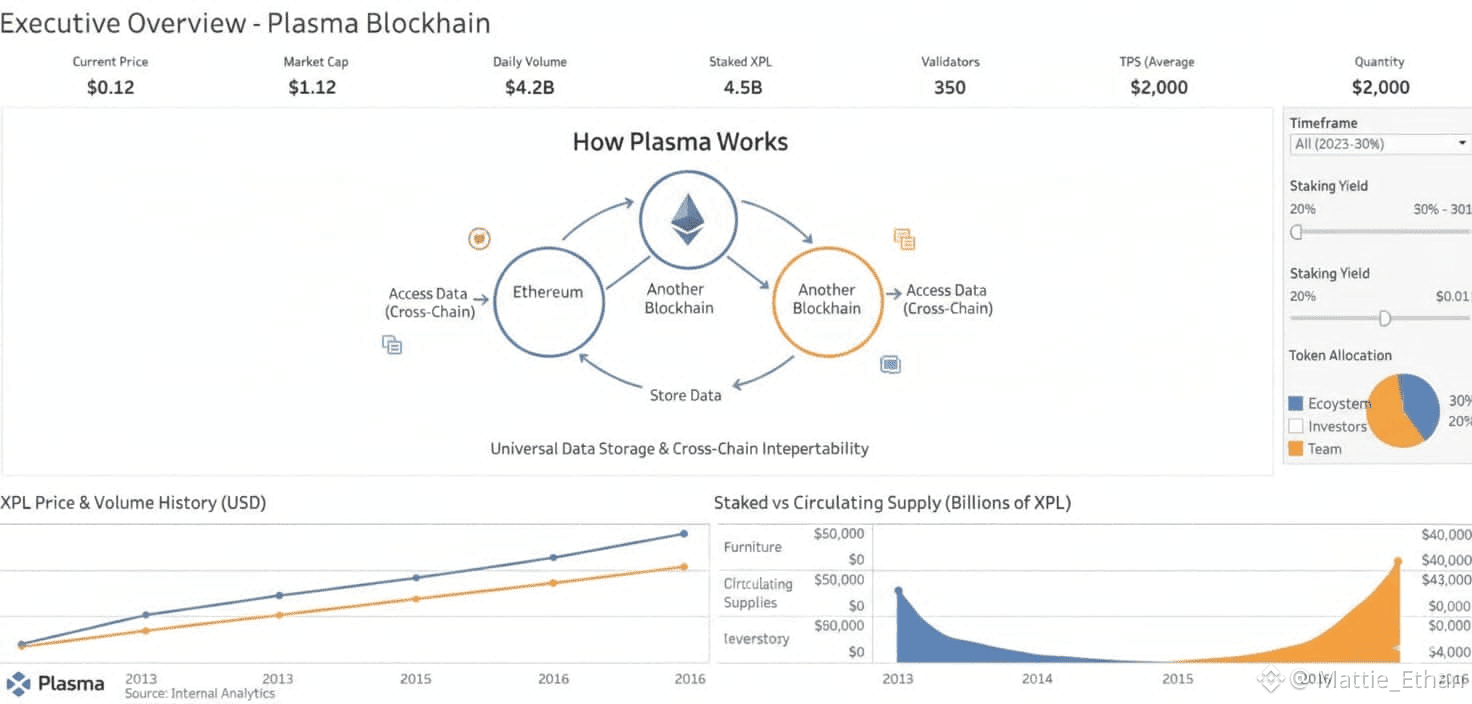
There are three main features that make Plasma stand out. First it can store universal data across chains securely. Validators run nodes and store files and they are compensated for keeping this data safe. Second it uses proof of spacetime meaning validators must show cryptographic proof that they still hold the information they were asked to keep. This creates a public record that anyone can check to ensure integrity. Third Plasma is interoperable meaning data can move across chains easily. For example an Ethereum app could store user profiles on Plasma and access them later on a different blockchain
Why Plasma Is Important
Many decentralized applications struggle with storing large volumes of data on chain because fees are high. Off chain solutions exist but moving data between chains can become complicated. Plasma addresses both problems by lowering costs and enabling cross chain data use. This can make building apps simpler reduce redundancy and allow developers to focus on building real world solutions.
Understanding XPL Token
The token that powers Plasma is XPL. The total supply is ten billion but only a small portion is in circulation in the early years. The rest is locked or set aside for future use. For the first three years there is no inflation so the circulating supply remains stable. After that inflation starts slowly and eventually reaches a low yearly rate
New tokens are given to validators who store data and secure the network. Plasma also burns part of the transaction fees reducing supply over time and balancing inflation
Token Allocation
XPL is distributed in several groups. Some goes to early investors and strategic partners who helped launch the network. A small portion is reserved for the core team with lock ups to ensure long term alignment. Other tokens are for ecosystem growth grants and developer incentives to fund projects and future partnerships. These lock ups reduce immediate selling pressure but investors need to be aware of future unlocks as supply rises
Circulation and Supply
At launch a small percentage of XPL is circulating while most is locked or reserved. This reduces immediate dilution but future inflation and token unlocks can increase supply. Investors should see XPL as a long term asset
Network Economics
Plasma relies on proof of stake validators store data process requests and stake XPL to run nodes. They are rewarded with new tokens and a share of fees. Part of the fees is burned to control supply. The system ensures security rewards participation and funds a community treasury to grow the ecosystem
Becoming a validator depends on hardware bandwidth and staking requirements which also affects decentralization. Delegation allows smaller holders to participate by giving their stake to a validator and sharing rewards
Investors and Supporters
Plasma has backing from well known crypto investment funds. These supporters bring money credibility and industry contacts. Strong investors can help the network grow faster overcome initial challenges and gain trust from exchanges wallets and developers.
Market Context
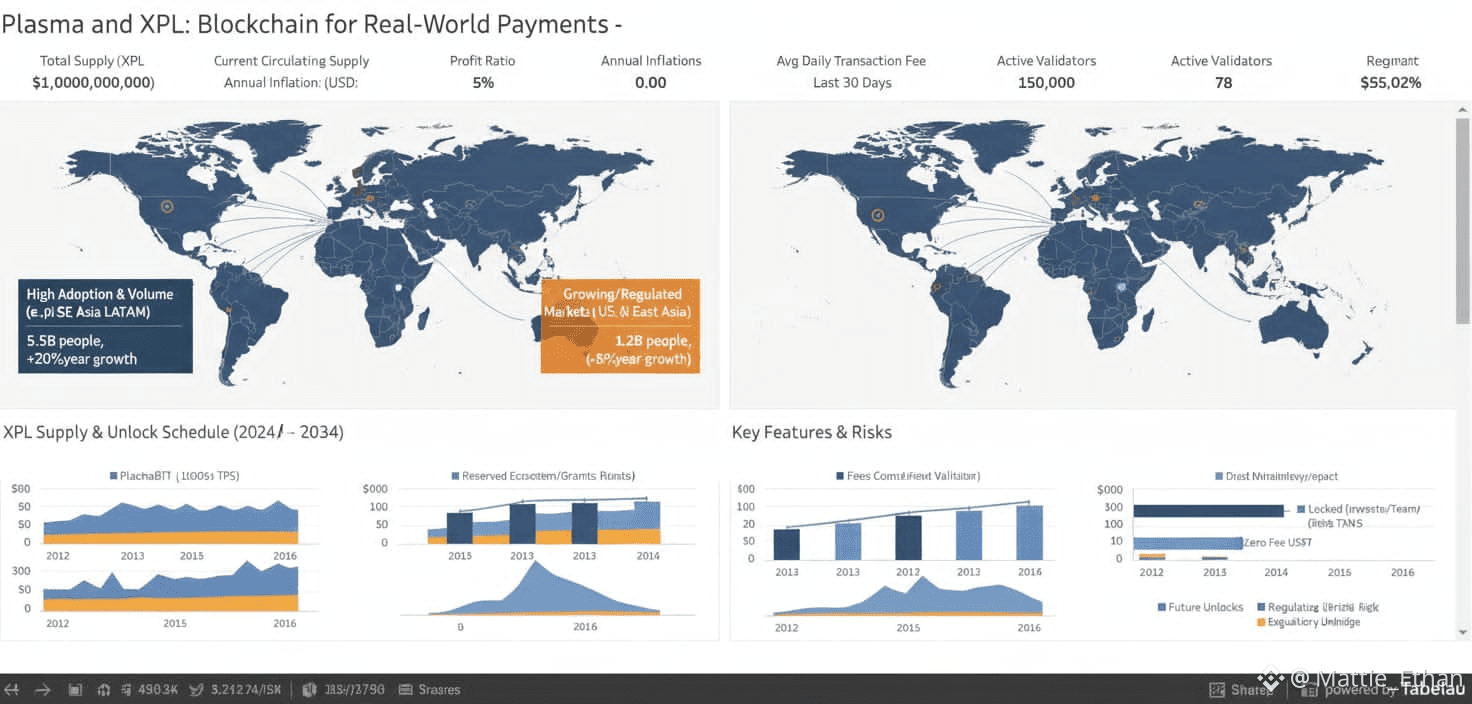
Crypto adoption is increasing globally millions of people now use digital assets and adoption rates are higher than traditional payment systems especially in emerging markets. This creates demand for decentralized storage and cross chain payments. Networks like Plasma can benefit as apps move to blockchain and need secure cheap ways to store and retrieve data
Risks and Considerations
There are risks to consider. Token supply may increase in the long run due to unlocks and inflation. There is competition from other decentralized storage networks and centralized cloud services. Execution risk exists the network must scale safely and reliably. Regulatory uncertainty and market volatility apply to all crypto assets
Conclusion
Plasma is a blockchain focused on real problems in crypto fast cheap stablecoin payments and cross chain data storage. Its token XPL is designed with clear economics staking burning and long term incentives. The network only succeeds if adopted by developers and users proving its vision in practice. It is a project to watch for anyone interested in blockchain infrastructure payments and ecosystem growth. Plasma combines speed security and interoperability in a way that can simplify app building and make cross chain finance more practical


