

When I first looked at Vanar Chain, what stood out wasn’t speed, fees, or any headline metric. It was something quieter. Vanar treats blockspace less like raw inventory and more like a designed surface, almost the way a platform thinks about bandwidth or a game engine thinks about frame time. That framing sounds subtle, but it changes nearly every downstream decision.
Most chains still behave as if blockspace is oil. Pump it out cheaply, sell it to whoever shows up, and let the market sort out the mess. Fees spike when demand arrives, users complain, and developers build workarounds. We have all seen this movie. Vanar seems to be working from a different assumption: blockspace is not just scarce, it is experiential. How it behaves under load, how predictable it feels, how it degrades when stressed, all of that becomes part of the product.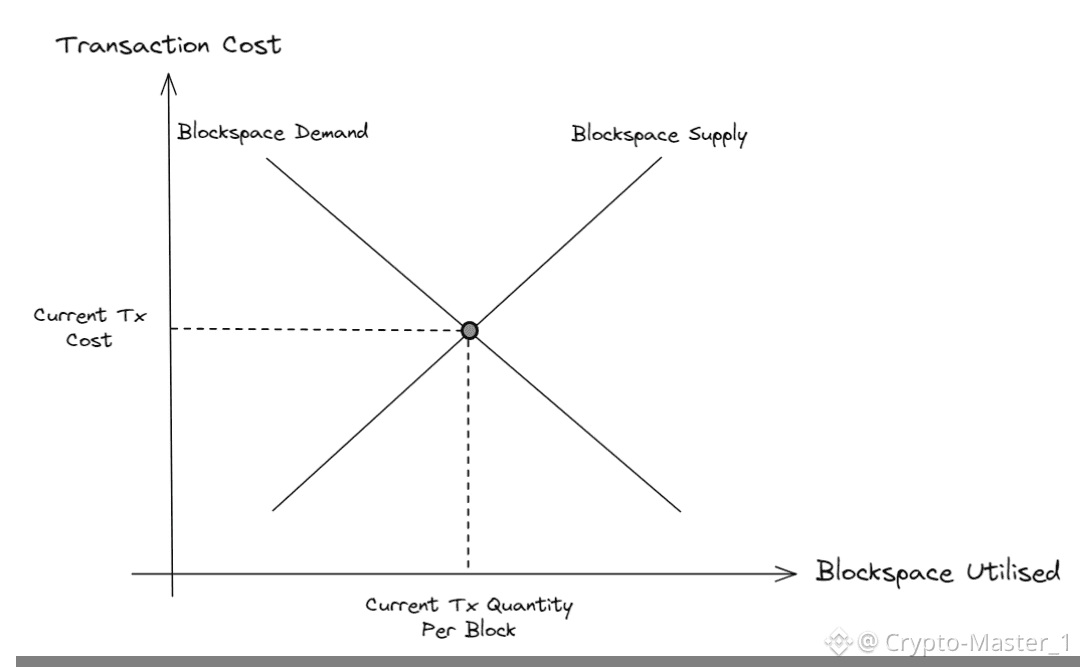
On the surface, this shows up in how Vanar targets specific workloads. Media-heavy applications, real-time interactions, agent-driven systems. These are not transactions you can delay or reorder without breaking something. A live digital experience that stutters for two seconds is not “slightly worse.” It is broken. Underneath, that means the chain is optimized around consistency rather than raw peak throughput. Early performance figures shared by the team point to stable sub-second finality under normal conditions, not as a bragging point but as a baseline. The number matters because it tells developers what to expect every time, not only when the network is quiet.
That predictability creates another effect. Developers start designing around the chain instead of defending against it. If fees are stable within a narrow range, you can price an in-app action at a few cents without building elaborate fallback logic. Vanar’s average transaction costs staying in the low cent range during recent testing periods matters less as a number and more as a signal. It suggests the team is optimizing for fee texture rather than fee minimization. Cheap but erratic is not the same as slightly higher but steady.
Understanding that helps explain why Vanar does not chase generalized DeFi volume. DeFi loves commodity blockspace. Arbitrage bots do not care if fees spike as long as they can outbid others. But real-time applications do care. An AI agent coordinating actions across users cannot operate if execution timing floats unpredictably. When Vanar talks about supporting agent-driven economies, this is what they mean in practice. The chain becomes a predictable substrate for machines, not a chaotic auction house.
There is risk in this approach. Designing blockspace as a product means saying no. You cannot serve every use case equally well. If speculative trading suddenly floods the network, either you throttle it or you let it distort the experience for everyone else. Vanar’s bet appears to be that long-term value comes from protecting the experience, even if it means leaving some short-term activity on the table. That remains to be seen. Chains that restrict usage often face backlash when demand spikes.
Meanwhile, the broader market context makes this bet more interesting. As of early 2026, we are seeing a slowdown in pure L1 narrative cycles. Capital is more cautious. Builders are asking different questions. Instead of “how fast is it,” they are asking “can I rely on it.” Vanar’s positioning fits that shift. Its ecosystem growth has been measured rather than explosive, with a handful of applications testing sustained usage instead of a thousand copy-paste contracts chasing incentives. The smaller number matters because it hints at depth over breadth.
Underneath all of this is a philosophical shift about value capture. Commodity blockspace trends toward a race to the bottom. If every chain sells the same product, price becomes the only differentiator. Productized blockspace allows for differentiation based on behavior. Predictability, latency guarantees, execution ordering. These are things users can feel even if they never articulate them. Over time, that feeling becomes loyalty.
Critics will say this is just branding. That any chain can claim to design for specific workloads while still operating like everyone else under pressure. That criticism is fair. The real test comes when Vanar is stressed. When usage grows by an order of magnitude, does the experience degrade gracefully or collapse into fee chaos. Early signs suggest the team is planning for this, but planning and execution are different things.
What struck me most is how this approach mirrors trends outside crypto. Cloud providers learned long ago that raw compute is not enough. What sells is reliability, predictable billing, and performance profiles tailored to workloads. Blockchains are slowly relearning the same lesson. Vanar is simply leaning into it earlier than most.
If this holds, the implication is bigger than one chain. It suggests that the next phase of infrastructure competition will not be about who offers the cheapest blockspace, but who offers the most usable blockspace. That is a harder problem. It requires saying no, understanding users deeply, and accepting slower growth in exchange for steadier foundations.
The sharp takeaway is this: blockspace that feels intentional is harder to build, but easier to trust. And in a market tired of noise, trust is starting to look like the real scarce resource.
