


The market already decided what crypto is used for. It is not governance experiments. It is not ideology. It is dollars moving fast, cheaply, and predictably. Stablecoins won years ago. Most chains still pretend they did not.
Plasma does not pretend.
Plasma is built around one assumption that many Layer 1s still refuse to accept: stablecoins are the product, not a feature. Everything else is secondary.
That single assumption explains why Plasma’s progress looks boring on the surface and extremely dangerous underneath.
Chain Abstraction Without The Buzzwords
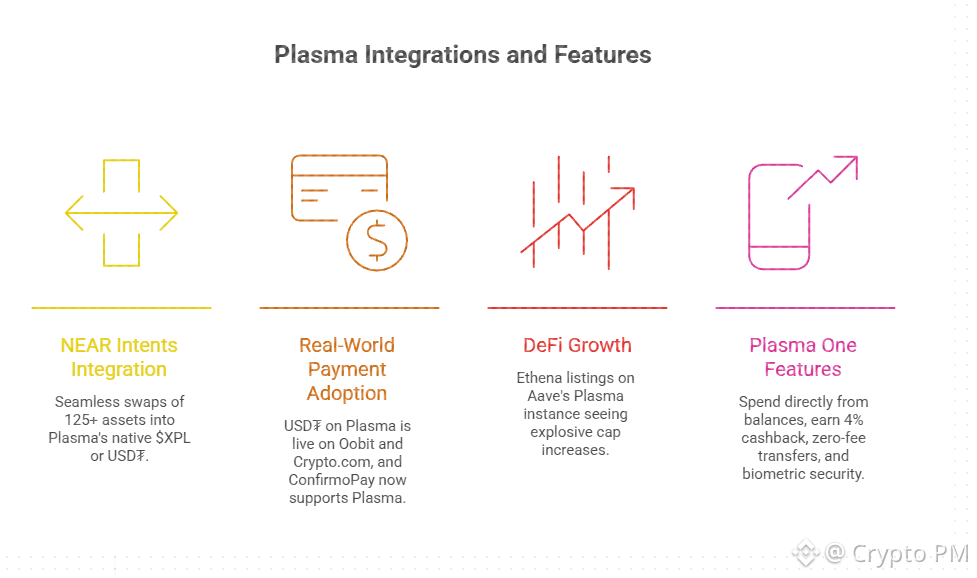
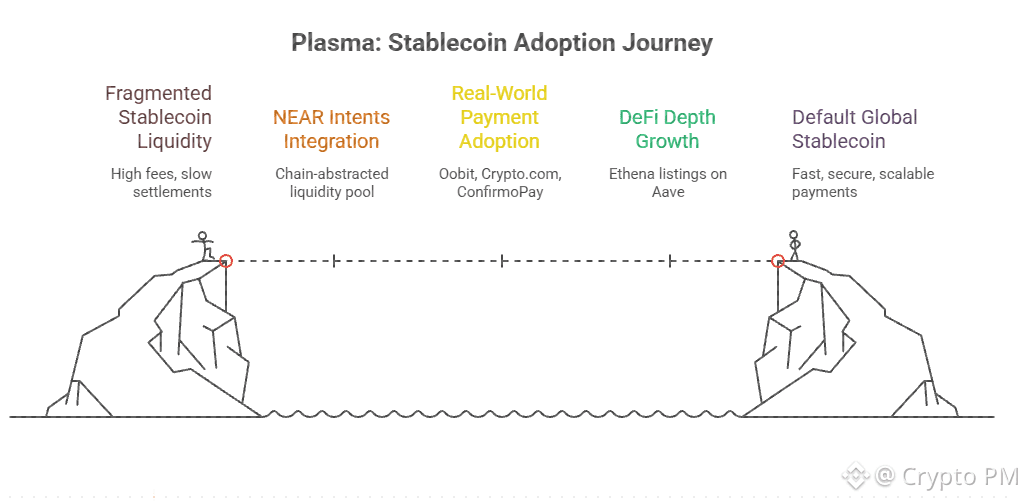
The integration with NEAR Intents is a perfect example of Plasma’s mindset. This is not a flashy partnership announcement. It is plumbing.
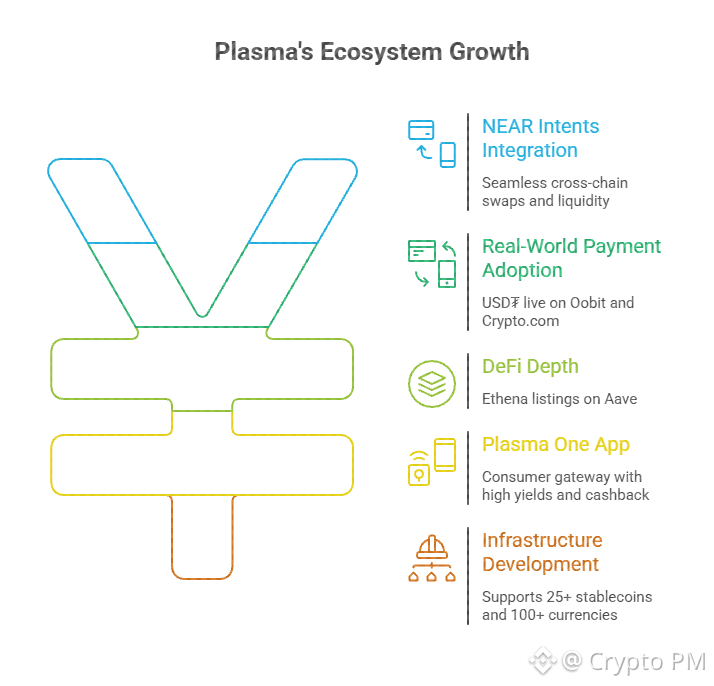
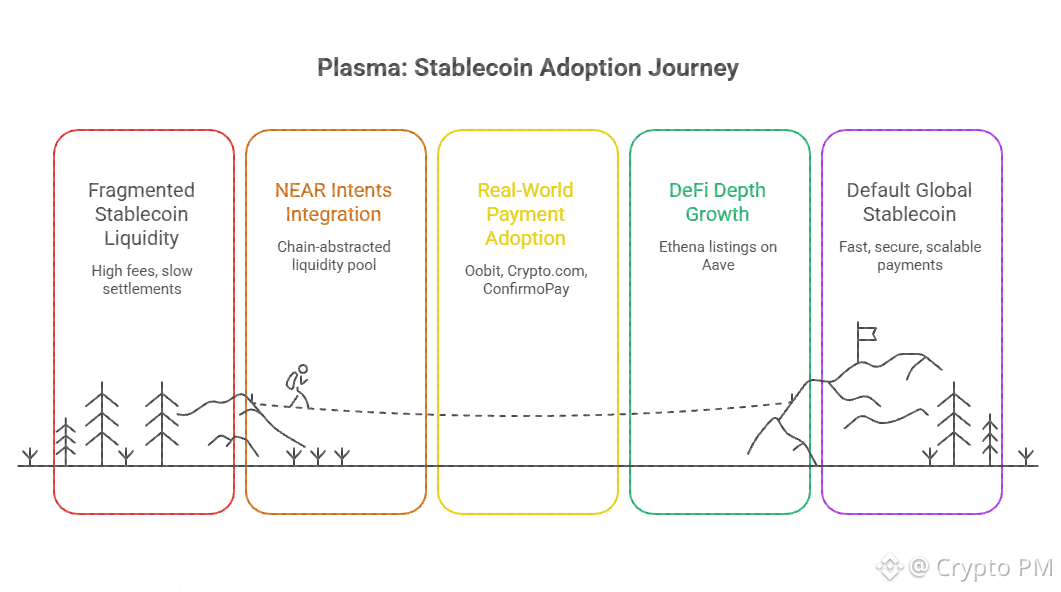
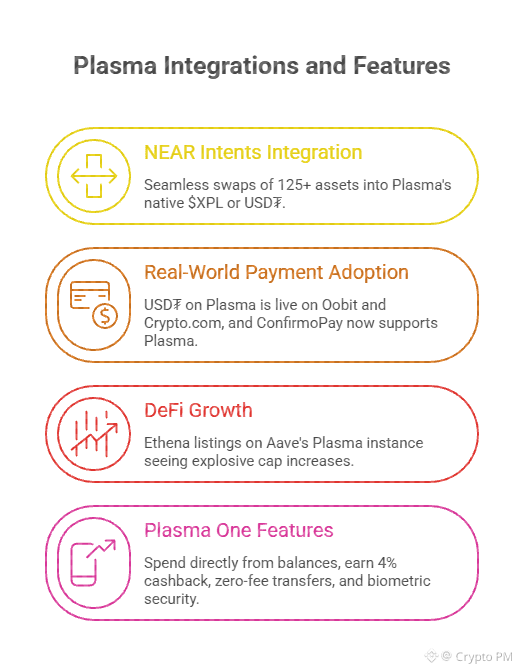
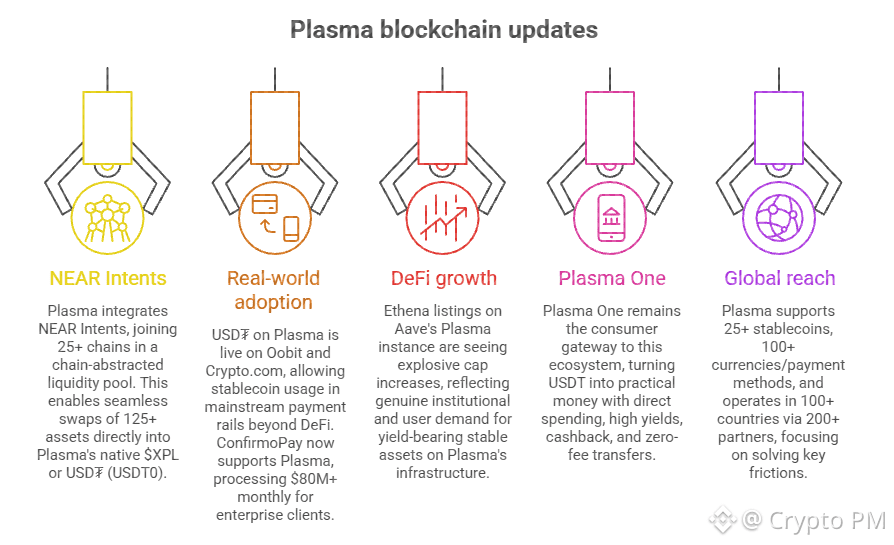
By joining a chain-abstracted liquidity network spanning more than 25 chains, Plasma allows users and builders to swap over 125 assets directly into $XPL or USD₮ without caring where liquidity originated. Pricing matches CEX levels even for large settlements, which is the part most people gloss over.
That matters because institutions and serious payment flows do not tolerate slippage surprises. If pricing breaks at size, adoption stops. Plasma understood that early.
This is not about bridges. It is about making stablecoin movement feel boring and reliable, which is exactly what mass usage requires.
Payments Are Where Chains Go To Die Or Grow
Plasma’s real traction is not DeFi charts. It is payments.
USD₮ on Plasma being live on Oobit and Crypto.com means stablecoins are escaping crypto-native silos and entering normal spending rails. That is the hardest transition to make and the easiest to underestimate.
ConfirmoPay supporting Plasma is even more telling. Processing over $80 million monthly for enterprise clients is not retail hype. That is payroll, e-commerce, forex, and settlement infrastructure choosing Plasma because zero-fee USD₮ transfers actually work.
Enterprises do not care about narratives. They care about cost certainty and reliability. Plasma checks those boxes quietly.
DeFi Liquidity That Is Actually Used
Plasma’s DeFi growth is not about farming gimmicks. The Ethena integrations tell the real story.
Seeing sUSDe caps scale to $720 million and then $1.2 billion is not retail speculation. That is yield-hungry capital parking where settlement is cheap, fast, and predictable.
Institutions do not deploy that size into chains that might break under load or surprise them with fees. Plasma’s protocol-level paymaster and sub-second finality make these numbers possible.
If this was fake demand, the caps would not keep expanding.
Plasma One Is The Real Stress Test
If Plasma fails anywhere, it will fail at Plasma One.
Building a stablecoin-native neobank is not a nice add-on. It is a brutal product challenge. Payments UX, compliance, customer support, fraud controls, and global reliability are unforgiving.
That said, Plasma One is doing something most chains never even attempt. It turns USDT into something people can actually live on.
Spend directly from balances. Earn on-chain yield without lockups. Get cashback that is not a gimmick. Send money globally with zero fees. Do it in over 100 countries with normal cards and biometric security.
This is where Plasma either becomes invisible infrastructure for everyday finance or just another good chain with no consumer funnel.
There is no middle ground here.
Why Plasma’s Approach Makes People Uncomfortable
Plasma does not sell dreams of being everything. It does not chase NFTs, AI, gaming, and social all at once. It is narrowly focused on stablecoins, payments, and settlement.
That makes it easy to ignore and hard to replace.
Most chains want to win narratives. Plasma wants to win flows. Those are very different games.
The $XPL Reality Check
Let’s not lie to ourselves. XPL is not risk-free. Unlocks matter. Supply dynamics matter. Anyone pretending otherwise is either naive or dishonest.
The real question is not whether unlocks exist. It is whether utility demand exists when they happen.
$XPL secures the network, enables advanced gas, benefits from fee burns, and is tied directly to stablecoin usage. That gives it a chance. Not a guarantee. A chance.
That is more than most tokens have.
my take
Plasma feels like infrastructure built by people who stopped caring about crypto applause and started caring about real usage. Zero-fee stablecoin transfers. Chain-abstracted liquidity. Enterprise payment rails. Consumer neobank experiments.
This is not exciting in a meme cycle. It is extremely relevant in a world where stablecoins already move billions daily.
If Plasma succeeds, most users will never talk about it. They will just use it.
And in payments, that is what winning actually looks like.


