

Hey everyone, Aurion X here. If you’ve been following crypto like I have, you already know that AI + blockchain is everywhere. But let’s be honest—most projects just slap “AI” on old tech and hope nobody looks too closely.
That’s exactly why Vanar Chain grabbed my attention.
I’ve been digging into this project for weeks, and it genuinely feels different. It’s not about buzzwords. It’s about building real infrastructure for intelligent Web3 apps. Whether you’re a developer tired of messy AI integrations or an investor searching for true utility, this article breaks it down.
I’ll show you what makes Vanar unique, why it matters in 2026, and how it could change how we think about smart decentralized apps.
Let’s dive in.
First, let’s talk about the biggest issue with AI in blockchain today.
Most chains are like old cars trying to race in Formula 1. They work, but they’re not built for AI.
Agents forget context. Data lives off-chain. Oracles become weak points. Bots lose direction. RWAs can’t automate compliance without human help. Everything feels fragile and unreliable.
That’s why so many “AI-powered” dApps fail in practice.
Vanar flips this model. It’s an AI-native Layer 1, built from the ground up for intelligent workloads. No patches. No shortcuts.
Their multi-layer design makes apps “intelligent by default.”
For builders, this means on-chain semantic memory and built-in reasoning systems. AI doesn’t forget users. It doesn’t depend on expensive off-chain compute. It can actually operate on its own.
Vanar also supports low-latency transactions with EVM compatibility through GETH forks, so Ethereum tools can be ported easily. On top of that, they’re pushing carbon-neutral operations using renewable energy.
To me, this isn’t just innovation—it’s about making AI-powered payments, games, and services work smoothly without users even noticing the blockchain underneath.
Now let’s break down how Vanar works, without overcomplicating things.
At the foundation is the base Layer 1. It’s modular, scalable, and optimized for AI. Block times are around three seconds, and fees are USD-pegged at roughly $0.0005 per transaction. This allows AI agents to run nonstop without cost spikes. Their tiered gas system also keeps spam under control.
Next comes Neutron, the semantic memory layer. This is one of Vanar’s strongest features. It compresses data into “Seeds”—structured, searchable chunks that AI can read and verify on-chain.
Imagine turning contracts, identities, or property records into something AI can instantly understand and act on. No IPFS dependency. No missing data.
Then there’s Kayon, the contextual reasoning engine. This handles logic directly on-chain. It validates conditions, checks compliance, and triggers actions—without relying on oracles.
In PayFi use cases, Kayon lets AI manage invoices, subscriptions, and settlements securely. Its early 2026 rollout significantly improved network confidence.
Axon is the upcoming automation layer. This is where full autonomy happens. Think AI agents managing DeFi portfolios or workflows using natural language.
Flows is their industry-focused layer for gaming, entertainment, and RWAs. Over 60% of current activity comes from gaming, which shows real adoption instead of empty hype.
As of early February 2026, $VANRY trades around $0.0065 with a market cap near $14 million and daily volume close to $3.5 million. The token recently dipped with the broader market, but technical indicators suggest it may be oversold.
Security-wise, Vanar currently uses Proof-of-Authority and plans to transition toward Proof-of-Reputation, reducing energy waste while maintaining trust.
For me, this whole architecture proves one thing: AI in Web3 isn’t about flashy models. It’s about orchestration. And Vanar is quietly mastering that.
Technology is great, but real-world usage matters more.
So where is Vanar actually being used?
In payments, they’ve partnered with Worldpay to develop agentic payment systems. These allow AI to manage fiat-crypto bridges and enterprise settlements with lower costs and fewer delays.
In gaming, Vanar powers the VGN network. Titles like World of Dypians integrated Vanar technology to create more dynamic, AI-driven worlds.
In RWAs, Vanar enables programmable invoices and automated compliance. Assets can trigger payments automatically once conditions are met. No middlemen. No paperwork. No waiting.
On social platforms, Vanar works with projects like HyperGPT and maintains strong community engagement. Even their meme campaigns generate solid traction.
They’re also active across major platforms and exchanges like Binance, helping expand visibility and access.
All of this shows that Vanar isn’t a dead chain. It’s being used, tested, and improved in real environments.
So, is Vanar worth your time—and maybe your investment?
From my perspective, it’s seriously undervalued.
Several market forecasts point toward end-2026 targets around $0.013 to $0.014 if adoption continues. That represents strong upside, though nothing is guaranteed in crypto.
There are real risks. Development is long-term. Some features roll out slowly. Their token release schedule stretches over many years, which requires patience.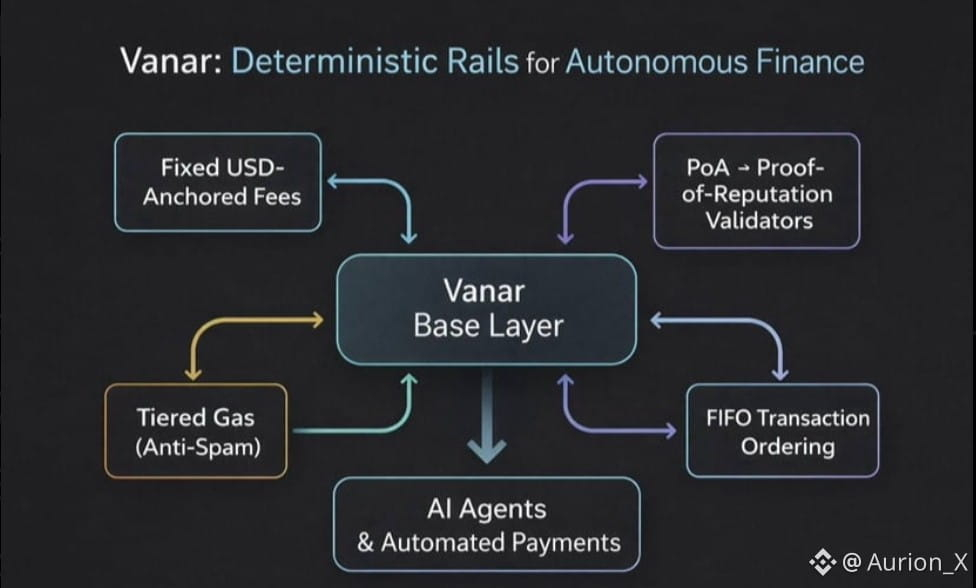
But there are also major positives.
No massive insider dumps. Real products. Working infrastructure. Growing partnerships.
Most importantly, Vanar represents something bigger.
The future of Web3 isn’t just decentralized.
It’s intelligent.
For developers dealing with broken AI tools, Vanar’s SDKs in JavaScript, Python, and Rust are worth exploring. For investors, this is one of those low-cap, high-utility projects that doesn’t rely on hype.
And sometimes, those are the ones that matter most.
So what do you think?
Is Vanar the AI-native blockchain to watch in 2026, or just another overambitious experiment?
