
Stablecoins represent the digital evolution of the USD, engineered for global accessibility, high-end technology, and massive earning potential. While the traditional USD is struggling, stablecoins are consistently gaining ground.

If you look at the current strength of the dollar:
1 USD = €0.84
This clearly indicates how much value the USD has lost to inflation.
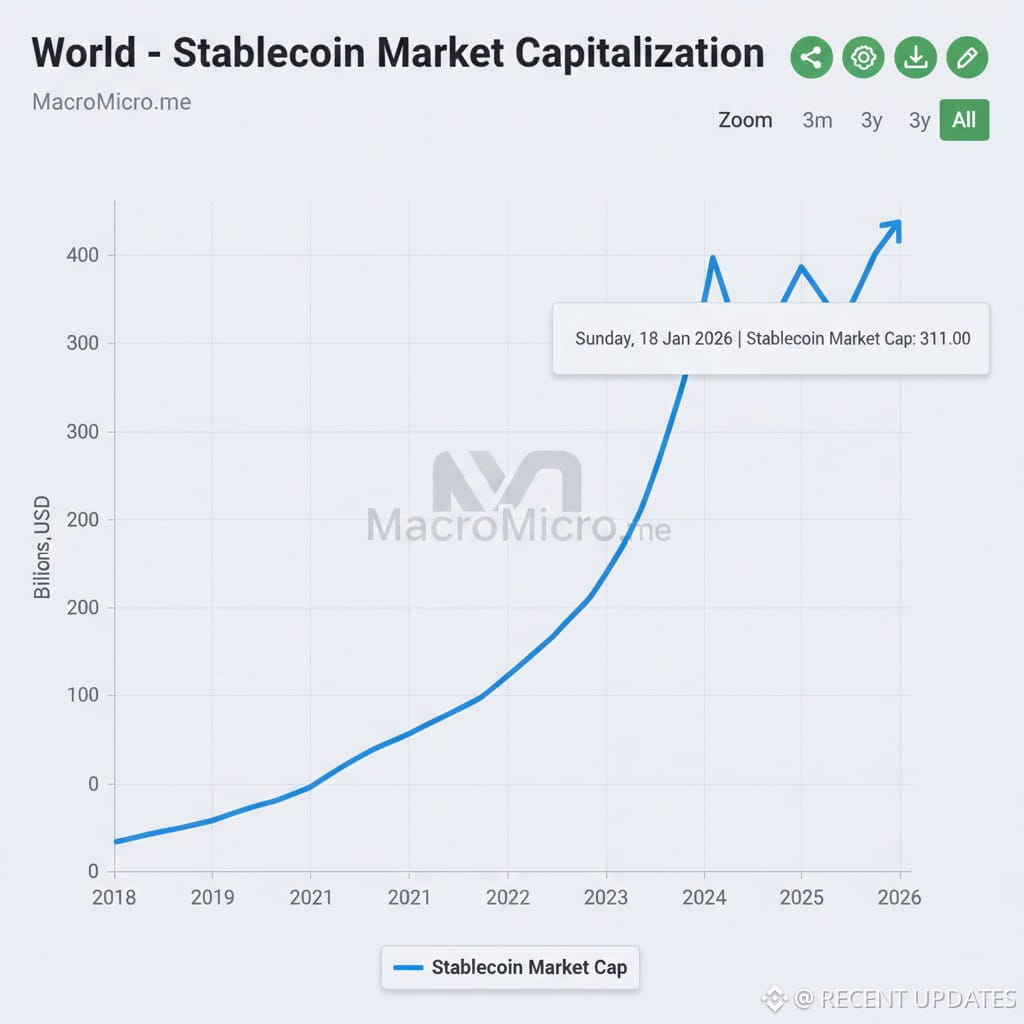
In contrast, the stablecoin market has seen explosive growth since 2020. Here is the breakdown:
In 2020, the stablecoin market cap was at $20 billion.
In 2021, it skyrocketed to $150 billion.
In 2022, the market faced a major setback due to the Terra/UST collapse, bringing the cap to $141 billion.
In 2023, growth remained flat due to the aftermath of the crash, yet it held strong at an estimated $128 billion.
In 2024, the market surged past previous losses, reaching a cap of $194 billion.
In 2025, fundamental structural changes for global adoption pushed the market cap to over $283 billion.
As of January 2026, the market cap sits at a massive $312 billion.
With over 220 million holders, the speed of adoption is undeniable.
But what’s the real advantage of stablecoins?
The true benefit lies in decentralization and yield generation. The higher the price stability, the better your APY and APR becomes.
For those who don't know the difference:
APY (Annual Percentage Yield): This includes compounding interest. Depending on the coin, you can earn 10% or significantly more.
APR (Annual Percentage Rate): This is the simple interest rate you get from your chosen yield, also ranging from 10% upward.
The Disadvantages
The main downside is tied to your staking limits and the type of coin you hold. While standard stablecoins stay at $1, algorithmic ones can go above $1 and carry extreme risk.
Three Types of Stablecoins You Must Know:
Fiat-Backed (USDT & USDC): Designed to stay at $1.00, with a typical low range of $0.97–$0.98.
Over-Collateralized (DAI): A decentralized coin created by MakerDAO, pegged to $1 but backed by assets like $ETH, $BNB, and $USDC.
Algorithmic Stablecoins: Highly volatile coins that can fluctuate above $1, sometimes reaching $1.20 or more.
How a 10% Return Works on a $10,000 Investment:
Using APY (Compounding):
$10,000 in Fiat-backed (USDT/USDC) = Approx $11,046.
$10,000 in Crypto-collateralized (DAI) = Approx $11,046.
$10,000 in Algorithmic coins = Approx $11,046.
Using APR (Simple Interest):
$10,000 in Fiat-backed (USDT/USDC) = Approx $11,000.
$10,000 in Crypto-collateralized (DAI) = Approx $11,000.
$10,000 in Algorithmic coins = Approx $11,046 (due to price fluctuations).
The core rule is simple: the more you invest, the higher your earnings.
Latest Market News
Tether has officially launched USAT, a US-regulated, dollar-backed coin built specifically for the American market. It is positioned to become the primary digital currency for the US within the next 10 years.

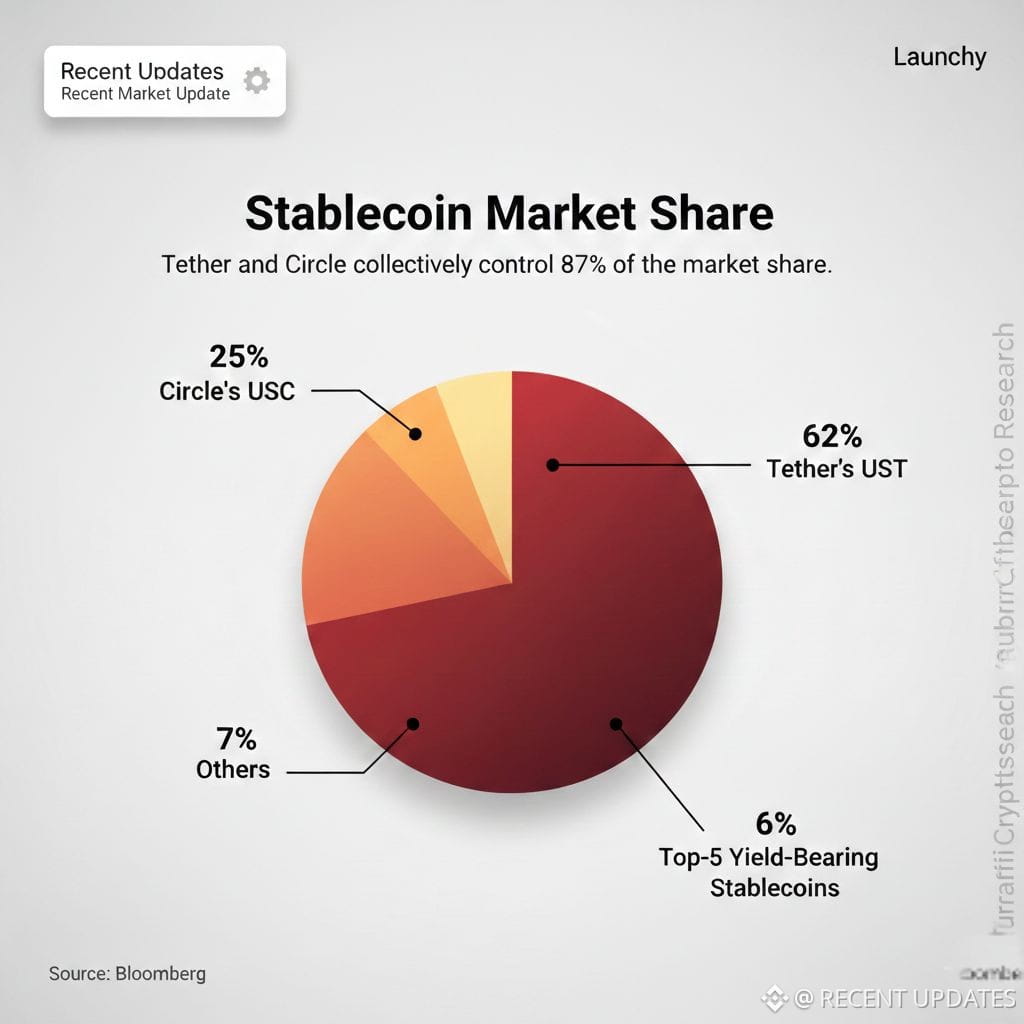
Currently, Tether and Circle dominate about 87% of the total market:
USDT holds a ~62% market share.
USDC holds a ~25% market share.
Yield-bearing stablecoins currently make up only ~6%.
To achieve true financial freedom for holders, the yield-bearing sector needs to rise to 10-15%. Stablecoins and tokenized assets are now the leading force in the crypto world. By 2030, we will see if they truly take $ETH control of global currency. $BTC $BNB #stable #StablecoinRevolution

