
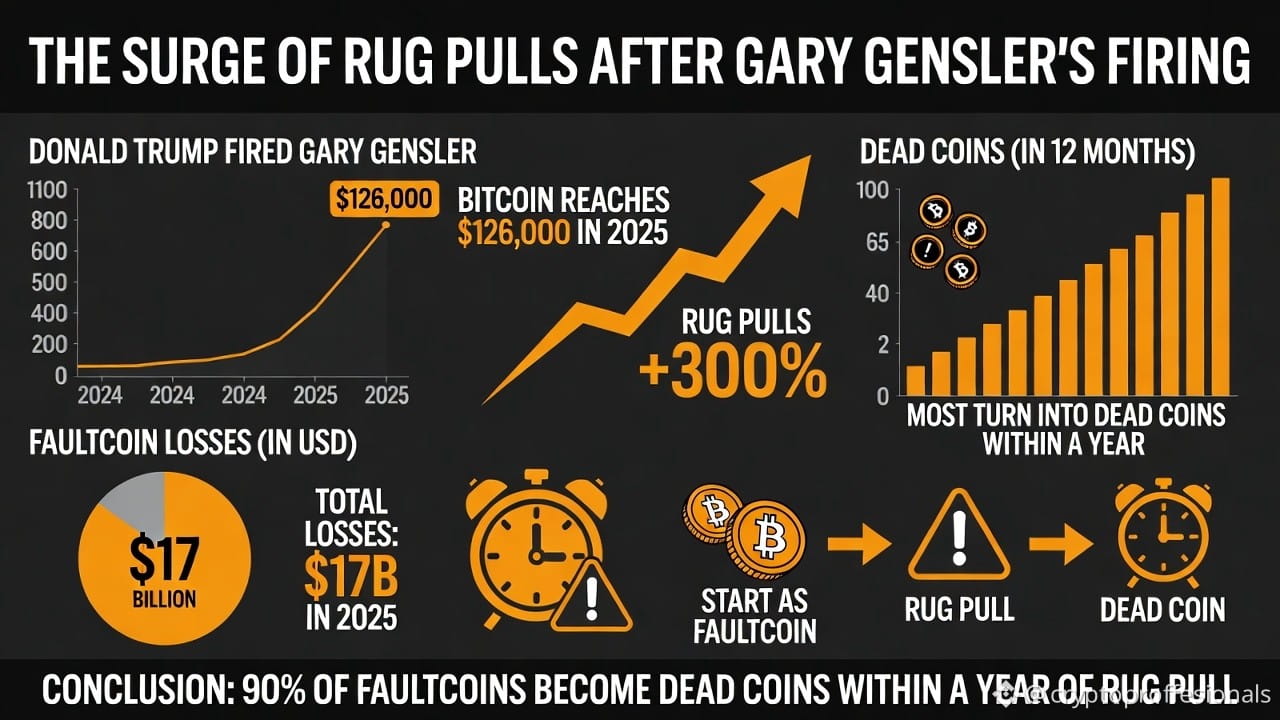
When President Donald Trump returned to office in January 2025, one of his first moves was to oust Gary Gensler, the SEC Chair known for his stringent crackdown on cryptocurrency fraud. Gensler, appointed under Biden, had enforced regulations aggressively, targeting unregistered securities and scams through lawsuits and oversight. Trump's campaign pledge to "fire Gensler on day one" was fulfilled on Inauguration Day, January 20, 2025, when Gensler resigned amid pressure. This shift marked a pivot toward deregulation, with Trump nominating Paul Atkins—a pro-industry figure—as the new SEC Chair, emphasizing innovation over enforcement.
The result? A dramatic loosening of regulatory reins that critics say flung open the doors for scammers. In the year following Gensler's departure, faultcoins—low-utility or hype-driven altcoins—experienced an unprecedented wave of rug pulls, where developers hyped projects, attracted investments, and abruptly abandoned them, draining liquidity and leaving tokens worthless. Enforcement actions dropped sharply: The SEC pursued just 13 crypto cases in 2025, down 60% from 33 the prior year. This lax environment allowed faultcoins to proliferate unchecked, with many launching amid the post-inauguration hype only to rug within months. Like $FLOW
By mid-2025, reports documented a spike in rug pulls, with losses soaring to $17 billion for the year—up from $12 billion in 2024. Faultcoins like meme tokens and speculative projects, which promised quick gains, became emblematic of the era. Investors flocked to them during Bitcoin's surge to $126,000 in October 2025, but as oversight waned, developers exploited the freedom. Within a year, countless faultcoins turned into "dead coins," their values plummeting 99% or more, with no recovery in sight. Illicit flows ballooned to $154 billion, often tied to these rug schemes used by bad actors to evade sanctions or launder funds.
Trump's own involvement fueled the fire: His endorsement of certain tokens, including a family-linked meme coin that pumped billions before crashing, exemplified how the administration's pro-crypto stance enabled rugs. A congressional probe later revealed how deregulation allowed "professionalized corruption," letting faultcoins rug at will without fear of reprisal. Oversight groups lamented that "Trump's SEC let crooks run free," turning 2025 into a graveyard for faultcoins. Like $DOGS
As 2026 dawns amid a crypto winter, the legacy is clear: Firing Gensler didn't just boost innovation—it buried thousands of faultcoins in rugs, leaving investors reeling from a year of unchecked demise.


