

Decentralized storage is often framed as a technical challenge, but its real test lies in economics. Data must be stored, maintained, and retrieved continuously. If the system is too expensive, users leave. If incentives are weak, operators stop participating. Walrus addresses this reality by treating storage as an economic system, not just a technical one.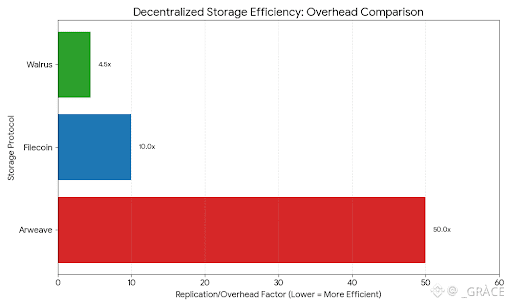
In many decentralized networks, inefficiency hides behind ideology. Excessive replication and poor incentive design increase costs while reducing sustainability. Walrus takes a more pragmatic approach, aiming to align incentives so that participation remains viable over the long term.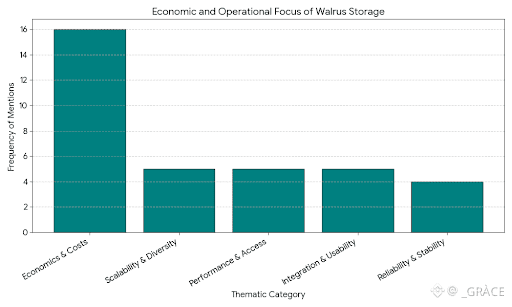
One of the most overlooked issues in Web3 is cost predictability. Applications cannot scale if storage expenses fluctuate unpredictably. Walrus focuses on creating clearer economic structures, making it easier for developers and teams to understand what growth actually costs.
Data retrieval is another critical factor. Storage is only valuable if data can be accessed reliably and quickly. Walrus prioritizes performance alongside decentralization, acknowledging that users care more about experience than architecture diagrams.
As Web3 expands, data types become more diverse. It is no longer just transaction data. Media, NFTs, application states, and off-chain computation all rely on dependable storage. Walrus is designed to accommodate this diversity, making it adaptable to changing demands rather than locked into a single use case.
Sustainability also matters during stress. Market cycles, network congestion, and usage spikes test whether a system can hold up. Walrus emphasizes long-term participation incentives, encouraging stability instead of short-term speculation.
Another strength of Walrus lies in its compatibility mindset. Storage does not exist in isolation. It supports blockchains, applications, and interfaces. Walrus is built to integrate smoothly, reducing friction instead of creating new complexity for developers.
Infrastructure success is rarely visible at first. It becomes obvious only when ecosystems depend on it. Walrus positions itself for that role by focusing on fundamentals instead of narratives. This is the kind of infrastructure that quietly becomes indispensable.
In the long run, decentralized data systems must make economic sense. Walrus contributes to that goal by balancing efficiency, reliability, and incentives. As Web3 moves from theory to real economic activity, this balance becomes more important than any short-term excitement.

