

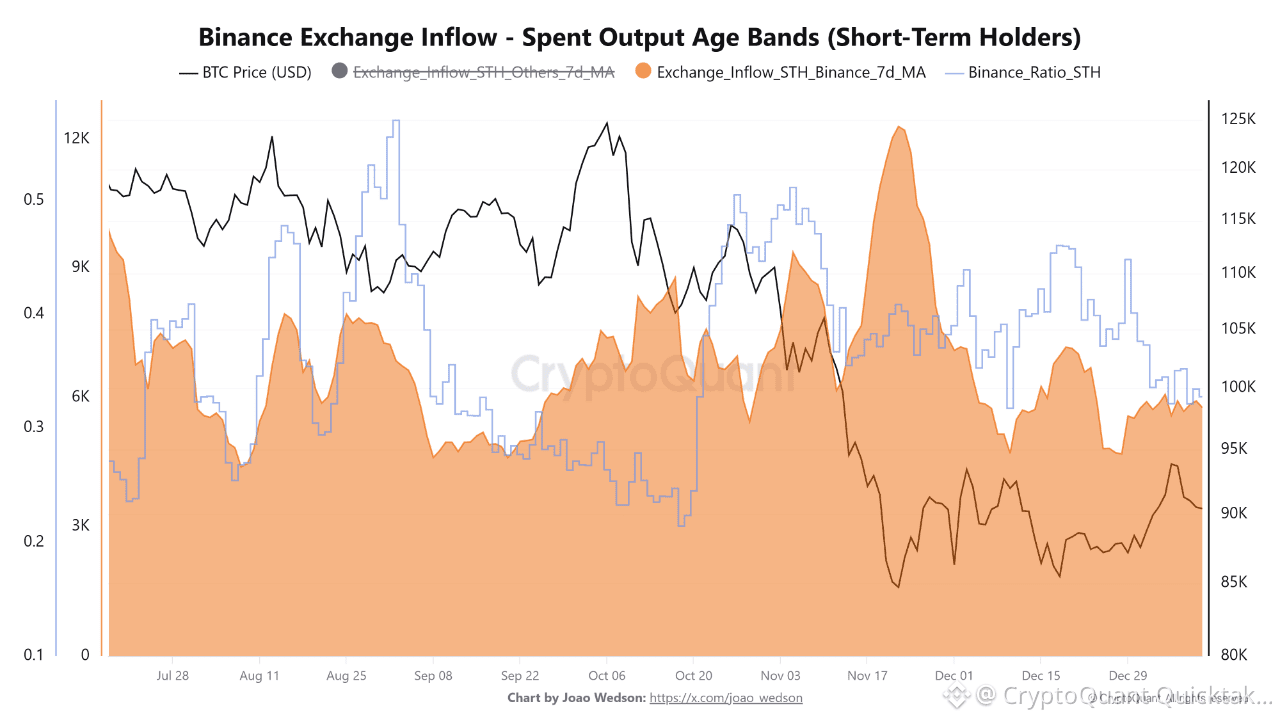
Data from Binance’s short-term Bitcoin flow platform indicates a decrease in the intensity of inflows during January compared to December and November. In November, we witnessed very high peaks in short-term Bitcoin (STH) inflows to Binance, with the 7-day moving average exceeding 12,000 BTC. This coincided with Bitcoin trading at around $84,000, confirming that the significant increase in short-term deposits was driven by panic selling or aggressive profit-taking, which led to strong selling pressure and an accelerated price decline.
In December, while STH inflows to the platform continued, they were less intense and more volatile compared to November, not exceeding 7,000 BTC. This was reflected in the price action, with Bitcoin entering a sideways consolidation phase and showing limited recovery attempts, as selling pressure gradually eased, though it did not completely disappear.
Looking at current values, we observe that STH flows on Binance are clearly below the November highs and closer to the mid-levels recorded in December, where they have not exceeded 6,000 BTC. The Binance STH ratio is also showing relative stability, indicating the absence of a new wave of mass selling from short-term traders. This relative decline in flows suggests that a significant portion of the readily sellable supply was already liquidated during the previous correction.
The impact on price is a reduction in direct selling pressure, allowing Bitcoin to attempt to establish a price bottom and gradually stabilize. As long as STH flows remain below November levels, the likelihood of a sharp new decline remains limited. However, any sudden surge in these flows would serve as a warning sign of a potential return to negative volatility.
Written by Arab Chain
