
For a long time, storage in Web3 was treated as an afterthought. Applications focused on execution speed, user experience, and token design, while data availability was assumed to “just work.” That assumption is starting to break down. Walrus Protocol approaches data availability as a first-class requirement, not a background service.
Availability Is Not the Same as Storage
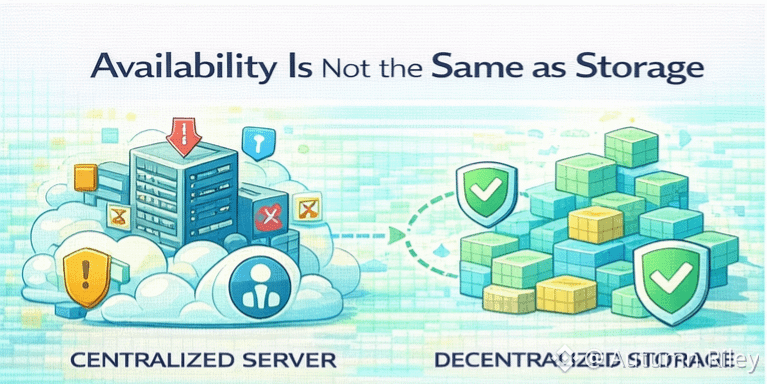
Storing data and guaranteeing access to it are two different problems. Traditional systems often store data successfully but fail when users or applications need consistent access under stress, upgrades, or network changes. Walrus Protocol is designed around availability guarantees, ensuring that once data is accepted by the network, it remains accessible for its intended lifetime.
This distinction is critical for decentralized systems that rely on persistent state, historical records, and verifiable data.
Why Availability Shapes Trust
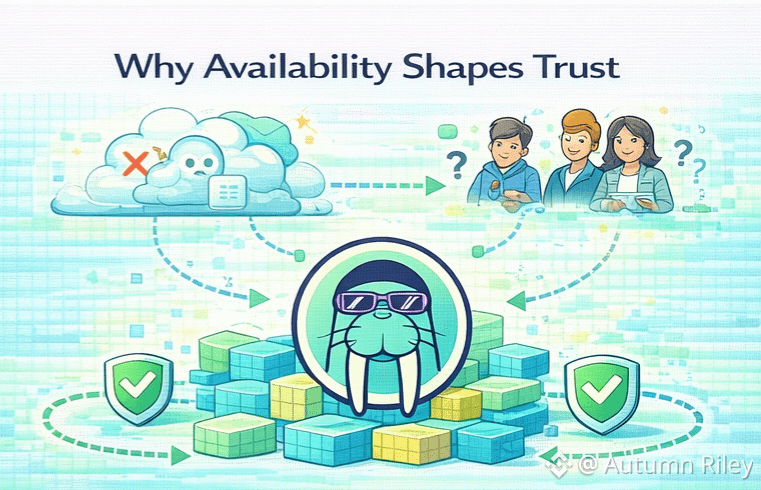
In decentralized environments, trust depends on verifiability. If data becomes temporarily unavailable or inconsistently retrievable, confidence in the system erodes quickly. Walrus Protocol addresses this by enforcing availability at the protocol level rather than relying on best-effort infrastructure.
Once data reaches its Proof of Availability, the network takes responsibility for maintaining access. This shifts availability from a promise into an observable property that developers and communities can rely on.
Availability Across System Changes
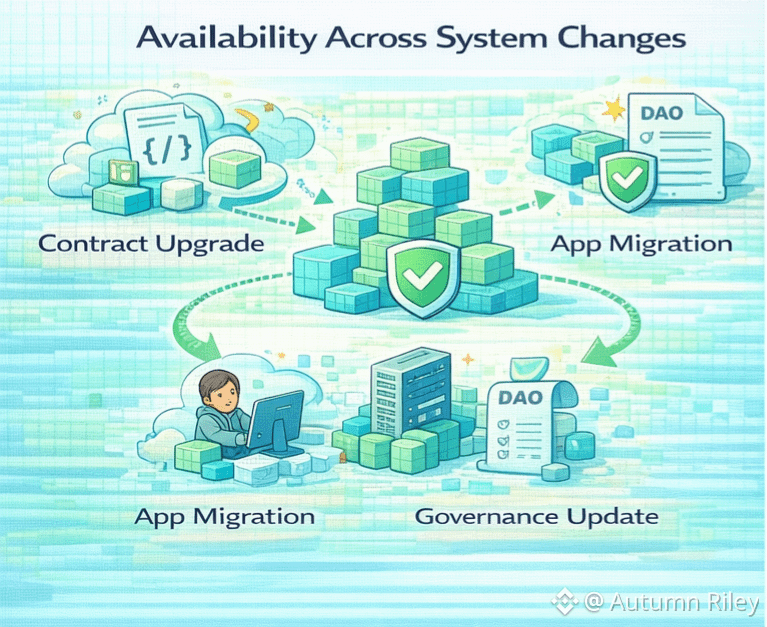
Web3 systems evolve constantly. Contracts are upgraded, applications migrate, and governance rules change. Data availability must persist through these transitions. Walrus Protocol separates data availability from execution logic, allowing systems to evolve without risking data loss or fragmentation.
This separation makes Walrus especially relevant for long-lived applications, DAOs, and rollups that need continuity across multiple generations of software.
Incentives That Protect Availability
Guaranteeing availability requires aligned incentives. The $WAL token underpins Walrus Protocol’s economic model, rewarding participants who maintain availability and penalizing behavior that threatens network reliability. This ensures that availability is not just a technical feature, but an economically enforced outcome.
By tying rewards to consistent participation, Walrus creates a system where maintaining data access is always in the network’s best interest.
Why This Matters for the Next Wave of Web3
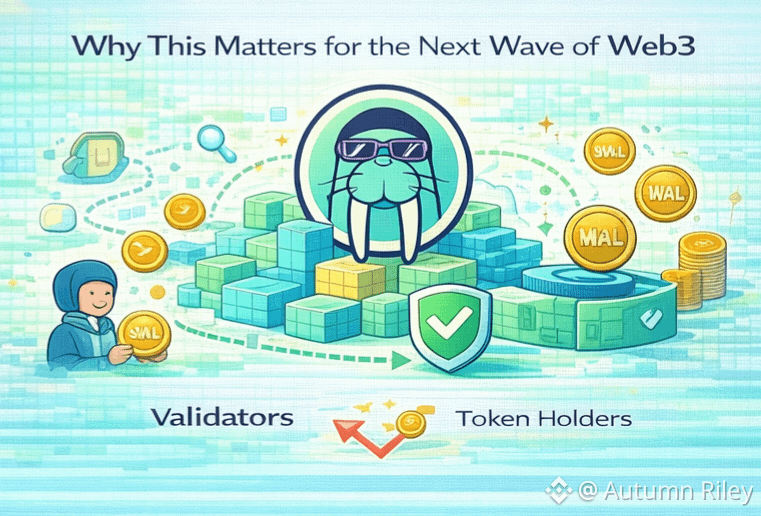
As Web3 moves toward more complex and data-intensive use cases, availability will become a deciding factor for adoption. Applications that cannot guarantee access to their data will struggle to earn long-term trust.
Walrus Protocol positions itself as infrastructure built specifically for this reality. By making data availability verifiable, persistent, and protocol-enforced, @Walrus 🦭/acc supports decentralized systems that can grow without sacrificing reliability.
In the next phase of Web3, availability won’t be optional. It will be foundational. #walrus

