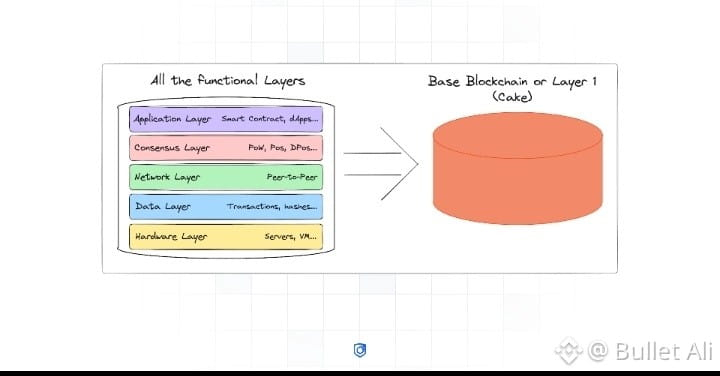
**TL;**DR — Plasma is a purpose-built Layer-1 designed to make stablecoins behave like money: near-instant settlement, extremely low (often zero) user fees for common USD₮ flows, full EVM compatibility for developer ergonomics, and a hybrid security model that periodically anchors Plasma’s state into Bitcoin to raise censorship resistance and trust. Below I walk through architecture, consensus, gas model, stablecoin primitives (gasless USDT), Bitcoin anchoring, bridge/asset flows, target users & business model, risk surface, and the big-picture opportunity — with citations to primary docs and independent writeups.
1) What Plasma is (short form)
Plasma is a high-performance Layer-1 blockchain built from the ground up for stablecoin payments (primarily USD₮). It claims three core goals: make stablecoin transfers feel instant, make the most common payment flows gasless or frictionless, and provide institutional-grade auditability by anchoring state to Bitcoin. The project keeps the Ethereum execution model (so existing smart contracts and developer tooling continue to work) while replacing the slow, open-permission proof-of-work/long-finality tradeoffs with a fast BFT consensus tuned for payments.
2) Architecture — execution, consensus, and the “Reth” bridge
Execution layer (EVM via Reth). Plasma runs a standard Ethereum-compatible execution environment implemented on top of the Rust-based execution client Reth (the Reth project). That means opcodes, precompiles and typical EVM semantics are preserved so developer workflows, wallets, and audits translate with minimal changes. The chain exposes the same transaction/execution model but plugs Reth into Plasma’s specialized consensus via the Engine API.
Consensus (PlasmaBFT). The consensus engine, called PlasmaBFT, is a pipelined, Fast-HotStuff-derived BFT implementation written in Rust. It’s optimized for low-latency commit (sub-second or very low-second finality in practice) and high throughput, using a pipelined proposal/vote/commit structure to parallelize stages and raise transactions-per-second for settlement use cases. Because finality is deterministic, payment applications can rely on immediate settlement guarantees.
How the pieces fit. Execution (Reth) handles the EVM semantics; PlasmaBFT orders and finalizes blocks quickly; optional relayer/paymaster infrastructure sits above the execution layer to enable gasless/paid-by-sponsor transfers for the most frequent stablecoin flows.
3) Stablecoin-centric features (what’s actually different)
Plasma’s design includes several concrete primitives that differentiate it from general-purpose L1s:
Gasless USDT / zero-fee transfers for USD₮: Plasma documents a relayer/paymaster API that can sponsor direct USD₮ transfers for users. The scope is intentionally narrow: sponsorship applies to direct stablecoin transfers (e.g., sending USD₮) to remove fee friction for common payment patterns while avoiding making every opcode gratis. Identity-aware controls reduce abuse.
Stablecoin-first gas model / custom gas tokens: Plasma supports alternative fee mechanisms so that common users need not hold a separate native token for trivial payments. That includes the ability to pay gas in stablecoins, or use a sponsored-gas model for certain transaction classes. This lowers onboarding friction in payment markets where users expect to hold only dollars.
Confidentiality / receipts: The project discusses options for privacy-friendly flows (e.g., shielding metadata on payments and issuing on-chain receipts) to match commercial payment needs, though these are scoped features (payment rails typically need some auditability for compliance).
4) Bitcoin-anchored security — what it is and why Plasma uses it
Plasma periodically anchors a summary of its ledger (state roots/checkpoints) into Bitcoin’s blockchain. Anchoring is a one-way, tamper-evident commitment: once a Plasma checkpoint is included in a Bitcoin block, that checkpoint inherits Bitcoin’s immutability and censorship resistance. The practical effect:
Plasma keeps fast, BFT finality for day-to-day payments.
If someone attempts to rewrite Plasma history, the anchored checkpoints on Bitcoin serve as an external, high-trust truth-witness that exposes inconsistency.
Economically, anchoring lets Plasma “piggyback” on Bitcoin’s enormous security budget without trying to re-create that costly PoW on its own chain.
Multiple technical writeups and the project docs describe anchoring and a trust-minimized bridge supporting pBTC (tokenized Bitcoin) and checkpoint anchoring for auditability. This hybrid (fast BFT + periodic Bitcoin anchoring) is the core of Plasma’s argument for institutional trust.
5) Bridges, on-chain assets, and the token model
Native USD₮ support: Plasma works with USD₮ (Tether) as a first-class asset and coordinates with relayer APIs to sponsor transfers. The docs show an on-chain USD₮ wrapper and API endpoints for relayers to sponsor transfers while applying abuse controls.
Bitcoin bridge / pBTC: Plasma implements a trust-minimized bridge for moving BTC onto the chain (minting pBTC), enabling BTC liquidity to be used inside Plasma’s smart contracts and DeFi. Independent verifiers or MPC/threshold-sig schemes are described as part of the deposit verification process.
XPL token (network economics): The native token (XPL in market writeups) is used for staking by validators, paying for complex gas/operations, and governance. For the user-facing payment flows the chain aims to minimize XPL exposure, but the token remains central for security incentives and validator economics. (Market writeups and exchange academies discuss staking and rewards.)
6) Who Plasma is for — product market fit
Retail in high-adoption markets: users in regions where stablecoin usage is already common (for remittances, local quick payments, card/merchant rails) benefit most because Plasma eliminates tiny-fee friction and speeds settlement to near-real time.
Institutions / payments & finance: payment processors, fintechs, custodians and treasury managers benefit from deterministic finality, Bitcoin-anchored auditability, and stablecoin-first primitives that simplify reconciliation. Banks and regulated PSPs that need a dependable settlement layer (24/7, low cost, fast) are the natural institutional targets. Several market analyses and platform docs pitch Plasma as a “settlement layer” for digital dollars and fintech rails.
7) Real technical tradeoffs & risks
No design is free. Plasma improves speed and fee UX by trading along several axes — here’s an honest look.
Centralization vs. latency: PlasmaBFT is a validator-set BFT system (validators stake and coordinate). BFT systems usually require tighter validator coordination (fewer validators or more communication) to achieve sub-second finality. That design is excellent for throughput, but it typically centralizes some block-production aspects compared to fully permissionless PoW. The Bitcoin anchoring step mitigates history-rewrite risk but does not magically decentralize real-time validator operations.
Sponsorship abuse & anti-spam: Gasless transfers require careful anti-abuse and identity controls; Plasma documents identity-aware relayer limits and scope restriction (sponsoring only direct USD₮ transfers) to limit spam and griefing. If those protections or relayers are misconfigured, attackers could spam sponsored flows and create operational costs.
Bridge risk: Any cross-chain bridge (even “trust-minimized” ones) introduces coordination and cryptographic complexity. The bridge code, verifier set, and MPC/threshold schemes must be audited and monitored. Anchor transactions to Bitcoin reduce some attack vectors but do not remove bridge failure modes entirely.
Regulatory scrutiny: A chain designed around USD₮ (a stablecoin issued by an identifiable company) and aiming at payments/institutions will attract regulatory attention. For institutions to adopt Plasma defensibly, the project’s KYC/AML integrations, legal structures, and custody models for sponsored flows must be well-defined — an operational as well as a technical challenge. Analysts note that regulatory partnerships and compliance tooling will be a gating factor for wide institutional adoption.
8) How developers and integrators will actually build
Because Plasma preserves EVM semantics via Reth, most Ethereum smart contracts, Solidity tooling, and infra (Truffle/Hardhat/ethers.js/MetaMask-style wallets) work with small adjustments. Integration work centers on:
Using Plasma’s relayer/paymaster API for sponsoring transfers.
Integrating custodian flows or on-chain receipts into existing backends.
Handling anchoring proofs or checkpoint verification if an application requires Bitcoin-anchored audit trails.
For wallets: adding support for sponsored USD₮ transactions and any permit/EIP-712-style off-chain approvals the chain supports for gasless flows.
9) Evidence, ecosystem & backing (fundraising / partners)
Market writeups and several exchange academies (Bitget, Bitfinex blogs, CoinGecko, CoinMarketCap summaries) describe institutional backing and ecosystem partnerships. Public documentation shows active integration guides, validator docs, and relayer APIs. Independent third-party audits and ecosystem evaluations (e.g., Aave infrastructure review threads) probe compatibility and readiness for DeFi composability. Always check primary docs and audit reports before large integrations.
10) Bottom line: opportunity & final take
Plasma tackles a real gap: existing smart-contract chains were not built specifically as settlement rails for dollar-denominated payments. By optimizing finality, user UX (gasless stablecoin transfers), and adding Bitcoin anchoring for high-trust auditability, Plasma offers a credible architectural path to make stablecoins behave more like money than tokens.
That said, adoption hinges on non-technical variables too: regulatory clarity, partnerships with custodians, merchant integrations, wallet support for sponsored flows, and careful bridge/audit practices. If Plasma can line up enterprise counterparts (custodians, payment processors, card rails) while preserving open developer access, it could become an important settlement primitive in stablecoin-driven payments — but the road from technical promise to global adoption requires strong operational and regulatory execution.
Sources and further reading (selected primary + reputable secondary)
1. Plasma official site & docs (overview, consensus, gasless transfers).
2. Reth (Rust Ethereum execution client) — project repo & docs explaining EL role.
3. Deep dives and exchange academy explainers describing zero-fee claims, Bitcoin anchoring, XPL token model. (Bitget / Bitfinex / CoinGecko / CoinMarketCap summaries).
4. Independent technical analysis and governance discussions (Aave infra review, DAIC capital technical deep dive).
5. Market/regulatory context: Citigroup “Stablecoins 2030” report (for industry context on why instant settlement matters).