

Vanar Chain is not just another blockchain promising to solve the same old problems. It stands out because of its unique approach to integrating AI with blockchain technology in a meaningful, practical way. While most new Layer 1 (L1) blockchains focus on flashy promises like speed and low fees, Vanar has chosen a more reserved path. Instead of pushing a narrative based on hype, it focuses on building an infrastructure that can genuinely support AI systems and handle the challenges these systems face in the real world.
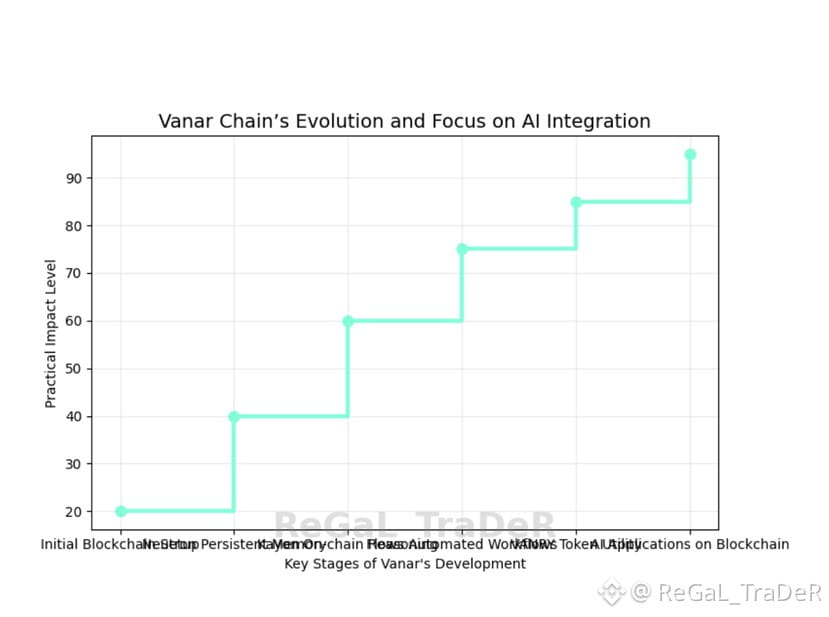
The reality is that we’re not necessarily running out of blockchain space, but we are running out of infrastructure that can support the kind of advanced, continuous operations required by AI. This is the gap that Vanar is aiming to fill. By creating a blockchain designed specifically with AI applications in mind, Vanar addresses the unique needs of intelligent systems that require persistent memory, on-chain reasoning, and automated control. These are the things that many other blockchain projects overlook because they aren’t as glamorous as speed or scalability. But these are precisely the features AI needs in order to function properly, making Vanar a project built for the future.
Vanar’s approach to blockchain development is both practical and forward-thinking. It has developed a unique stack that provides persistent memory through Neutron, which allows AI systems to store data in a way that’s not just static but also meaningful. This ability to interpret and act on data directly on-chain, without relying on external systems, is a game-changer for AI-driven applications. Similarly, the on-chain reasoning capability provided by Kayon and the automated workflows through Flows set Vanar apart from many other blockchain projects that still treat data as simple, transactional information rather than the dynamic, contextualized knowledge required by AI.
One of the biggest challenges that most blockchain projects overlook is payments. AI agents need systems that can handle compliant, global settlement without constant supervision. Vanar solves this by ensuring that its blockchain isn’t just for storing tokens or performing simple transfers but is capable of powering actual economic activity. The $VANRY token plays a crucial role in this system, providing the necessary fuel for economic transactions within the network. Unlike many other tokens that focus on speculative trading, $VANRY is designed to be the backbone of real-world activities — something that gives it tangible utility.
What makes Vanar particularly compelling is its restraint. In a world where every new project is screaming about being revolutionary, Vanar quietly focuses on solving real problems. There’s no rush to label everything as “disruptive” or “transformational.” Instead, the focus is on whether the system can meet the practical demands of AI applications — today and in the future. This grounded approach is refreshing in an industry often driven by unrealistic claims and marketing noise. The team behind Vanar understands that building a blockchain for the future requires more than just flashy announcements. It requires solving the hard problems that most people don’t want to deal with, and that’s exactly what Vanar does.
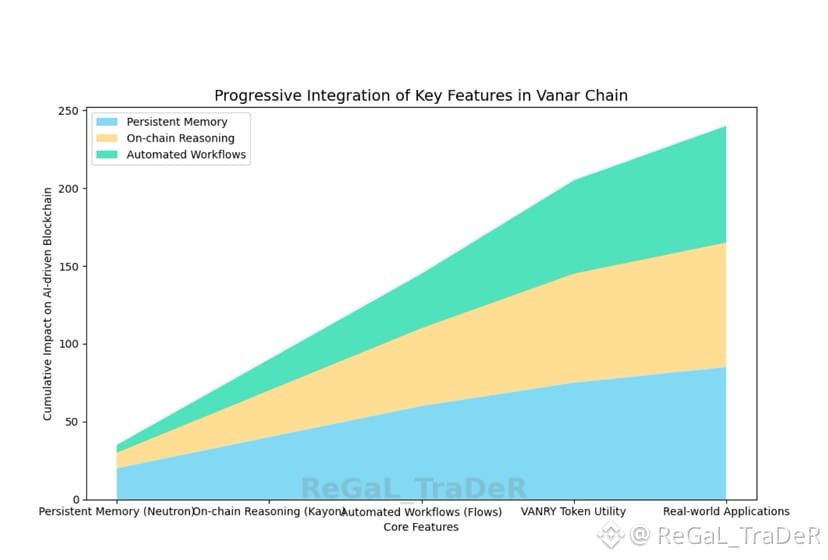
Looking ahead, Vanar’s potential is clear. If AI continues to shape the future of technology, the blockchain systems that will succeed are the ones that were ready to support AI from the beginning. It won’t be the loudest projects or those that promise the quickest solutions that win out. It will be the ones that understand AI’s real needs and can provide the infrastructure to meet them. Vanar’s focus on memory, reasoning, and automation places it in a strong position to be one of the blockchains that drives AI applications forward in the coming years. However, as with all emerging technologies, the true test will be adoption. While the tech is promising, its success will ultimately depend on whether developers and businesses choose to build on it. If Vanar can continue to provide the tools and features that AI systems need, it will likely play a crucial role in the blockchain space as we move toward a more AI-driven future.
In conclusion, Vanar Chain represents a step forward in the evolution of blockchain technology, not just in terms of speed or scalability, but in its ability to support intelligent, autonomous systems. The project’s focus on solving real, foundational problems rather than chasing buzzwords sets it apart in an overcrowded market. If the blockchain space is to adapt to the needs of AI, Vanar appears to be well ahead of the curve, and it’s this readiness that makes it a project worth watching in the years to come.
