

Blockchain payments are often evaluated through technical metrics block time throughput and confirmation speed. While these numbers are easy to compare they rarely describe how risk actually behaves in payment systems. Payments are not just about moving data quickly. They are about transferring value with certainty. That distinction changes how risk should be modeled.
In payment environments uncertainty is the primary source of risk. Merchants users and service providers do not ask how fast a block is produced they ask when a transaction can no longer change. When settlement is ambiguous behavior shifts. Merchants wait before delivering goods. Users hesitate before closing a transaction. Systems introduce extra confirmations manual checks or fallback processes. These are all signs of risk being pushed onto participants.
Many blockchains attempt to reduce this friction by producing blocks faster. While this improves responsiveness it does not necessarily reduce economic risk. Shorter block intervals can increase reorganization probability amplify network variance or blur the meaning of confirmation. In those cases speed masks uncertainty instead of resolving it.
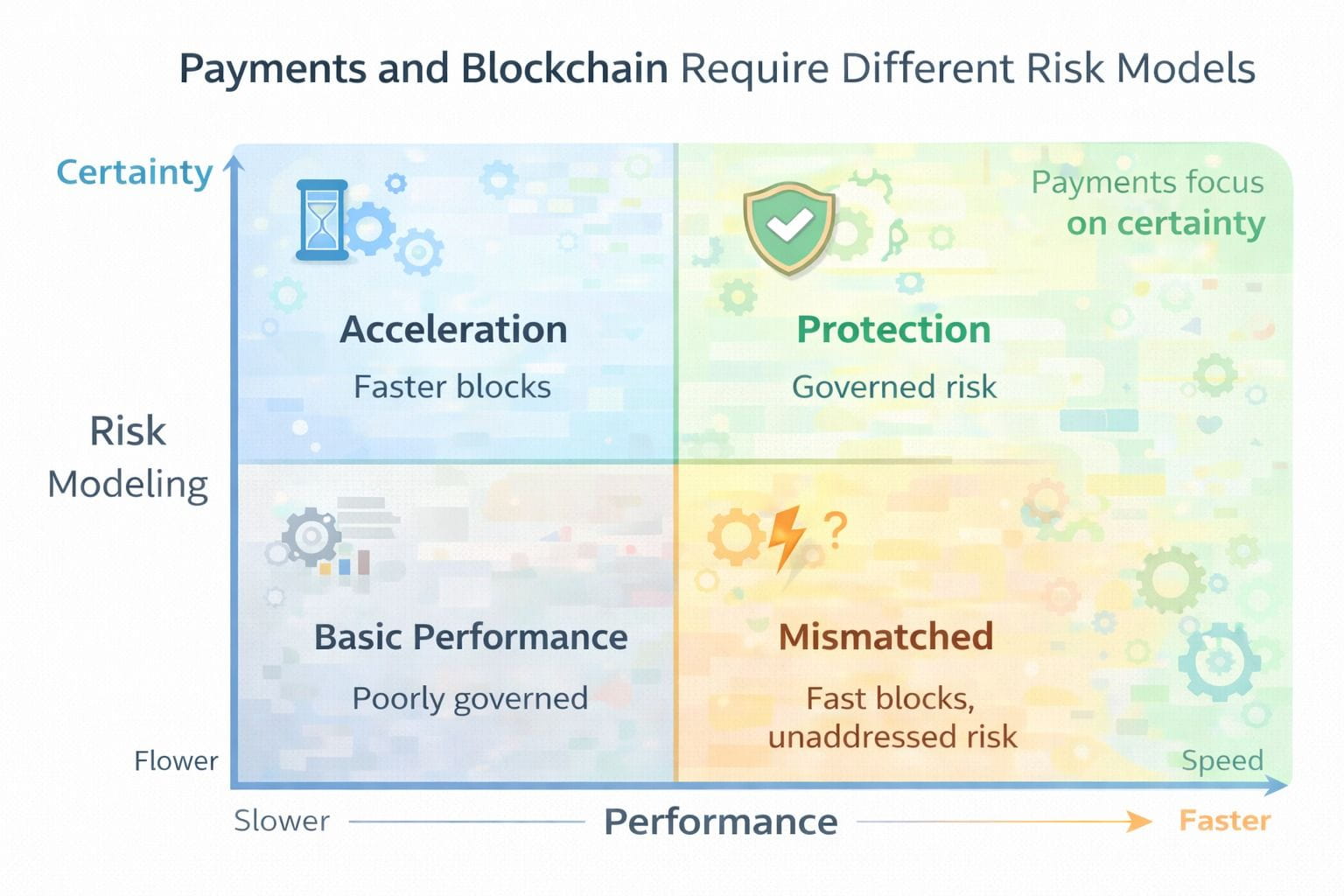
Payment-specific risk models focus on different questions. How predictable is finality under load? How clearly does the system communicate when value is settled? What happens during congestion partial outages or validator failures? These scenarios matter more than peak throughput because they shape user trust during normal and stressed conditions alike.
Another overlooked factor is behavioral risk. Users treat payments differently from other transactions. Even small chances of reversal change how people act. A fast transaction that might change later feels riskier than a slower one that is clearly final. This psychological dimension cannot be addressed by performance tuning alone.
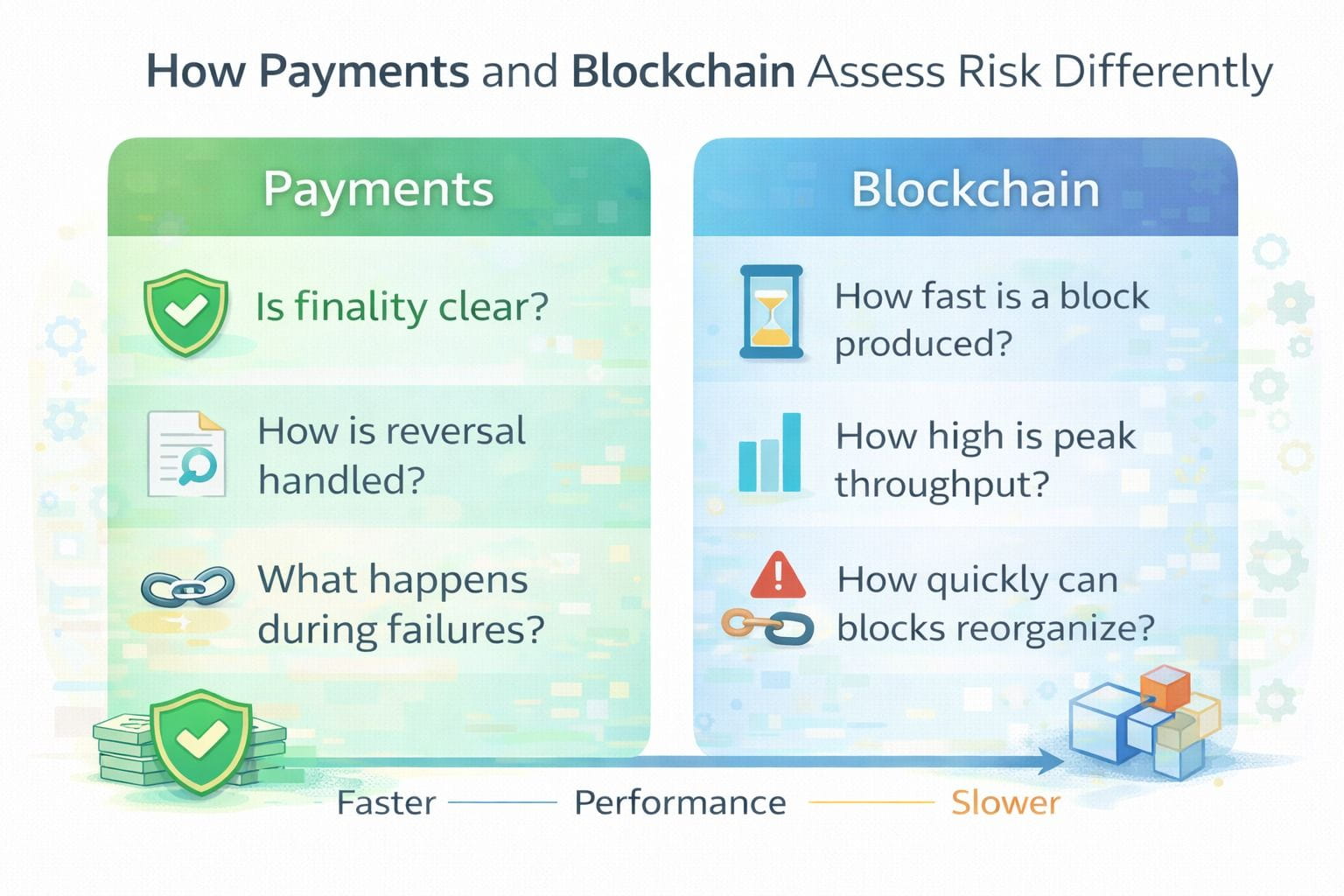
As blockchain payments mature success depends less on technical acceleration and more on alignment between system behavior and economic expectations. Faster blocks may improve responsiveness but payments require risk models built around certainty bounded failure and clear settlement semantics. Without that shift speed becomes a statistic not a solution.

