

I tend to feel a disconnect when individuals mention the idea of blockchains substituting something or rivalry something in the real-life finance. Transactions do not simply occur in financial systems. They analyze past, trends, conduct and reputation built through time. A system lacking memory finds it difficult to price risk, continue, and intelligently adapt. It is the prism according to which I can now see Vanar Chain.
What to me is attractive is that the design Vanar is drawn to is natural financial behavior. In conventional finance, no decisions are commonly made in isolation. The credit worthiness is determined by previous activities. Adherence is based on the past. The use of fraud detection relies on the identification of abnormal patterns. The fact that data can be stored directly on chain and that AI agents can then act on this data, seems to me, feels in tune with these realities that Vanar is offering. It does not impose blockchain constraints on real systems. It reaches them at the point of existence.
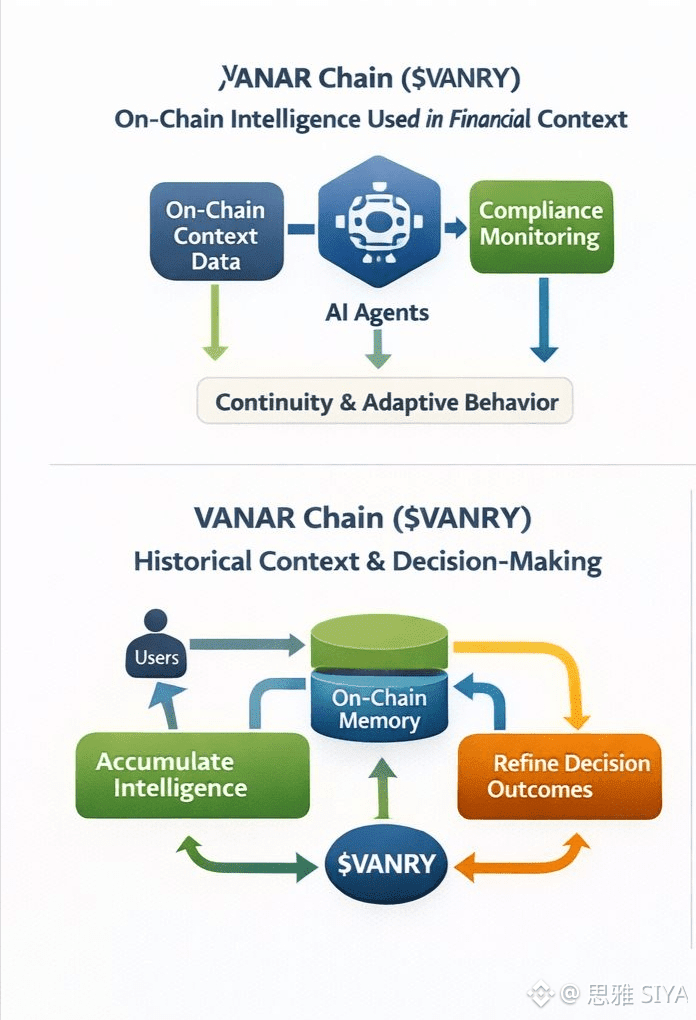
I read something significant in the manner of executing Vanar as well. The network enables the usage of context in contracts and agents, as opposed to the scenario where all transactions are treated as new events. In the long term, this allows adaptive behavior. Depending on previous results, systems may be more conservative, more efficient or more selective. That is how financial infrastructure evolves in the real world and it is uncommon to encounter it being so explicitly recognised on the protocol level.
The central figure here is played by $VANRY. VANRY is consumed whenever historical context is stored, referred to or applied. It implies that the token is not linked to the volume or speculation alone. It is associated with complexity of decisions. The more advanced the applications become, the higher the worth of running against memory. This resembles more closely the nature of infrastructure pricing in the non crypto world where more economic importance is assigned to deeper functionality.
The thing that I like the most is the fact that this design is not in a hurry. Vanar is not attempting to flaunt by using raw throughput and short term metrics. It is concentrated on becoming reliant. Financial systems have a long way to win trust, and they can lose it very fast. A chain that values memory, flexibility and continuity stands a higher probability of gaining such trust in the long run.
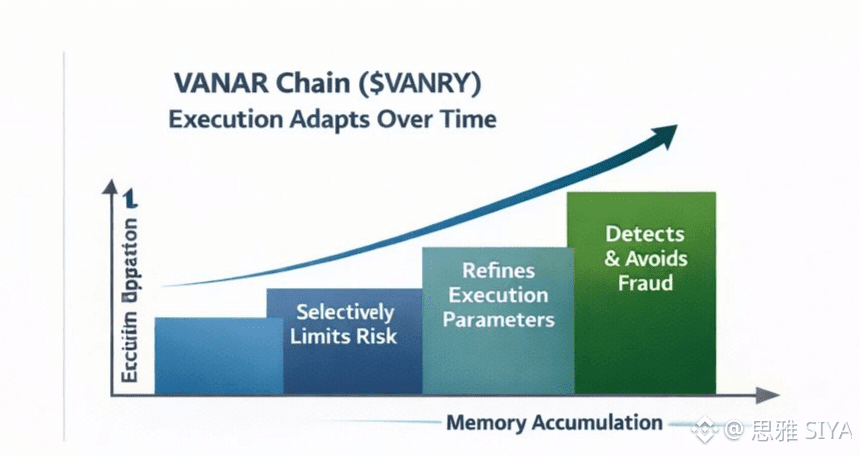
Today I would say that Vanar Chain is not placing itself as a disruptive experiment as much; it is a digital financial substrate. One who realizes that some things do not come in such as options as intelligence, history and context. They are the foundation. Such reasoning does not tend to be fashionable at the time, but it usually characterises what may persist in the future.