
Crypto payments rarely fail in dramatic ways. More often, they fail in moments that feel small but personal. A USDT transfer that pauses longer than expected, a wallet suddenly asking for BTC, BNB, or ETH to complete a “simple” payment, or a fee that changes at the final step. The transaction usually goes through, but confidence doesn’t. In payments, that hesitation matters. People remember uncertainty more than success, and over time, they stop reaching for systems that require extra attention when money is already in motion.


This is where many blockchains struggle as payment rails. Technically, they may be fast, cheap, or secure, but payments depend on behavior, not benchmarks. If fees fluctuate with network activity, if settlement speed changes without warning, or if users must constantly manage gas tokens they don’t care about, payments never become routine. Ethereum, Bitcoin, and BNB Chain each excel in their own domains, yet payments remain a secondary concern, inheriting congestion, volatility, and UX complexity from broader network activity.

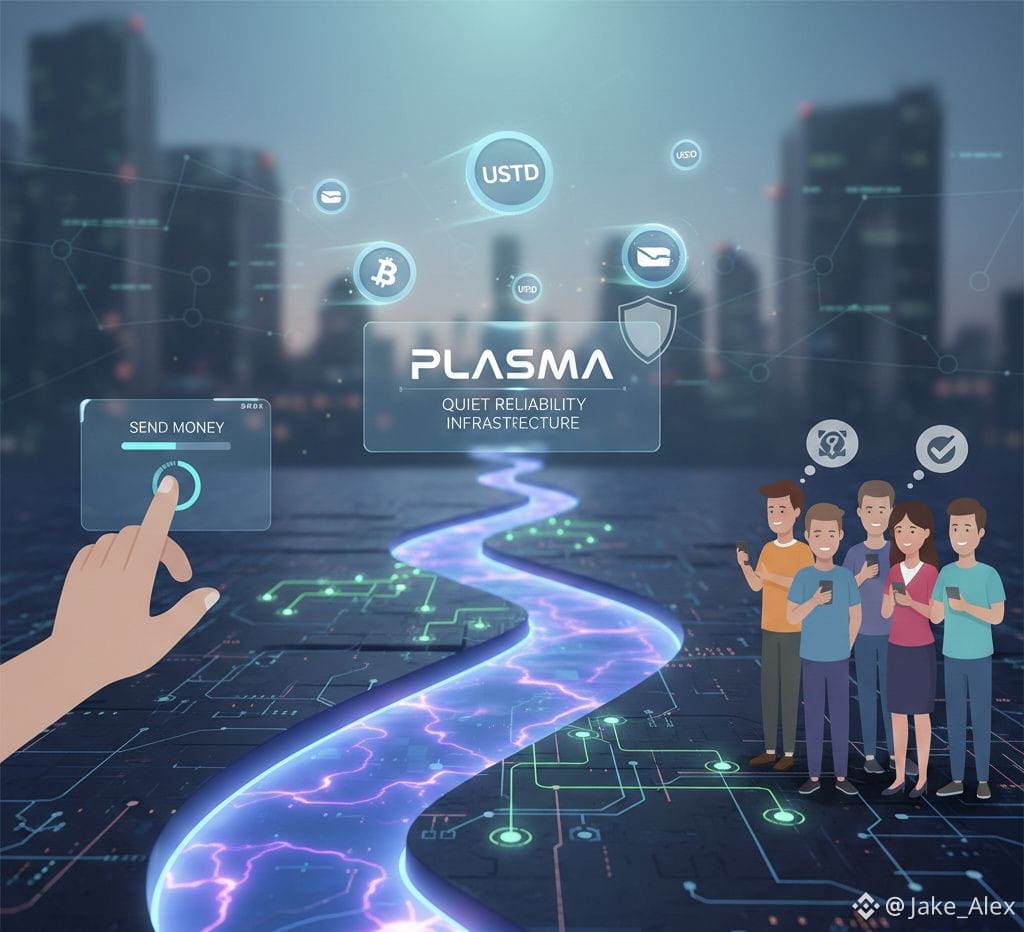
Plasma takes a narrower approach by treating stablecoin settlement as the primary job. Built as a payments-first Layer 1, it focuses on making transfers feel consistent through fast finality, gasless USDT transfers, and stablecoin-first fees. These are technical choices, but their impact is human: fewer interruptions, fewer decisions, and fewer reasons to hesitate. When sending money feels the same every time, users stop thinking about the network and start trusting the process. That quiet reliability is what turns a payment system into infrastructure, one uneventful transfer at a time.

