
VANAR entered my field of view not through announcement or excitement, but through posture. It felt built by people who had already seen what breaks when technology is designed for insiders rather than for the next wave of humans. There is a difference between chains that optimize for novelty and those that accept the quieter burden of real-world adoption. VANAR carries the latter weight without advertising it.

Having spent years around gaming, entertainment, and brands, the VANAR ecosystem seems shaped by a practical understanding of how people actually interact with digital worlds. Games are not abstractions. Metaverses are not ideas. They are lived environments, shaped by habit, continuity, and trust. When a system fails there, users do not complain loudly; they simply leave. That silent exit has taught the industry more than any postmortem ever did.
What distinguishes VANAR is not a single feature, but an attitude toward permanence. Its design treats digital objects, identities, and experiences as things that should persist, not disposable artifacts of short-term engagement. In Virtua, in the VGN games network, there is an implicit respect for memory, for worlds that do not reset every season just to chase attention. This creates a different relationship between system and user, one rooted less in excitement and more in confidence.
Over the years, I have learned that incentives shape behavior more than ideals ever will. VANAR feels structured around incentives that reward continuity rather than extraction. Governance here does not feel performative or rushed. It feels patient, as though decisions are made with the understanding that communities, especially mainstream ones, move slowly and value reliability over experimentation disguised as progress.
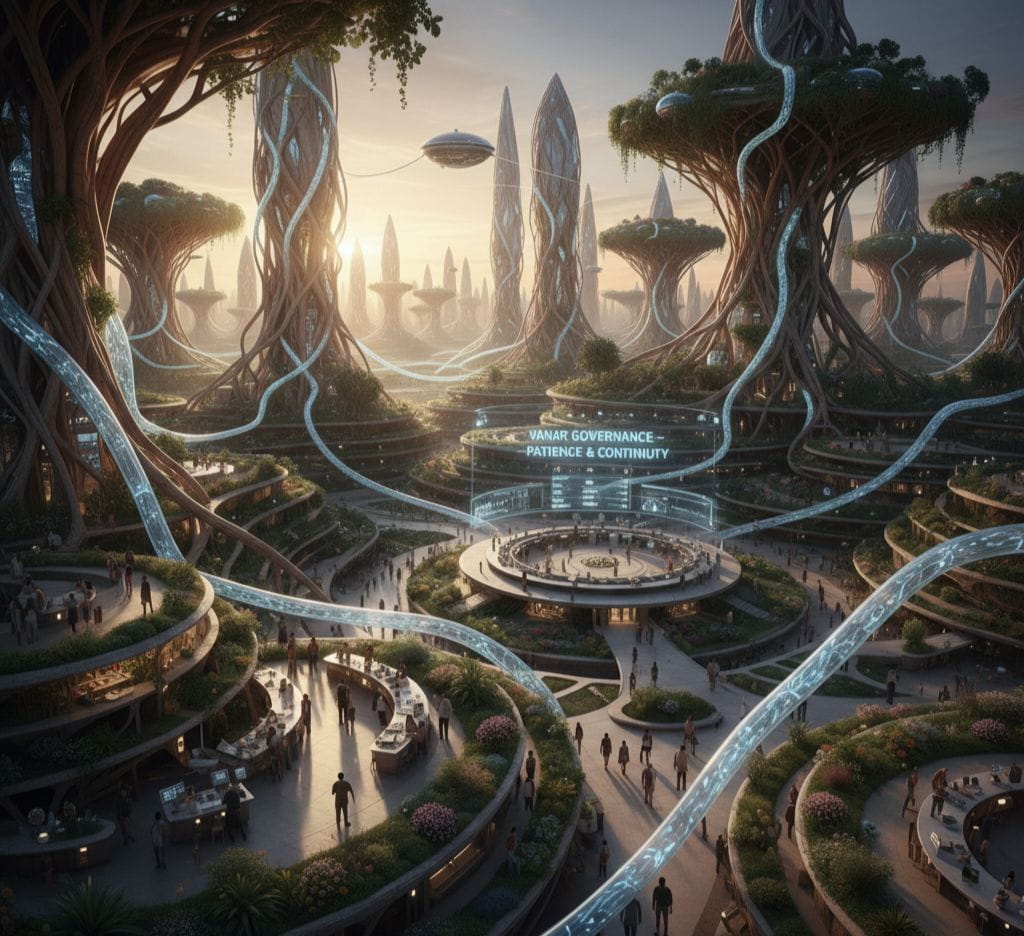
AI, eco systems, brand integrations, and Web3 applications often collapse under their own ambition when stitched together without care. VANAR’s approach feels more like urban planning than rapid construction. You sense an effort to let different verticals coexist without overwhelming one another, allowing users to encounter the technology naturally, often without realizing they are engaging with a blockchain at all. That quiet disappearance of complexity is not accidental. It is a form of respect.
DeFi, when viewed through this lens, stops being a playground and starts becoming infrastructure. VANAR’s relationship with decentralized finance feels less like a promise of opportunity and more like an acceptance of responsibility. Financial tools embedded into entertainment or gaming environments must behave predictably, even boringly, because trust in those spaces is fragile. Once lost, it rarely returns.
Having watched Ethereum evolve from experimentation into foundational infrastructure, I recognize the signs of a system that understands time. VANAR does not feel rushed to explain itself or prove itself. It seems aware that the next billions will not arrive through persuasion, but through environments that simply work, remember them, and do not betray their expectations.
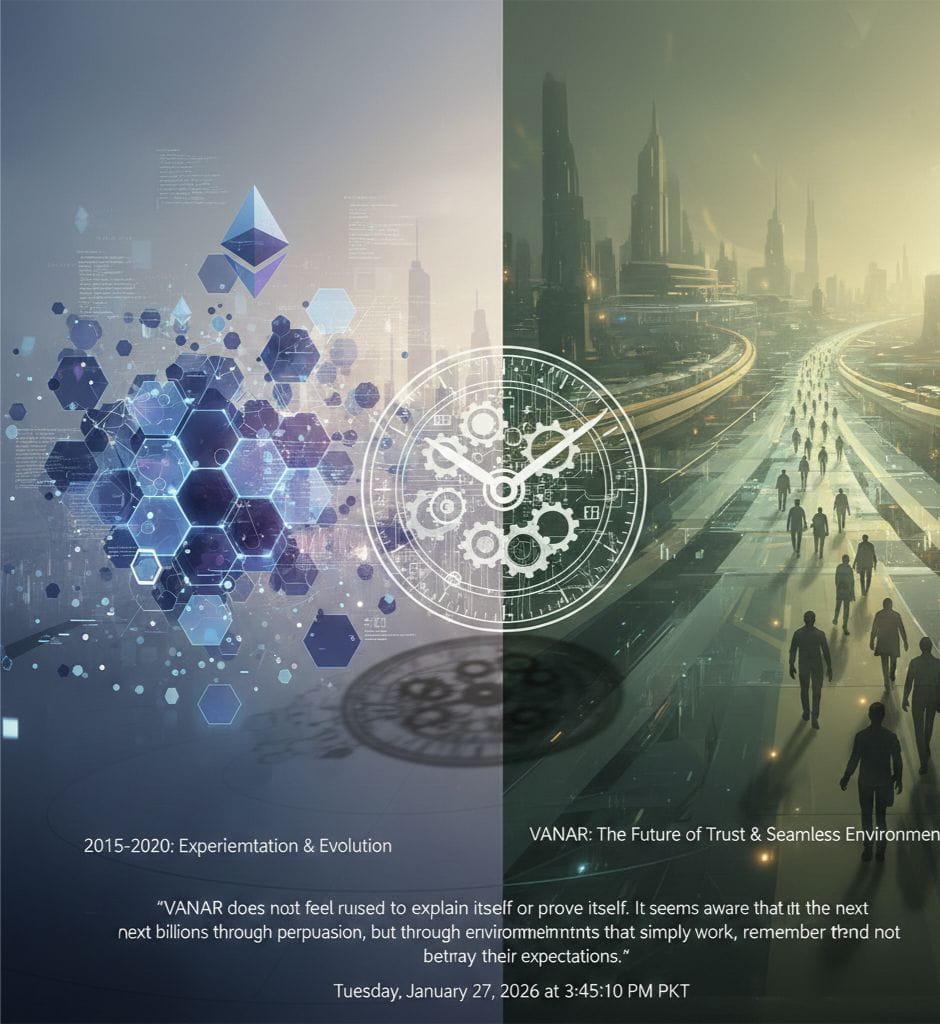
What ultimately endures in technology is not brilliance, but alignment. Memory held carefully. Incentives tuned to human behavior rather than speculation. Systems that assume people will stay, not flip. VANAR, powered by $VANRY , carries the quiet seriousness of a project that knows it may be judged not by how loudly it speaks today, but by whether it is still standing, familiar, and trusted when the noise has passed.
