
It Was Built for Things That Never Stop Running
Most blockchains are still built around one idea.
A human opens a wallet.
Clicks a button.
Waits.
Even when AI enters the picture, that idea doesn’t change much. AI is treated like a helper. Something that assists the human.
That assumption no longer holds.
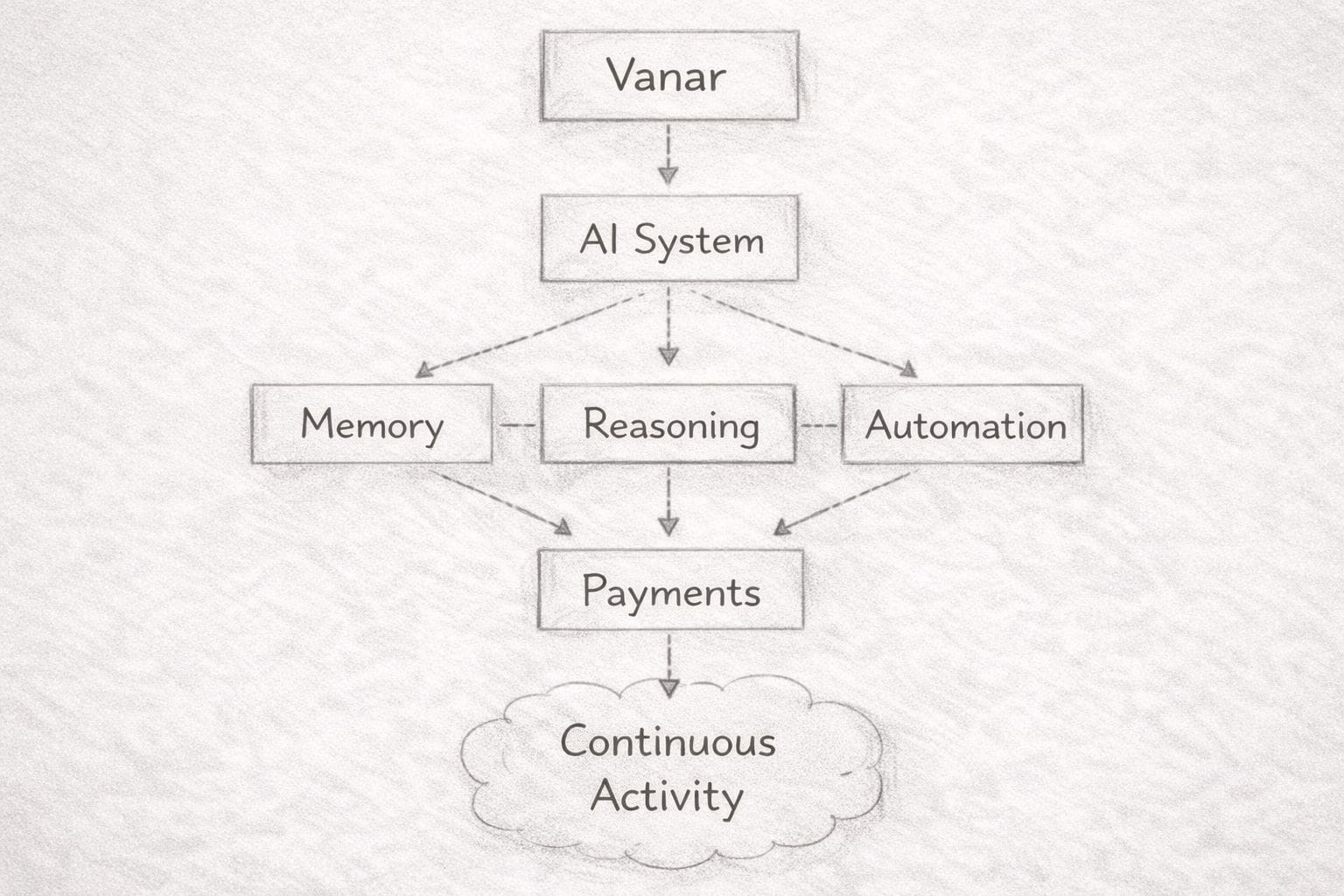
Vanar feels like it started from a different place. It feels like it assumed the next wave of activity won’t come from people clicking more. It will come from systems that don’t click at all.
AI Doesn’t “Use” a Chain the Way People Do
Humans interact in moments. You open an app. You do one thing. You leave.
AI doesn’t work in moments.
It runs.
It watches.
It remembers.
It decides.
Then it does it again.
There’s no pause.
Most blockchains aren’t comfortable with that. They expect quiet periods. They rely on congestion and pricing pressure to slow things down.
Vanar behaves like it expects activity to continue.
That’s a small design choice. But it changes everything.
This is the difference between a chain you use once and a system you rely on.
Why “AI-Ready” Chains Still Feel Fragile
A lot of chains say they’re AI-ready.
Usually that means they can host AI-related apps, store outputs, or process transactions generated by bots.
That’s fine. But it’s shallow.
AI-first infrastructure starts somewhere else.
It starts with the idea that intelligence is not a feature you add later.
It shapes the system from day one.
Vanar feels closer to that idea. Not because of how it talks. Because of how it behaves.
Memory Is Where Intelligence Either Grows or Stalls
People talk about storage all the time. But storage isn’t memory.
Memory means context.
Knowing what happened before.
Knowing why it matters now.
An AI system without memory doesn’t improve. It just reacts.
Vanar’s direction, especially with products like myNeutron, suggests memory isn’t treated as an afterthought. It’s treated as something the infrastructure itself should support.
That matters more than speed.
When Systems Never Pause, Infrastructure Can’t Either
AI doesn’t stop between actions.
It doesn’t wait for better timing.
It doesn’t “come back later.”
It keeps going.
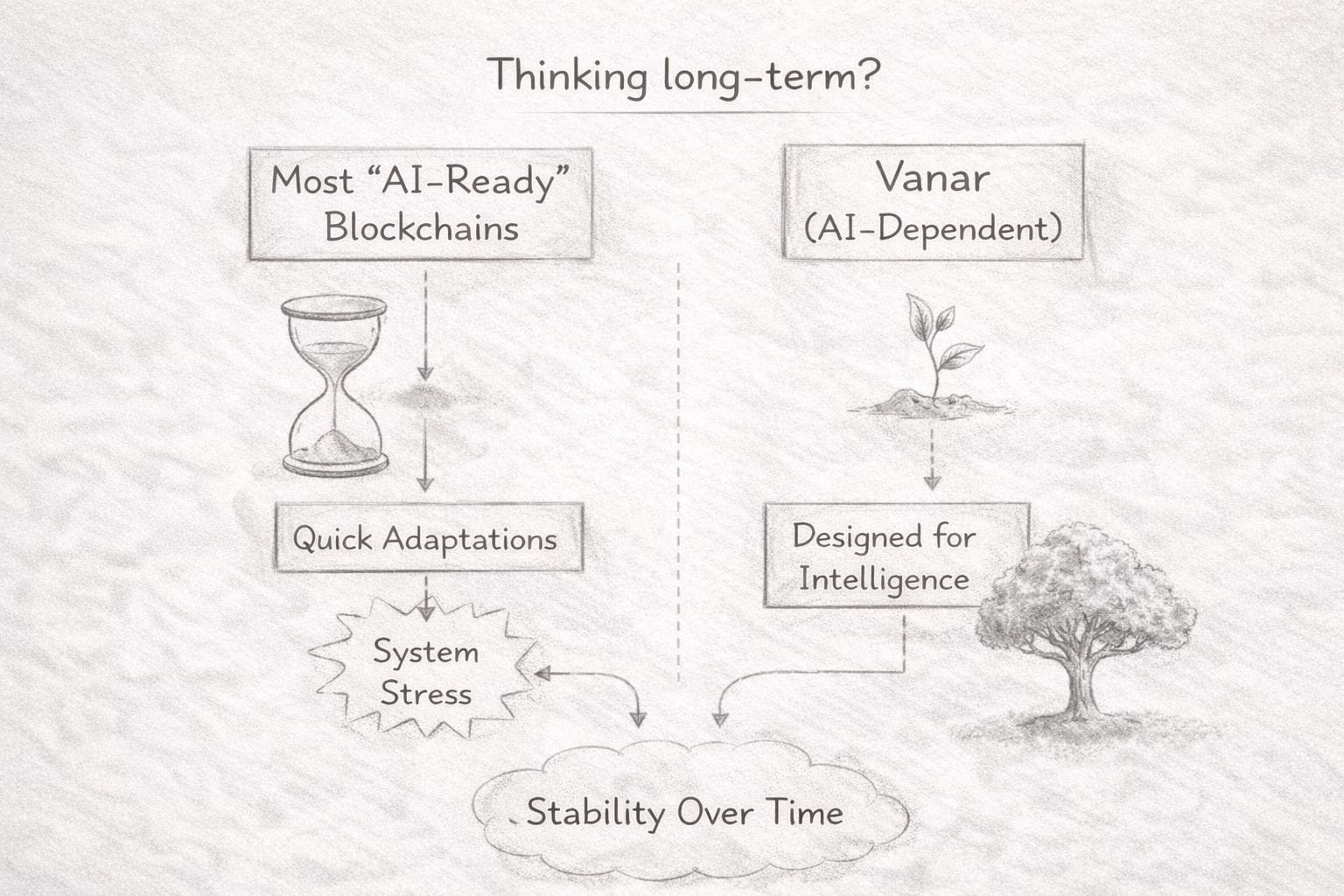
That creates a different kind of pressure on infrastructure. Not spikes. Not bursts. But continuity.
This is what happens when infrastructure is built for systems that don’t pause.
Automation Is Easy. Control Is Not.
Anyone can automate actions.
The hard part is knowing when not to act.
AI agents don’t hesitate. They don’t get tired. They don’t feel regret. Left unchecked, they create noise.
Vanar’s approach to automation, especially through Flows, feels careful.
Not just faster.
Safer.
More predictable.
Easier to explain later.
That’s the kind of automation enterprises and real users actually trust.
Gaming Wasn’t a Shortcut. It Was a Test.
Some people underestimate Vanar’s roots in gaming and entertainment.
That’s a mistake.
Games expose bad infrastructure quickly. Latency shows. Bugs surface. Poor design gets punished fast.
If a system works there, it’s usually solid.
AI systems behave more like games than finance. They run continuously. They react in real time.
Vanar didn’t start in theory. It started under pressure.
Payments Are Where Most AI Stories Break Down
AI agents don’t open wallets.
They don’t approve pop-ups.
They don’t wait.
They need settlement that works quietly and reliably.
Vanar’s focus on real economic activity, and the role of $VANRY within that system, suggests payments weren’t bolted on later. They were considered early.
That’s what separates systems from demos.
Final Thought
Most projects ask, “How can AI use our chain?”
Vanar feels like it’s asking something else.
What does a chain look like when AI is the main user?
That question leads to different decisions.
Different trade-offs.
Different outcomes.
And usually, the projects asking that question don’t look obvious at first.
They just keep working.
That’s the kind of infrastructure people don’t notice until they depend on it.
