
$In the fast-paced world of blockchain technology, where hype often overshadows substance, Plasma stands out as a project that's quietly reshaping how we think about stablecoins. Imagine a world where sending USDT – the world's most popular stablecoin – feels as straightforward as wiring money through a bank app. No fumbling for extra tokens to cover fees, no waiting around for confirmations that drag on, and no unexpected swings in costs that turn a simple transaction into a gamble. That's the promise Plasma is delivering, not through flashy marketing, but by designing its entire network around stablecoins as the star of the show. Launched in its mainnet beta in January 2026, Plasma isn't chasing the spotlight of being an all-purpose blockchain. Instead, it's focused on turning stablecoins into something that just works – reliably, predictably, and without the usual crypto headaches. With the global stablecoin market hovering around $310 billion and USDT alone commanding nearly $187 billion in circulation, Plasma's approach feels timely and essential. It's about making digital dollars feel normal, and in doing so, it could redefine payments in ways that go beyond the crypto bubble.
At its heart, Plasma treats stablecoins not as just another asset in a sea of tokens, but as the primary focus of the entire system. Most blockchains handle stablecoins like any other cryptocurrency – something you trade, hold, or use sparingly. But Plasma flips the script. It's built from the ground up to make USDT and similar assets the default way to interact with the network. This shift isn't just technical; it's a psychological game-changer for users. Think about the frustration of wanting to send USDT but realizing you need to buy the chain's native gas token first. It's like arriving at a toll booth with cash but being told you need quarters instead – you have the money, but you can't use it until you make an extra stop. Plasma says no to that nonsense. Its gasless USDT transfers mean you can send stablecoins without worrying about acquiring a separate token for fees. This isn't some half-baked workaround; it's baked right into the network's core, using smart authorization flows that handle the costs behind the scenes.
What makes this so powerful is how it mirrors everyday finance. You don't preload "internet credits" to browse a website or send an email – the infrastructure just handles it seamlessly. Plasma's documentation outlines a thoughtful rollout: starting with controlled access to prevent abuse, then expanding as the system proves itself. It's a pragmatic, payments-minded strategy. Ship the feature, monitor for issues, and scale carefully. This isn't glamorous, but it's how real-world money systems evolve – think of how credit card networks started small and built trust over time. By refusing to let gas fees create barriers, Plasma lowers the entry point for newcomers. That first-time user cliff, where crypto feels intimidating, gets smoothed out. Suddenly, stablecoin transfers become intuitive, encouraging more people to dip their toes into on-chain payments without the usual friction.
But gasless transfers are just the tip of the iceberg. Plasma takes it a step further with its "stablecoin-first gas" model, which tackles a deeper pain point for anyone dealing with regular transactions. If you're running a business – say, handling payroll for remote workers, sending remittances to family abroad, or settling payments with suppliers – the last thing you want is fees denominated in a volatile asset. Imagine budgeting for employee salaries in USDT, only to have your transaction costs spike because the gas token's price jumps 10% overnight. It's not just annoying; it's a risk that turns predictable expenses into market bets. Plasma fixes this by allowing fees to be paid primarily in stablecoins like USDT. This makes costs feel like a straightforward business line item – something you can forecast and plan for, just like utility bills or rent.
This isn't a flashy gimmick; it's an accounting essential. In traditional finance, predictability is king. You don't want to explain to your accountant why your remittance fees doubled because of crypto volatility. Plasma's design ensures that transaction costs stay aligned with the unit you're settling in – stable and steady. For operators and businesses, this alone could be a game-changer. Picture a small e-commerce merchant in Boston using Plasma to accept USDT payments from global customers. Fees come out in USDT too, so there's no currency mismatch headache. Or a freelancer platform paying out in stablecoins weekly – budgeting becomes reliable, not reactive. With stablecoins already powering billions in daily volume, features like this could quietly shift more real-world activity on-chain, away from clunky legacy systems.
Performance is another area where Plasma shines, proving that it's not just talk – it's delivering on the ground. As an EVM-compatible chain, Plasma leverages the familiar Ethereum Virtual Machine, which means developers can port apps easily without starting from scratch. But what sets it apart is the consensus mechanism tuned for sub-second finality. In payments, speed isn't about bragging rights; it's about trust. Slow confirmations mean wallets have to show confusing "pending" states, and merchants end up creating their own risk rules to decide when a payment is "good enough." Plasma changes that. Blocks come in around one second, with finality hitting in under that time. Right now, the Plasma explorer shows over 145 million transactions processed, averaging about 3.8 transactions per second (TPS). That's not headline-grabbing like some high-throughput hype chains, but it's perfect for what stablecoin settlement needs: steady, repetitive traffic that handles everyday use without drama.
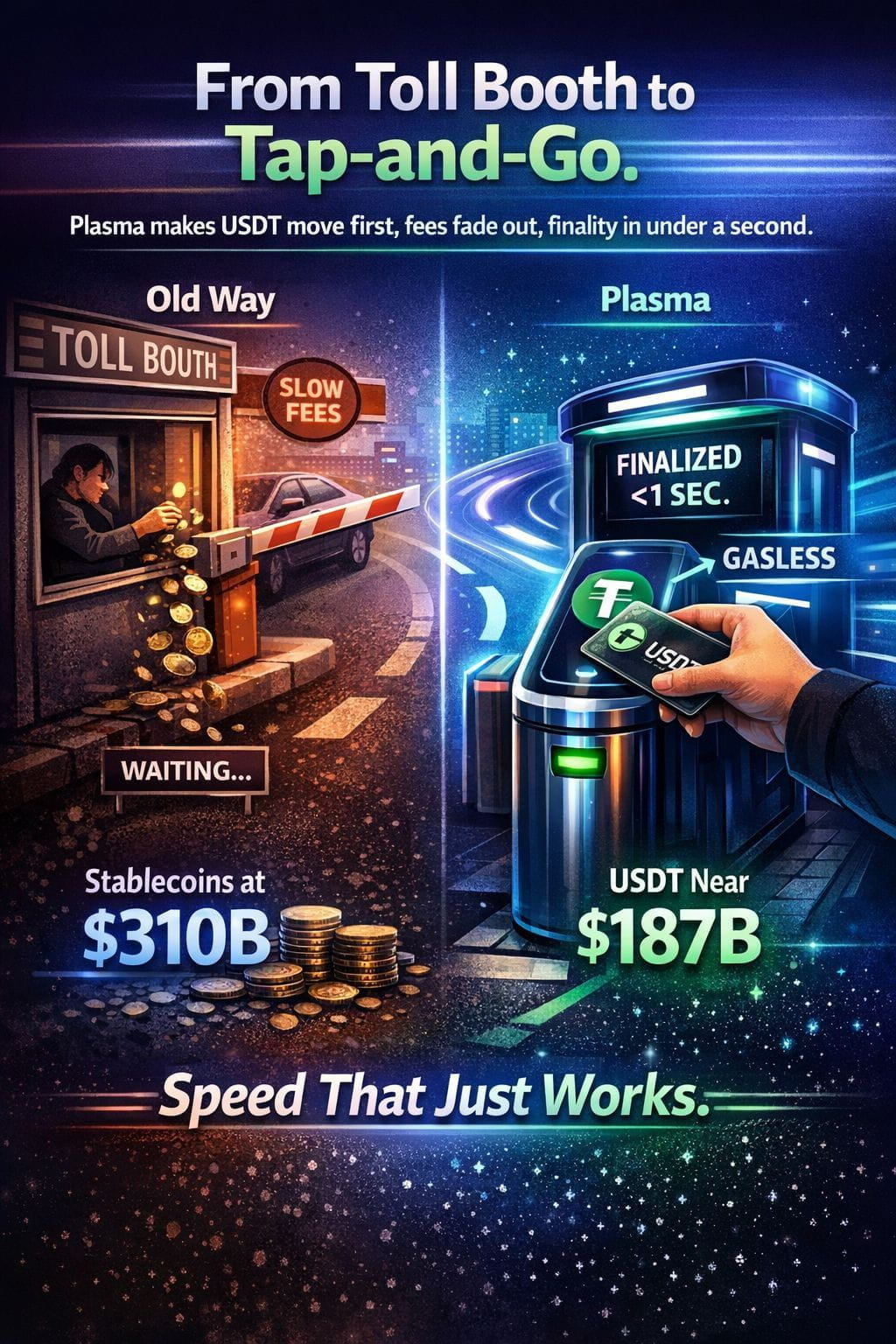
This kind of performance hints at real adoption already brewing. Those 145 million transactions aren't from viral memes or speculative trades; they're the boring, essential kind – transfers, settlements, and routine operations. In a payments network, that's the gold standard. Fast finality means a receipt is a receipt; you can treat it like cash in hand, not some probabilistic promise. For users, it means sending USDT feels instant and reliable, reducing the anxiety of "is it there yet?" For developers building on Plasma, it opens doors to apps that demand quick settlements, like micropayments or instant remittances. Since the January 2026 mainnet beta launch and the opening of public RPC endpoints, integrations have become lighter and faster. Wallets and apps can hook in without heavy lifting, making it easier for stablecoin ecosystems to expand.
One of the more intriguing aspects of Plasma is its Bitcoin-anchored security narrative. This isn't just a tech demo; it's a strategic move toward long-term neutrality. As a network that could handle serious stablecoin volume, Plasma knows it will face pressures – from regulators, big players, or even market forces – to censor transactions or prioritize certain users. By tying into Bitcoin's security model, Plasma aims to create a harder-to-capture foundation. Bitcoin's decentralized, battle-tested network serves as a neutral anchor, making it tougher for any single entity to control the rail. It's a smart play for building trust, especially with institutions and high-volume retail users who need assurance that the system won't bend under pressure.
That said, it's important to keep expectations grounded. Plasma's own mainnet beta announcements and docs are upfront: not every piece of this Bitcoin bridge is fully live at launch. It's a roadmap item being built out methodically. Rather than overhype it as "done," think of it as a commitment to evolving beyond relying on one foundation or validator group. This honesty builds credibility. In a space full of vaporware promises, Plasma's approach – deliver what's ready, roadmap the rest transparently – feels refreshing. As the Bitcoin elements mature, they could solidify Plasma as a secure, neutral layer for stablecoin flows, appealing to users wary of centralized risks.
What really makes Plasma feel tangible, rather than some abstract whitepaper dream, is the growing ecosystem of tools and distribution channels. A payments chain doesn't succeed on clever ideas alone; it needs reliable infrastructure that developers and users can actually use. That's where integrations like Tenderly come in. Tenderly's support for Plasma means builders can debug code, simulate transactions, and monitor live systems without makeshift solutions. For payments-focused devs, this is huge – they need precision to handle real money, not slogans. It's like having a professional toolkit for plumbing; it ensures the pipes don't leak when scaling up.
On the user side, support from trusted wallets is key to distribution. Trust Wallet's integration with Plasma brings the network to millions who already use it for stablecoins daily. No need to switch apps or learn new interfaces; just seamless access to Plasma's features. This matters because stablecoins thrive where people already live – in mobile wallets handling everyday transfers. With open RPCs since launch, more tools are following suit, creating a flywheel of adoption. Developers build because it's easy, users join because it's familiar, and the network grows organically.
Shifting to the token economics, Plasma's XPL token is positioned thoughtfully as the backbone for network security, not a shiny consumer asset. In a stablecoin-centric world, the ideal setup is users sticking mostly to USDT for daily ops, while XPL handles the heavier lifting: validator rewards, delegation, and long-term incentives that keep the system honest and performant. According to the Plasma explorer, XPL is currently trading around $0.12, with a market cap of about $257.8 million. This isn't financial advice – just a real-time snapshot from the chain itself, reflecting its role in sustaining the ecosystem.
The mainnet beta announcement ties XPL directly to Plasma's economic design, emphasizing how it evolves with the network. It's not meant to overshadow stablecoins; instead, it supports them by funding security and growth. This separation is healthy – it avoids the trap of forcing users into token speculation just to use the chain. Validators and delegators get the bulk of the utility, ensuring the network stays decentralized and resilient. As Plasma matures, XPL's value could stem from its real contributions to uptime and fairness, rather than hype cycles.
To tie it all together, Plasma's difference boils down to this: it's engineering the chain so stablecoins aren't an afterthought or a "clever app" – they're the default mode of operation. This pivot means optimizing for the unglamorous realities of finance: costs you can predict, confirmations that land instantly, and a security story built to withstand real-world pressures. It's a refusal to cater to crypto's thrill-seeking culture and instead embrace the steady rhythm of boring money movement. Sending USDT on Plasma feels like it should – simple, efficient, and without the toll-booth hunt for gas tokens.
Looking ahead, a few key things will determine if Plasma truly becomes the invisible plumbing for stablecoins. First, how fast do gasless USDT transfers and stablecoin gas roll out to broader apps and wallets? They need clear rules and safeguards against abuse to scale without hiccups. Second, will on-chain activity keep showing that settlement pattern – steady, repetitive volume rather than fleeting incentive chases? With 3.8 TPS and 145 million transactions already, it's off to a promising start. Third, how do the Bitcoin-anchored security features harden into robust infrastructure? If these pieces click, Plasma evolves from "another L1" into something rarer: the go-to rail for stablecoin payments that users rely on without a second thought.
Since the January 2026 launch, Plasma has integrated with Binance in meaningful ways, enhancing accessibility for stablecoin users. Through Binance Earn, for instance, holders can now tap into on-chain yields for USDT directly on Plasma, blending the exchange's liquidity with the network's efficiency. This partnership underscores Plasma's focus on practical utility, making it easier for Binance users to move stablecoins seamlessly without leaving their familiar ecosystem. As stablecoins like USDT push toward $187 billion in market cap, features like sub-second finality and predictable fees become the real differentiators – boring speed that actually matters for everyday use.
In essence, Plasma is reinventing stablecoin payments by making them feel ordinary in the best way possible. It's not about revolutionizing everything; it's about fixing the little things that make crypto feel broken. For businesses budgeting in stablecoins, developers building reliable apps, and users just trying to send money without drama, Plasma offers a breath of fresh air. With its EVM compatibility, fast performance, and thoughtful token design, it's positioning itself as the quiet enabler of a stablecoin-dominated future. As adoption builds – through tools like Tenderly, wallets like Trust Wallet, and integrations with platforms like Binance – Plasma could quietly become the infrastructure layer that powers trillions in digital payments. In a world where stablecoins are already a $310 billion behemoth, this kind of focused innovation might just be the key to unlocking their full potential.


