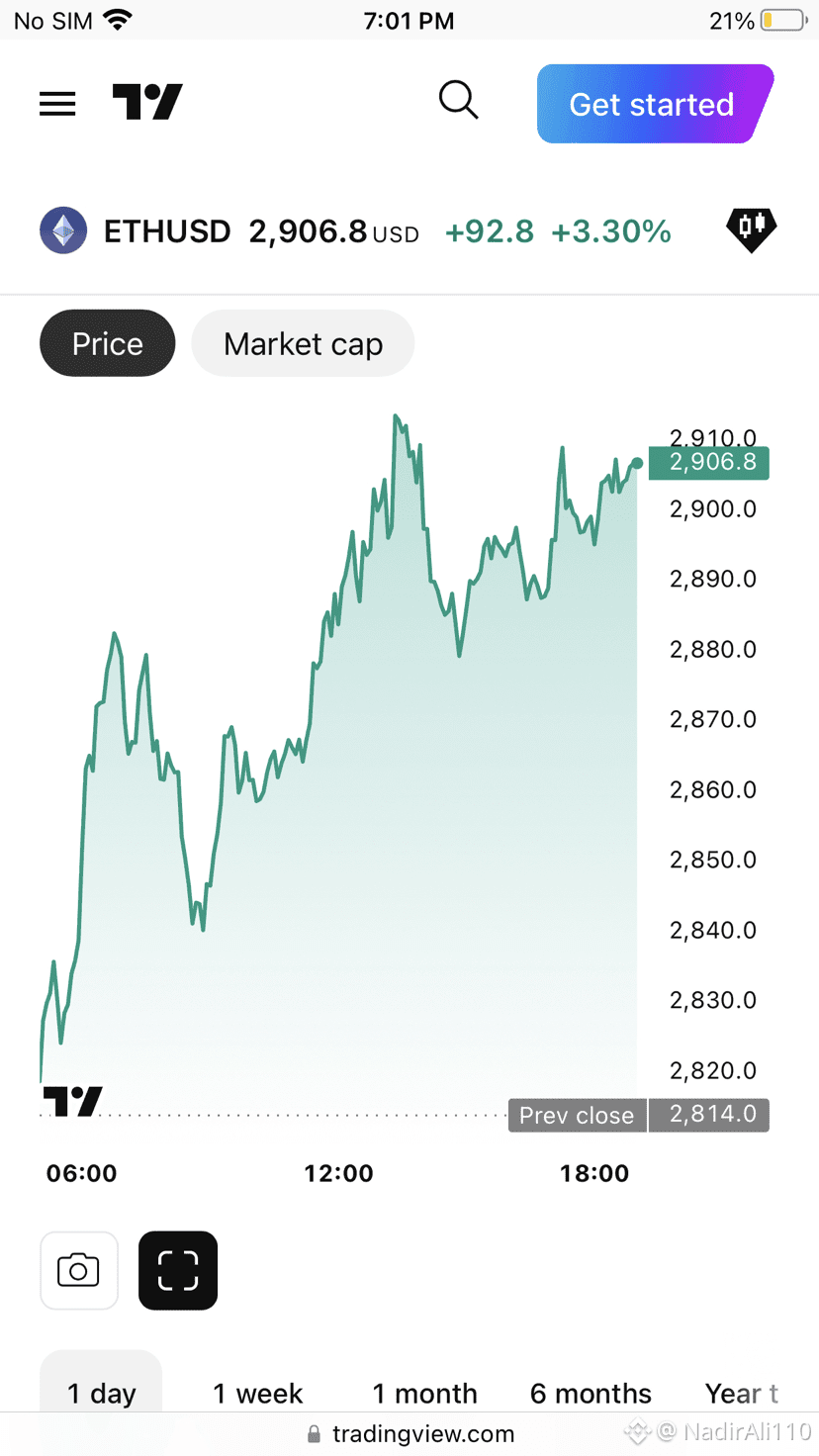
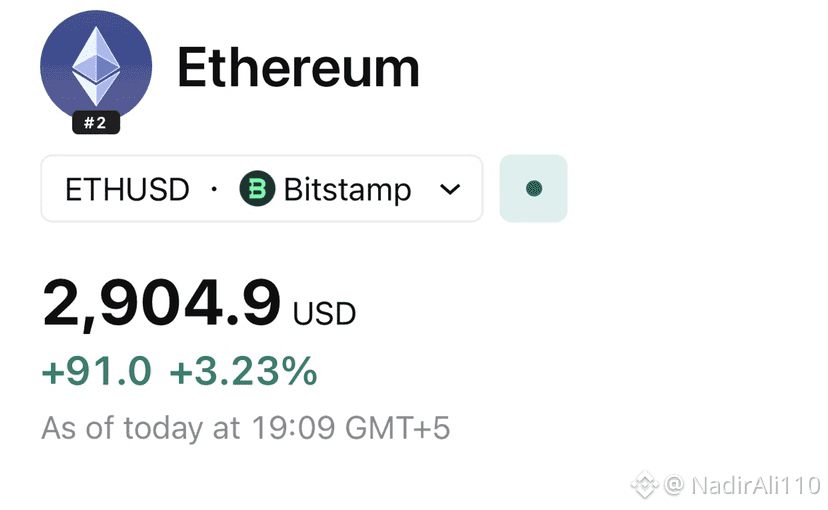
Ethereum $ETH is trading around $3,100, nearly 40% below its all-time high of nearly $5,000 set in mid-2025. Despite this, a powerful narrative is building: major financial institutions are declaring 2026 to be "The Year of Ethereum." The world's second-largest cryptocurrency is undergoing a profound identity shift, evolving from "ultrasound money" into the core settlement layer for trillions in real-world assets.
📈 The 2026 Thesis: Beyond Speculation, Toward Utility
The investment case for Ethereum this year hinges on its unique positioning at the intersection of technology and traditional finance. Unlike Bitcoin, Ethereum was designed as a programmable world computer, enabling it to become the backbone for decentralized finance (DeFi), stablecoins, and now, the tokenization of everything.
Standard Chartered's analysts are leading the bullish charge, predicting $ETH will outperform Bitcoin in 2026, with the ETH/BTC price ratio potentially returning to its 2021 high. They cite Ethereum's dominant role in stablecoins and tokenization, alongside successful scaling upgrades, as key drivers.
🏛️ The Institutional Onramp: Wall Street Builds on Ethereum
The most significant shift is the quiet but monumental adoption of Ethereum by the world's largest financial institutions for real-world asset (RWA) tokenization.
· Dominant Market Share: Approximately 66% of all tokenized assets are hosted on the Ethereum ecosystem, dwarfing the share of any competitor.
· A Who's Who of Finance: A wave of major institutions chose Ethereum as their primary platform in 2025:
· BlackRock launched its USD Institutional Digital Liquidity Fund (BUIDL).
· JPMorgan issued its first tokenized money market fund.
· Fidelity, Apollo, Amundi, and BNY Mellon have all tokenized funds or credit products on Ethereum.
· ETF Flows: Spot Ethereum ETFs, like BlackRock's iShares Ethereum Trust, now hold billions in assets, creating a crucial bridge for institutional capital.
This institutional activity is not just theoretical; it creates tangible demand. Firms like Bitmine are purchasing and staking hundreds of millions of dollars worth of ETH, directly reducing the liquid supply available on the market.
⚙️ The Tech Foundation: Upgrades and Scalability
Ethereum's utility depends on its technical capability. The successful implementation of the Fusaka upgrade in December 2025 has been a recent catalyst.
Purpose of Fusaka: This upgrade increased the network's data capacity, which significantly lowered transaction costs for Layer 2 scaling networks (like Arbitrum and Base) that rely on Ethereum for security.
The Scalability Trade-off: There is a critical tension here. While Layer 2s make Ethereum more usable, they also route a portion of transaction fees away from the main Ethereum chain. This has led to a new reality where ETH's monetary policy is now "modestly inflationary" during periods of normal activity, as the token "burn" mechanism is less active. The challenge for 2026 is converting massive ecosystem growth into sustainable value for ETH holders.
📊 Price Outlook: Scenarios for the Year
Analysts use scenario-based frameworks to model Ethereum's potential given numerous variables. The following outlines potential valuation ranges based on adoption, macroeconomic conditions, and market-structure outcomes.
Base Case
· Price Range: $3,400 - $3,700
· Key Drivers: Modest ETF inflows, neutral macro conditions. Scaling solution growth fails to translate into higher mainnet fees.
Bull Case
· Price Range: $3,900 - $4,200
· Key Drivers: Accelerating L2 activity, rebounding fee burn, resumption of strong ETF inflows. Federal Reserve rate cuts making ETH's ~3% staking yield more attractive.
Bear Case
· Price Range: $1,700 - $2,200
· Key Drivers: Prolonged risk-off environment, continued revenue compression, and significant ETF outflows.
Beyond 2026, firms like Standard Chartered have long-term targets of $15,000 by 2027 and $30,000 by 2029.
⚠️ Navigating the Risks
Investing in Ethereum is not without significant risks that could derail the bullish thesis:
· Value Capture Challenge: The growth of Layer 2 networks could continue to compress fees on the main Ethereum chain, capping its revenue potential.
· Inflationary Supply: With lower fee burns, $ETH supply may remain net inflationary, acting as a persistent headwind to price.
· Regulatory Uncertainty: While the current U.S. administration is seen as pro-crypto, the path of major legislation like the Digital Asset Market Clarity Act remains uncertain and impactful.
· Fierce Competition: Blockchains like Solana offer lower costs and faster speeds, continually competing for developer and user attention.
💡 The Strategic Perspective
Ethereum's story for 2026 is one of maturing fundamentals. Its value is becoming less tied to speculative hype and more to measurable, real-world economic activity. As BlackRock's analysts concluded, as we look toward the next era of tokenization, "Ethereum may be poised to be a beneficiary of growth."
For investors, this means evaluating Ethereum not merely as a cryptocurrency, but as a leveraged claim on the growth of the entire on-chain financial system. Its success hinges on its ability to monetize its position as the world's dominant settlement layer for the digital assets of the future.
#ETH #Ethereum #Mag7Earnings #ScrollCoFounderXAccountHacked