


The question didn't come from infra.
It came from finance.
Someone noticed a line item tied to a Walrus blob that had quietly dropped off the books. Same project. Same quarter. No alert. No incident. Just... gone.
The data wasn't lost. That wasn't the claim.
It just hadn't been renewed.
That's the moment Walrus gets uncomfortable. Not when you upload. Not when you retrieve. When the window closes and nobody remembers why the blob was there in the first place.
Because renewal is a decision, even when people treat it like housekeeping.
Most teams don't mean to let things expire. They just don't schedule intent. A blob arrives tied to a launch, a proof, a dataset someone swore would matter later. Weeks pass. The downstream system keeps working. Nobody touches it. On most storage, that's fine. Silence equals survival.
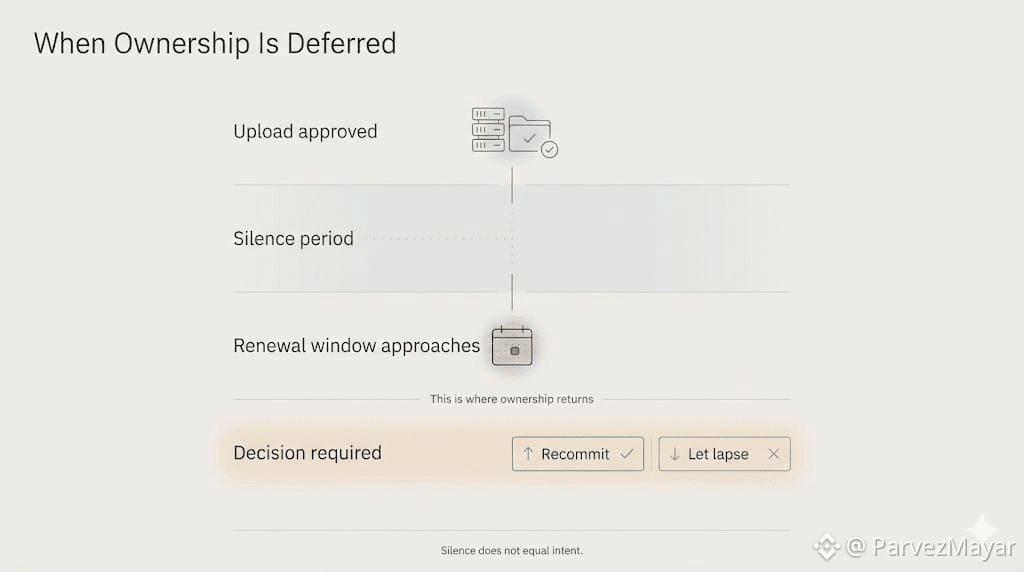
On Walrus, quiet weeks don't protect you.
The window ends whether you're ready or not.
That's how the pressure shows up: not as failure, but as a question that lands too late. Are we still standing behind this data? And if the answer is "I think so," you're already in trouble.
People scramble in familiar ways. Someone digs through logs. Someone checks old tickets. Someone swears it was renewed and then goes quiet. But technical presence isn't the same as an active obligation, and when the audit trail doesn't show a proof-of-availability clearing for that window, there's nothing left to argue with.
After that, behavior changes.
Calendars appear. Owners get named retroactively. Renewal windows shrink. "Misc" stops being a category. Not because anyone suddenly loves discipline, but because nobody wants to be the person explaining why something expired quietly and on schedule.
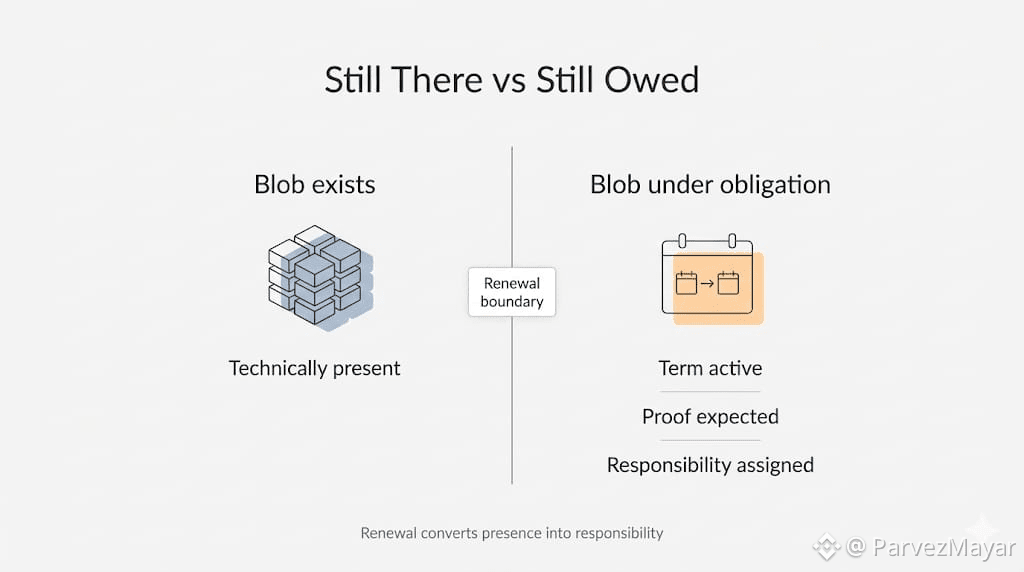
Walrus just makes the decision show up on paper.
The next thing created wasn't a postmortem.
It was a calendar invite.

