
Vanar doesn't fail because people don't know what it is. It runs the danger of failing for the same reason that many technically sound projects find it difficult to expand: users do not feel comfortable using it. In the marketplace, familiarity is frequently misinterpreted as a mushy term that comes second to innovation or performance. Familiarity is actually infrastructure. It is the silent layer that transforms exploration into long-term use and curiosity into habit.
The majority of traders and investors prefer to think that better technology is what drives adoption. Chains that move more quickly win. Less expensive fees prevail. Better architectural design prevails. However, historical evidence points to a different conclusion. The least novel tools are typically the ones that proliferate the fastest. They appear to be familiar. They act in a predictable manner. Instead than increasing cognitive strain, they lessen it. Vanar joins a market where consumers are already weary of novelty. fresh wallets. new user interfaces. new regulations. fresh dangers. In this context, even well-thought-out concepts may seem like friction.
The central promise of Vanar is situated at a fascinating juncture. It seeks to serve consumer-focused apps, gaming, and digital environments where emotional comfort is equally as important as performance. These customers don't constantly refresh their dashboards because they are not DeFi power users. Web2 platforms have already shaped the mental models of these gamers, artists, and studios. Users silently withdraw when anything violates such models too forcefully. They don't voice any complaints. They just walk away. This is where the lacking component is familiarity.
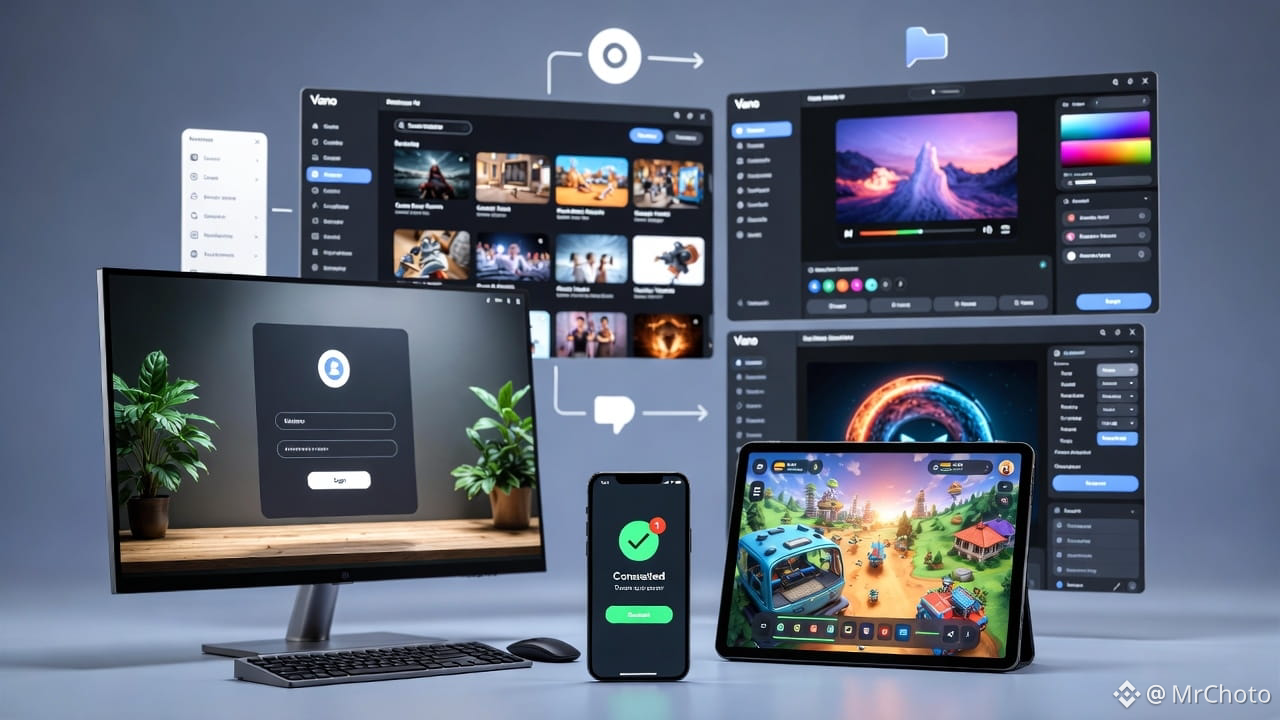
Examine how today's mainstream people engage with digital platforms. They anticipate successful logins. Quick settlement of transactions. Interfaces should appear natural without more explanation. They don't want to start by learning a new word. Confusion is frequently seen as a necessary aspect of the learning curve in the field of cryptography. Confusion is a deal breaker for widespread adoption. Raw throughput and feature depth are not Vanar's long-term problems. It's whether utilizing Vanar seems evident after a few minutes or unimpressive after a few hours.
This dynamic is already suggested by market data. Even when incentives decrease, chains with consistent user growth typically have reduced turnover. There is less variation in their daily active users. Beyond token payouts, their applications continue to be used. This trend may be seen in centralized exchanges, creative platforms, and game ecosystems. When incentives diminish, familiar flows perform better than new mechanics. Vanar's chance is to accept this truth instead of opposing it.
This becomes inevitable when it comes to the retention issue. Early adopters are willing to try anything. Users in the future won't. Technically, the chain did not fail if a player bridges assets once and never returns. Experientially, it failed. Adding more features is not the goal of retention. Eliminating reasons to depart is the goal. No marketing strategy can improve retention more than familiar navigation, predictable expenses, and reliable performance. When volume spikes vanish as soon as incentives expire, traders can readily notice this. Those cliffs are smoothed by familiarity.
An example from everyday life clarifies this. Think about the number of users who made their first online payment. Users were not taught about cryptography or settlement layers by the winning systems. They imitated preexisting habits. Transfer funds. View the confirmation. Proceed. The intricacy remained concealed. Crypto frequently has the opposite effect. It emphasizes complexity and refers to it as transparency. The lesson is painful but essential for infrastructure such as Vanar. The chain is not something that users want to feel. They want to experience the result.
This reframes Vanar's evaluation for investors. Partnerships and roadmaps are important, but user behavior is more important. Are Vanar-based applications increasing or decreasing friction? Are recurring users increasing naturally or just during incentive periods? Do developers create with familiarity or originality in mind? Compared to headline announcements, these signals are more predictive.
Vanar has an opportunity to intentionally close this gap according to its positioning. It can become background-fading infrastructure by putting familiar user processes, steady performance, and predictable interaction patterns first. That is not a flaw. Mass platforms succeed in this way. Volatility is regularly chased by traders. Elegance is the goal of builders. People strive for comfort. Long-lasting chains typically benefit the final group the most.
.
This is not a call to action for exaggeration or naive optimism. It's for self-control. If you are a builder in the Vanar ecosystem, consider your user's lack of patience and desire in understanding cryptocurrency. Keep a closer eye on retention metrics than announcements if you are an investment. As a trader, you should be aware that familiarity gradually builds up over time, frequently before the price reflects it.
Seldom does mass adoption happen in a big way. It appears when something ceases to feel novel. Vanar's future might depend more on what it makes feel natural right now than on what it adds in the future.#vanar $VANRY @Vanarchain
