


When I look at how blockchains have developed I see two main needs On one side is transparency so anyone can see transactions and verify them On the other side is privacy which is essential in real financial markets Public blockchains like Ethereum show that large scale finance can run on decentralized ledgers but all transaction details are visible This is a problem for regulated markets where confidentiality compliance and speed matter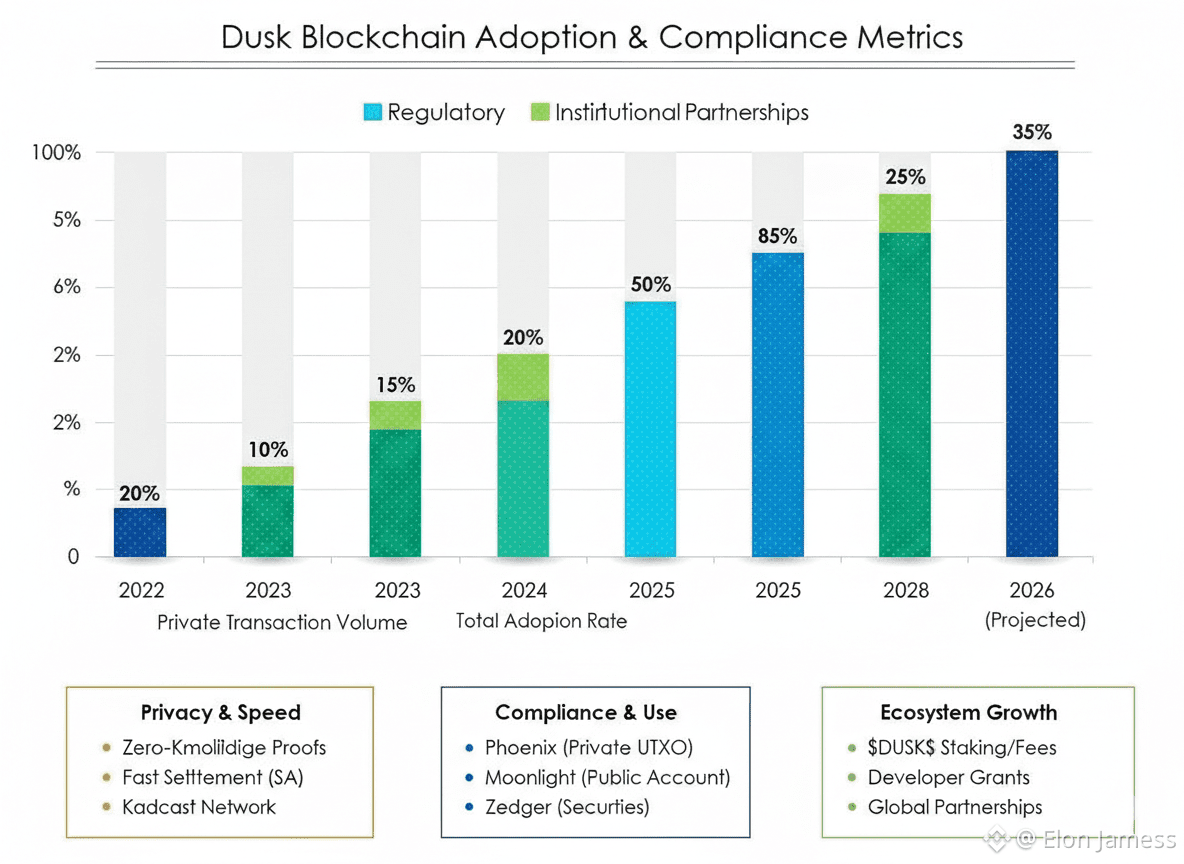
Dusk is interesting because it tries to solve this problem It is designed to let institutions use blockchain while keeping sensitive data private and still following rules It uses zero knowledge proofs so transactions can be checked for things like anti money laundering without showing the actual details Auditors and regulators can verify compliance without seeing private information This makes Dusk appealing for banks asset managers and exchanges that must follow regulations in Europe and other regions It is like giving Monero style privacy but with the ability to meet regulatory standards
The technology behind Dusk is built from scratch not copied from other chains The main consensus mechanism is called Succinct Attestation or SA It is proof of stake and ensures transactions are final in seconds This is important for financial markets where speed and certainty are required Validators attest blocks using zero knowledge proofs so the network is fast and secure Dusk also uses Kadcast a peer to peer network protocol that spreads messages efficiently to reduce congestion and improve speed
Dusk supports two transaction models Moonlight which is account based and fully transparent like Ethereum for cases where full visibility is fine Phoenix which is UTXO based allows amounts and participants to stay private while still proving compliance to authorized auditors This dual model lets Dusk handle both public and privacy sensitive activity on the same chain On top of these Dusk offers Zedger a smart contract framework for confidential securities token offerings and corporate actions It can handle dividend distribution share issues on chain and maintain privacy at the same time
Dusk has its own token DUSK which is used to incentivize participants Stakeholders who hold DUSK can take part in consensus produce blocks and earn fees Transaction fees are also paid in DUSK and validators must meet compliance rules to participate This encourages good behavior and reduces risks of malicious actions The design combines economic incentives with regulatory alignment
The network is designed for real world finance and regulatory compliance It can support issuance and redemption of securities manage corporate governance functions and run private auctions All while allowing partial transparency for regulators to audit transactions Unlike privacy coins like Monero Dusk balances privacy with compliance making it suitable for institutional adoption Fast settlement and Kadcast network design reduce risk and congestion making the network competitive with traditional financial infrastructure
There are risks of course The cryptography is complex and must be carefully audited Zero knowledge proofs are powerful but need scrutiny Acceptance by financial institutions is key The network relies on them for adoption Regulatory changes could require adjustments and there is competition from other blockchains Established networks may have more liquidity or developers so Dusk will need to prove itself in execution
Overall Dusk is a thoughtful attempt to balance transparency and privacy for blockchain in finance Its consensus network dual transaction models zero knowledge compliance and smart contract framework create a platform where institutions can tokenize shares settle trades and keep sensitive information private Its regulatory focus sets it apart from pure privacy coins and makes it more realistic for real world finance The project shows that privacy and regulation can coexist in a decentralized system and could be a foundation for future securities markets
