

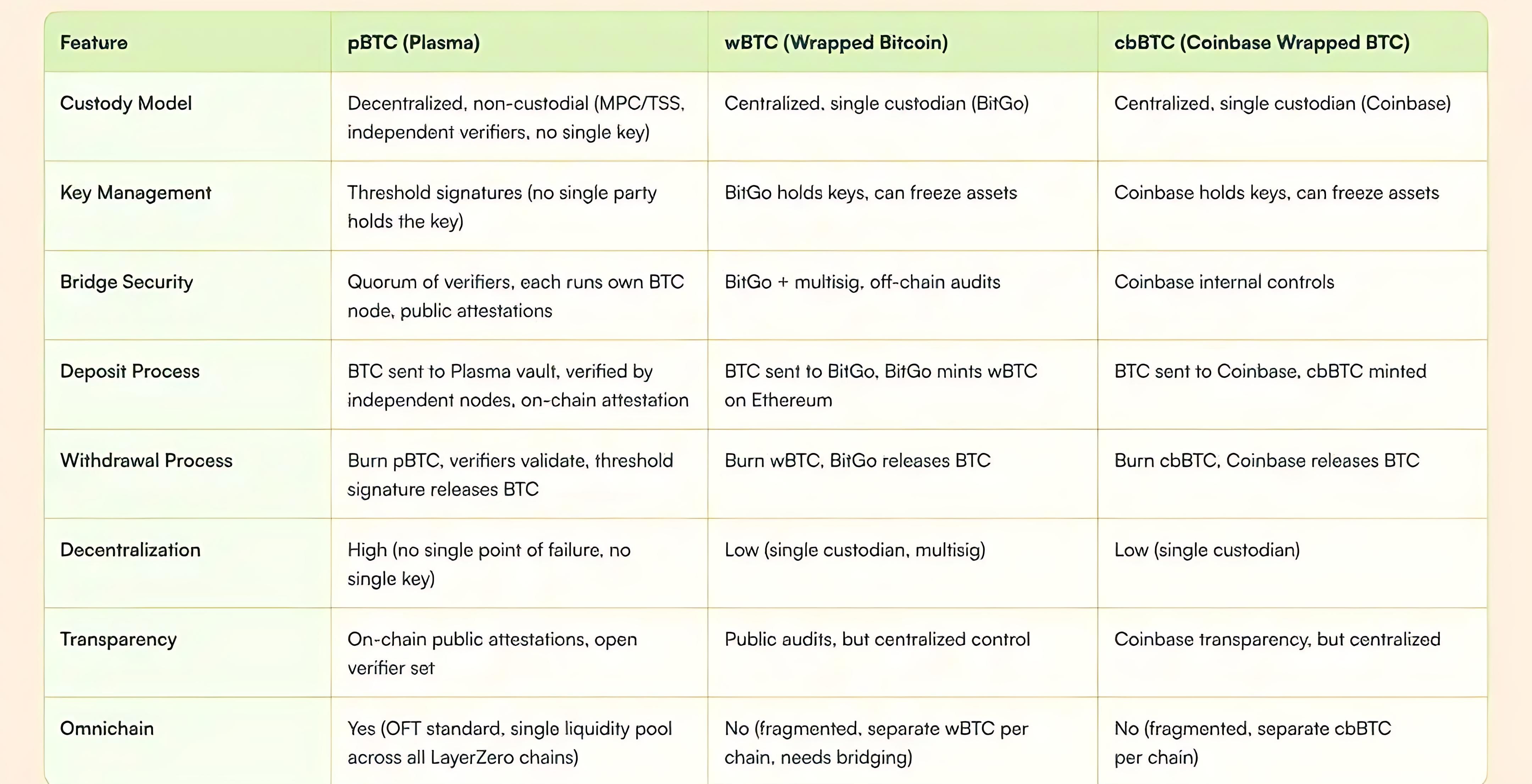
In the world of DeFi, the way we bridge Bitcoin matters. For years, the market has relied on centralized solutions like wBTC and the newer cbBTC. However, a closer look at the architecture reveals critical flaws in these legacy models—flaws that @Plasma is solving with pBTC.
The Custody Problem
According to recent research by Sumcap and ExaGroup, the primary difference lies in custody. Both wBTC (BitGo) and cbBTC (Coinbase) operate on a centralized model where a single custodian holds the keys and retains the power to freeze assets. In contrast, pBTC utilizes a decentralized, non-custodial model. Through MPC (Multi-Party Computation) and TSS (Threshold Signature Schemes), no single party holds the private key, significantly reducing counterparty risk.
Security via Independence
Security isn't just about holding keys; it's about verification. pBTC relies on a quorum of independent verifiers, each running their own BTC node with public attestations. Compare this to the internal controls of Coinbase or the off-chain audits of BitGo, and the difference in transparency becomes obvious.
True Omnichain Functionality
Perhaps the most exciting feature of pBTC is its Omnichain capability. While competitors suffer from fragmented liquidity (requiring separate tokens per chain), pBTC utilizes the OFT standard. This creates a single, unified liquidity pool across all LayerZero chains, making it the most efficient vehicle for Bitcoin DeFi.
Conclusion
As we move toward a trustless financial system, we cannot afford to keep our Bitcoin in centralized "black boxes." With high decentralization, on-chain transparency, and robust security, Plasma is building the infrastructure real users deserve.


