
Most people evaluating Dusk are using the wrong mental model. They’re treating it like a typical L1 and then asking the usual crypto questions:
Where’s the hype? Where’s the TVL spike? Why isn’t the price moving?
That framing completely misses what Dusk is building — and more importantly, who it’s building for.
Dusk isn’t trying to win the attention economy. It’s trying to survive the regulatory one.
The Mistake Retail Keeps Making
Crypto-native users love permissionless chaos. Institutions don’t. Banks, exchanges, and issuers don’t want “maximum privacy” — they want controlled privacy. They need to hide sensitive data without breaking audit trails.
This is where most privacy chains fail. They treat privacy as invisibility. Regulators treat invisibility as non-compliance. Game over.
Dusk took a different path:
privacy with selective disclosure, enforced at the protocol level.
That’s not exciting for Twitter.
It is exciting for compliance officers.
Why DuskEVM Is More Strategic Than It Looks
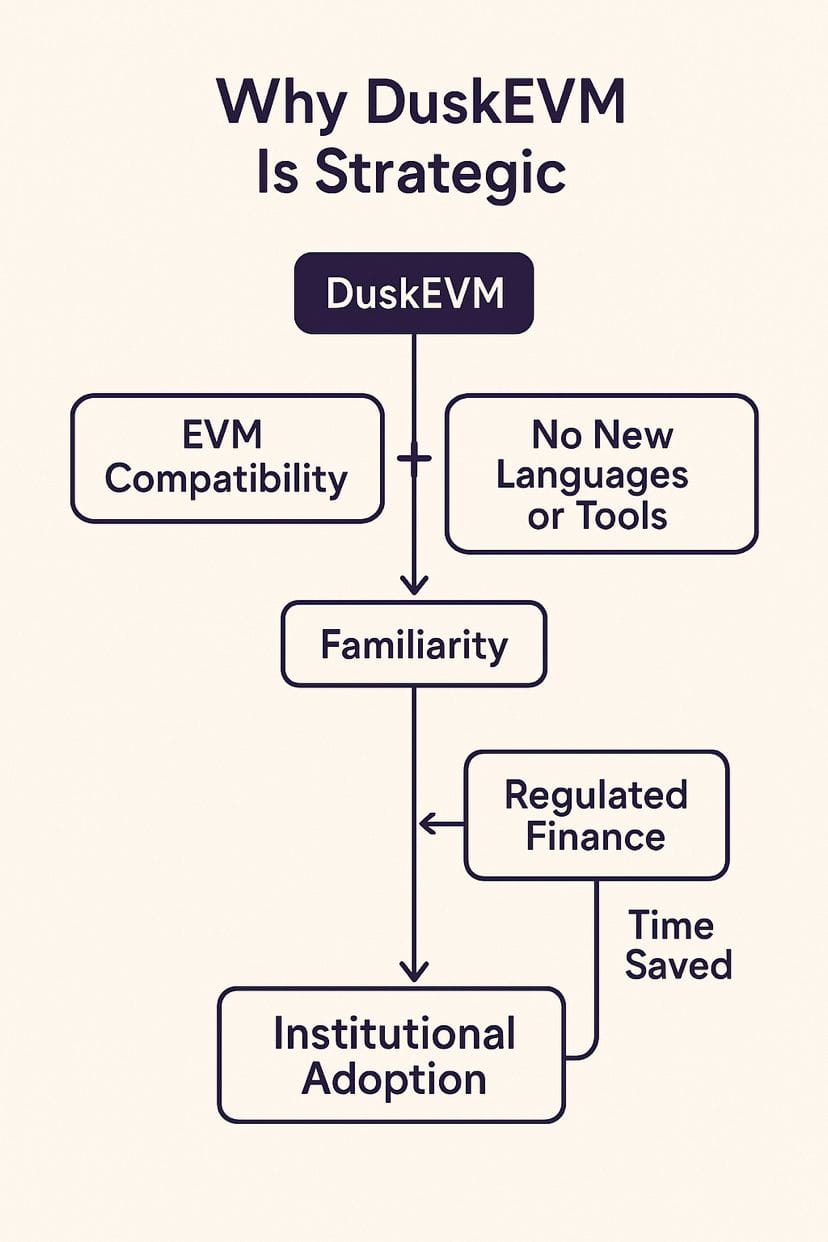
People underestimate DuskEVM because “EVM compatibility” sounds boring in 2026. But boring is exactly the point.
Institutions don’t adopt innovation — they adopt familiarity with guardrails.
By supporting Solidity, Dusk isn’t chasing developers. It’s removing excuses. No new languages, no exotic tooling, no experimental execution quirks. Just known workflows operating inside a system that understands compliance constraints.
That dramatically shortens adoption cycles. In regulated finance, time saved is alpha.
Hedger Isn’t About Hiding — It’s About Proving
Here’s a strong opinion:
Most people talking about zero-knowledge proofs don’t understand what regulators actually care about.
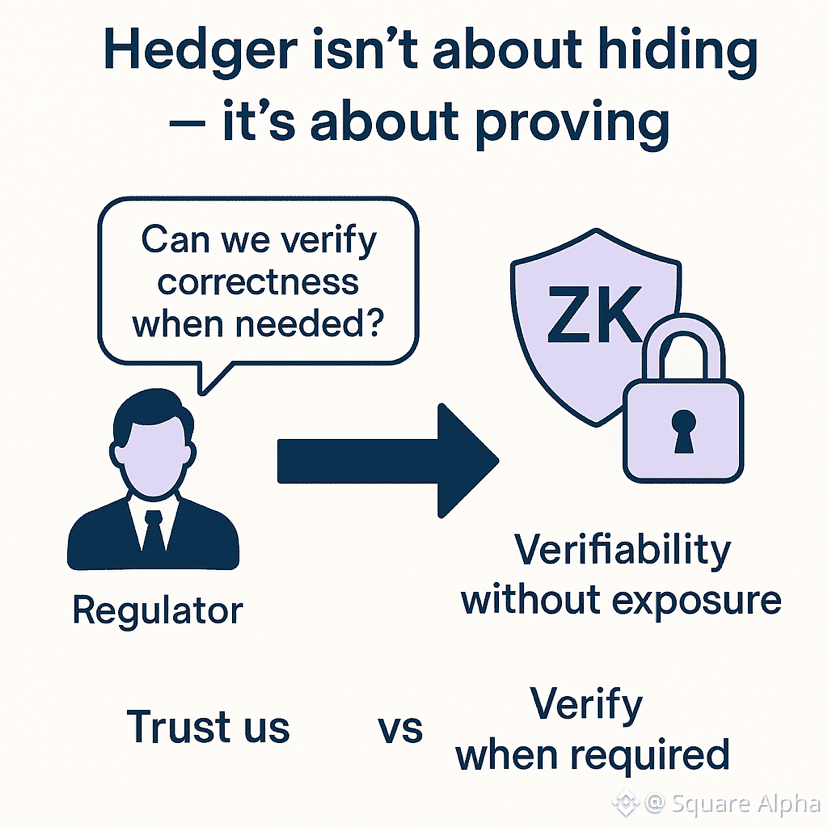
Regulators don’t ask: “Can we see everything?”
They ask: “Can we verify correctness when needed?”
Hedger’s blend of ZK proofs and homomorphic encryption is about verifiability without exposure. Transactions can remain confidential while still being mathematically provable as valid. That’s not philosophical privacy — that’s operational privacy.
It’s the difference between “trust us” and “verify when required.”
DuskTrade Changes the Risk Profile
The moment Dusk aligned with a licensed Dutch exchange, the project stopped being theoretical. Tokenizing securities under an MTF/Broker framework isn’t crypto cosplay — it’s real liability.
That matters because it filters out unserious builders. If something breaks, there are legal consequences. That pressure forces better engineering, better governance, and slower but more durable execution.
Slow is a feature here, not a bug.
The Token Reality No One Likes
Let’s be honest about $DUSK.
This is not a momentum token.
It doesn’t benefit from meme cycles.
It won’t reward impatience.
Its upside is tied to actual settlement usage, validator participation, and regulated throughput. That means long flat periods, followed by structural repricing if adoption materializes.
That’s uncomfortable for most traders — which is exactly why these setups are often mispriced early.
Why I’m Still Watching Closely
I don’t size Dusk like a speculative bet. I size it like infrastructure exposure. Something that either compounds quietly or fails quietly — not something that explodes on headlines.
What I respect is the consistency. No narrative pivoting. No retail bait. No sudden “AI + gaming” nonsense.
Just regulated finance, privacy done correctly, and a roadmap that assumes friction instead of ignoring it.
Most crypto projects try to outrun reality.
Dusk is building inside it.
And historically, that’s where the survivors come from.
